Trump Administration Mandates USDA Staff to Screen Foreign Research Partners
Washington, Saturday, 17 January 2026.
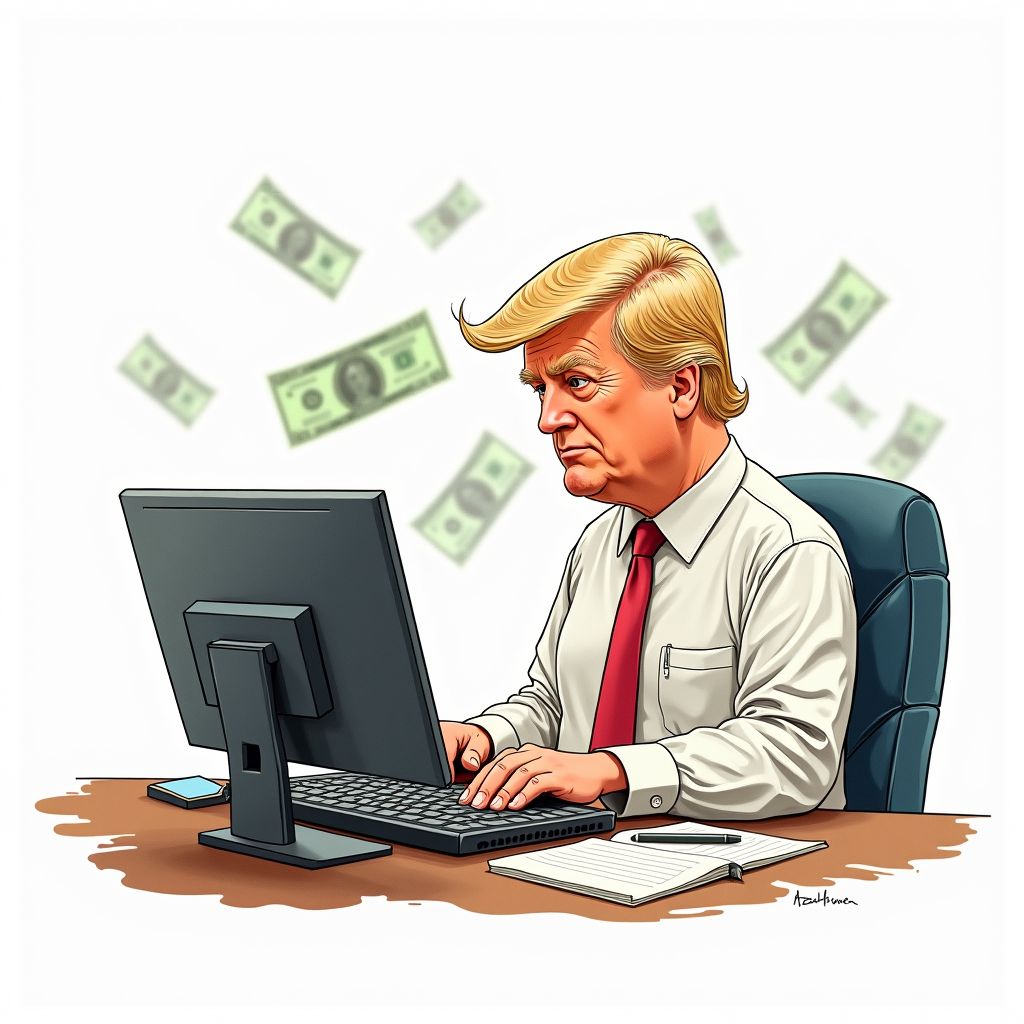
The Trump administration now requires USDA employees to Google-search foreign research partners for “subversive activity,” a move critics liken to McCarthyism and internal supervisors describe as dystopic.
A New Layer of Surveillance in Science
In a significant shift regarding how federal agencies interact with the global scientific community, the Trump administration has directed USDA employees to personally vet foreign nationals collaborating with the agency. According to a new directive, staff members are instructed to utilize Google to conduct background checks on research partners, specifically looking for evidence of “subversive or criminal activity” [1]. If employees identify potential red flags during these internet searches, they are required to forward the names of the foreign scientists to national security experts within the agency for further review [1]. This policy applies broadly, targeting researchers not only from designated “countries of concern”—identified as China, Cuba, Iran, North Korea, Russia, and Venezuela—but also from allied nations such as Canada and Germany [1].
Internal Dissent and Operational Confusion
The implementation of these measures has sparked friction within the department. During a meeting held in December 2025, USDA supervisors voiced significant concerns regarding the directive, with one official describing the requirement to investigate foreign peers via Google as “dystopic” [1]. The policy affects pending scientific publications co-authored by employees in the USDA’s Agricultural Research Service, introducing a complex layer of compliance to routine academic work [1]. Furthermore, while new written guidance on foreign collaboration was anticipated by January 1, 2026, employees reported as of mid-January that the vetting mandates continue in the absence of these updated formal instructions [1].
A Pattern of Restrictions
This directive follows a series of exclusionary measures enacted throughout 2025. A memo issued in July by Rollins instructed the USDA’s Office of Homeland Security and other leadership bodies to determine which foreign arrangements should be terminated [1]. Consequently, the agency laid off 70 employees originating from “countries of concern” during the summer of 2025 [1]. By November 2025, the scope of restrictions widened further when a research leader instructed staff to cease research activities with scientists from these specific nations and to reject papers covering “sensitive subjects,” explicitly naming “diversity” and “climate change” as topics to avoid [1]. Staff were also told to evaluate whether foreign researchers could potentially utilize their findings against American farmers [1].
Risks to Innovation and Global Collaboration
The scientific community has reacted with alarm regarding the long-term implications of these policies on American innovation. Jennifer Jones, director for the Center for Science and Democracy at the Union of Concerned Scientists, characterized the directive as a “throwback to McCarthyism” and a “classic hallmark of authoritarianism,” noting that asking scientists to spy on co-authors fundamentally undermines the collaborative nature of research [1][7]. Caroline Wagner, an emeritus professor of public policy at The Ohio State University, warned that these barriers “will certainly reduce the novelty, the innovative nature of science and decrease these flows of knowledge that have been extremely productive for science over the last years” [1]. As of today, neither the USDA nor the Department of Homeland Security has commented on the specific consequences for researchers flagged through this new vetting process, beyond the potential rejection of their work [1].