SpaceX Pushes Next Starship Launch to April 2026 Amid Ambitious Mars Goals
Boca Chica, Thursday, 12 March 2026.
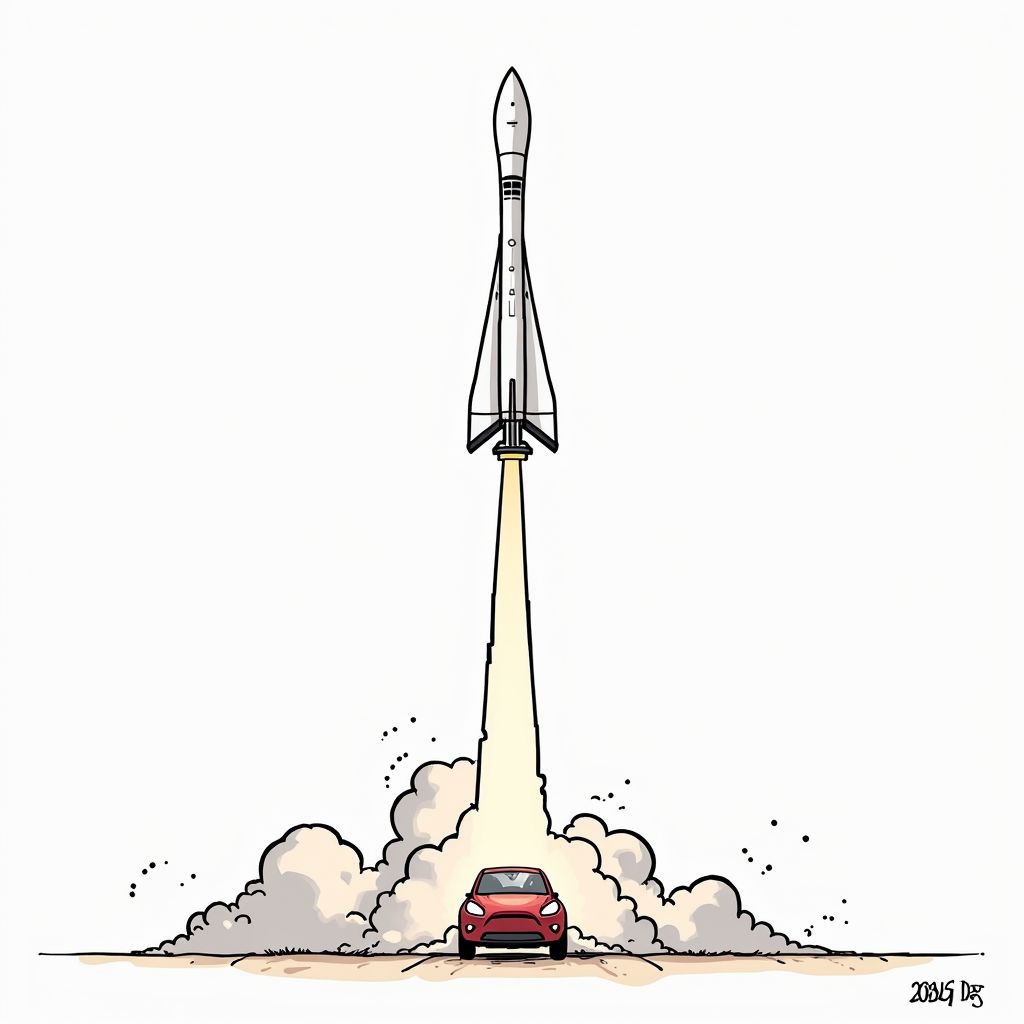
SpaceX delayed its next Starship launch to April 2026. Despite this, Elon Musk maintains plans to send uncrewed rockets carrying Tesla humanoid robots to Mars by year’s end.
Navigating Delays and Technical Milestones
SpaceX has officially adjusted the timeline for its highly anticipated Starship Flight 12. Originally slated for the first quarter of 2026 [2], CEO Elon Musk confirmed on March 7, 2026, that the launch is now targeting early April [1]. The delay comes despite significant recent progress at the company’s Starbase facility in South Texas. As of March 7, SpaceX successfully completed “cryoproof” testing of the Starship upper stage, and by March 9, the Super Heavy booster was deemed ready for preflight testing [1]. On March 11, 2026, Booster 19 was rolled out to Pad 2, marking the first such rollout in 147 days following the successful Flight 11 in October 2025 [5]. Flight 12 is particularly notable as it will debut the Version 3 (V3) Starship, which stands approximately 124.4 meters tall—an increase of 2.5 meters over previous iterations [1].
NASA Pressures and Broadening Operations
The schedule adjustments for Starship are not occurring in a vacuum. SpaceX is currently navigating immense pressure from NASA to accelerate the development of its Human Landing System (HLS) variant [5]. Both SpaceX and competitor Blue Origin are racing to prepare lunar landers for NASA’s Artemis 4 mission, scheduled for 2028 [1]. Despite the Starship delays, the broader SpaceX enterprise continues to operate at a blistering pace. On March 10, 2026, a Falcon 9 rocket successfully delivered the 6,803.89 kg EchoStar XXV satellite into a geosynchronous transfer orbit, marking the company’s 30th mission of the year [5]. Concurrently, the Starlink satellite internet constellation continues to expand. As of mid-March 2026, SpaceX has launched 11,463 Starlink satellites, with 9,913 currently operational [5], representing a remarkable 86.478 percent operational success rate for the deployed network.
The ‘Technology Monastery’ Challenge
While the hardware continues to evolve, SpaceX faces significant human resources and environmental hurdles at its South Texas hub. In February 2026, Musk candidly referred to Starbase as a “technology monastery,” admitting that convincing married engineers to relocate to the remote site—located 40 minutes from Brownsville and near the Mexican border—has become his “biggest silent problem” [3][4]. The facility’s location adjacent to the Lower Rio Grande Valley wildlife corridor has also drawn intense scrutiny from environmental advocates [3][4]. Since 2019, operations at Starbase have triggered at least 19 environmental incidents, including fires and fuel leaks, with a notable 2023 launch igniting roughly 1.4 hectares of nearby state park land [3][4]. Nevertheless, the Federal Aviation Administration (FAA) has granted clearance for up to 25 Starship and Super Heavy orbital launches and landings annually from Boca Chica, provided strict mitigation and monitoring measures are enforced [3][4].
Strategic Pivots and Interplanetary Ambitions
Looking ahead, SpaceX’s strategic roadmap remains as aggressive as ever. Beyond the upcoming April test, the company is aiming to conduct its first Starship launch from Florida’s Kennedy Space Center by late summer or early fall of 2026 [1]. Interestingly, Musk announced a strategic pivot in February 2026, emphasizing the construction of a lunar city before fully committing to Mars [1]. However, the overarching goal of reaching the Red Planet by the end of 2026 with uncrewed missions remains a central pillar of Musk’s vision [GPT] [alert! ‘While Musk frequently iterates on ambitious Mars timelines, executing an uncrewed Mars landing by the end of 2026 remains highly speculative and dependent on flawless V3 testing’]. These future interplanetary endeavors are expected to leverage synergies across Musk’s corporate portfolio, potentially carrying Tesla (TSLA) humanoid Optimus robots to assist in early habitat construction and exploration [GPT].