Trump’s Iran Deal Puts Israel in a Bind: Comply or Lose US Support
Washington, Friday, 19 June 2026.
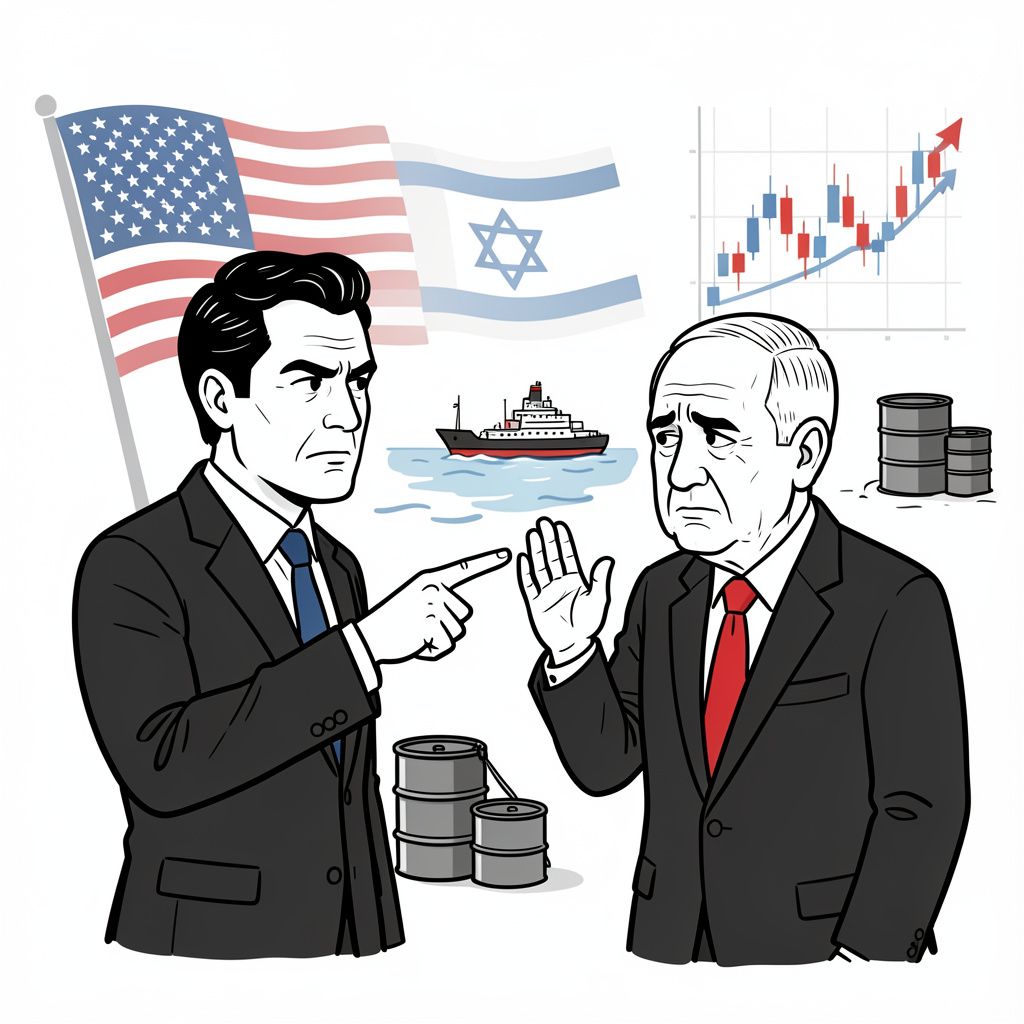
US Vice President JD Vance has given Israel a 60-day ultimatum: accept President Trump’s controversial Iran deal or risk losing America’s backing. The warning comes as the US lifts its naval blockade in the Strait of Hormuz, reopening a critical global trade route. Vance’s blunt message—delivered amid rising tensions—frames Trump as Israel’s ‘only powerful ally’ and warns against public opposition. The deal, which includes sanctions relief and unfrozen Iranian assets, has sparked outrage in Israel, where leaders fear it undermines security. With oil prices stabilizing and regional alliances shifting, the stakes couldn’t be higher for Israel’s future.
The Ultimatum: A 60-Day Countdown Begins
On 17 June 2026, US Vice President JD Vance delivered an unprecedented ultimatum to Israel: accept the Trump administration’s Iran deal within 60 days or risk losing American support. The warning, issued during a press briefing in Washington, marks a dramatic escalation in US-Israel tensions and a significant shift in American foreign policy. Vance’s statement came just hours after the US lifted its naval blockade in the Strait of Hormuz, a move that reopened a critical global trade route but also signaled Washington’s commitment to the deal [1][2]. The 60-day negotiating period, which began on 16 June 2026, is set to conclude on 15 August 2026, leaving Israel with little time to respond [3].
The Deal’s Core: Sanctions Relief and Strategic Trade Routes
The preliminary agreement between the US and Iran, signed on 14 June 2026, includes several key provisions that have drawn sharp criticism from Israeli leadership. Central to the deal is the lifting of US sanctions on Iran’s oil exports, which are expected to return to prewar levels of approximately 3.8 million barrels per day (mb/d) [4]. Additionally, the US has agreed to unfreeze approximately $300 billion in Iranian assets, a financial windfall that Tehran could use to rebuild its military capabilities [4]. The reopening of the Strait of Hormuz, a 33-kilometer-wide chokepoint through which roughly 21% of the world’s oil supply transits, has already led to a stabilization of global energy prices [5]. Seven vessels, including five Chinese, one French, and one Italian ship, resumed transit through the strait on 15 June 2026, ending a blockade that had lasted over 100 days [5].
Israel’s Dilemma: Security Concerns vs. Diplomatic Isolation
Israeli officials have reacted with alarm to the deal, viewing it as a direct threat to national security. Prime Minister Benjamin Netanyahu, while publicly urging calm, has privately expressed concerns that the agreement undermines Israel’s strategic position in the region [6]. Netanyahu’s ultranationalist coalition partners, including National Security Minister Itamar Ben-Gvir and Finance Minister Bezalel Smotrich, have been far more vocal in their opposition. Ben-Gvir accused the Trump administration of abandoning Israel, while Smotrich warned that the deal would embolden Iran and its proxies, including Hezbollah [6]. Vance’s response to these criticisms was unequivocal: “Donald J. Trump is the only head of state in the entire world who is sympathetic to the nation of Israel at this moment in time,” he stated, adding that Israel’s public opposition to the deal risked alienating its “only powerful ally” [1][7].
The Nuclear Question: Verification and Vague Commitments
One of Israel’s primary concerns is the deal’s handling of Iran’s nuclear program. The preliminary agreement commits Iran to refrain from pursuing nuclear weapons, but it remains vague on key issues such as uranium enrichment rights and stockpile retention [4]. Under the terms of the deal, Iran is required to down-blend approximately 11 metric tons of enriched uranium, including 440 kilograms enriched to 60% purity [4]. However, the agreement does not require Iran to surrender this material, a point of contention for Israeli officials who argue that Iran cannot be trusted to comply [4]. Vance has sought to reassure critics by emphasizing the importance of verification. “Words don’t matter, ladies and gentlemen. We’re about verification,” he stated during a press briefing on 16 June 2026 [4]. Yet, the deal’s omission of curbs on Iran’s ballistic missile program—a key Israeli demand—has further fueled skepticism. Intelligence estimates from May 2026 indicate that Iran has retained approximately 70% of its prewar missile stockpile despite US strikes in the early months of the conflict [8].
The Lebanon Factor: Hezbollah and the Ceasefire
A critical component of the US-Iran deal is the ceasefire in Lebanon, where Israel and Hezbollah have been engaged in near-daily clashes since the war’s onset. The preliminary agreement calls for Israel to withdraw from occupied southern Lebanon, a demand that Netanyahu has firmly rejected. “Israel will not withdraw from southern Lebanon as long as its security needs demand it,” Netanyahu stated on 16 June 2026 [6]. Vance, however, has made it clear that the US expects both sides to adhere to the ceasefire terms. “The Israelis have to respect this peace process,” he said, adding that the US expects Hezbollah not to attack Israel and Israel “not to be going wild” in Lebanon [6]. Trump himself weighed in on the issue, criticizing Israel’s military tactics in Lebanon as excessive. “An apartment house every time you’re looking for someone,” he remarked on 15 June 2026, underscoring the administration’s frustration with Israel’s approach [6].
The Broader Implications: US Foreign Policy and Global Alliances
The Trump administration’s Iran deal represents a broader recalibration of US foreign policy, with potential long-term consequences for global alliances. The deal has exposed fractures within NATO, as European allies including Spain, France, and Italy refused to support US military operations against Iran [10]. US Defense Secretary Pete Hegseth criticized these allies as “shameful” for denying basing and airspace access, announcing a six-month review of US troop presence in Europe to realign forces with “America’s global needs” [10]. The administration has also signaled its intent to reduce NATO dues if member states fail to meet the 5% GDP defense spending target, up from the 2% agreed upon in 2014 [10]. Meanwhile, the US-Israel relationship, long considered the cornerstone of American Middle East policy, faces its most severe test in decades. Vance’s warning to Israel—“Anybody in Israel who thinks their biggest problem is the President needs to wake up and smell reality”—underscores the high stakes of the current standoff [1].
What’s Next: The 60-Day Deadline and Beyond
As the 60-day negotiating period unfolds, the world will be watching closely to see whether Israel complies with the Trump administration’s demands or risks further alienating its most powerful ally. The final deal, expected to be finalized by mid-August 2026, could include additional sanctions relief tied to Iran’s compliance with nuclear and missile restrictions [4]. However, with Iran’s Supreme Leader Ayatollah Mojtaba Khamenei already warning against “excessive demands,” the path to a lasting agreement remains uncertain [3]. For Israel, the choice is stark: accept the deal and its perceived security risks, or defy the US and face the potential loss of military and diplomatic support. With oil markets stabilizing and global trade routes reopening, the economic incentives for compliance are clear—but the geopolitical costs may prove too high for Israel to bear [5].
Sources
- time.com
- www.aljazeera.com
- www.nytimes.com
- www.washingtonpost.com
- www.axios.com
- www.aljazeera.com
- www.facebook.com
- www.washingtonpost.com
- www.reuters.com
- www.politico.com