How Bigwave Robotics Is Bridging Artificial Intelligence and Factory Automation
Seoul, Thursday, 29 October 2026.
Bigwave Robotics launched its Hyper Foundry software, sparking a 30% stock surge as the company connects complex AI model training directly to operational industrial and humanoid machinery.
Hyper Foundry: The Core Engine of Bigwave Robotics’ Physical AI Revolution
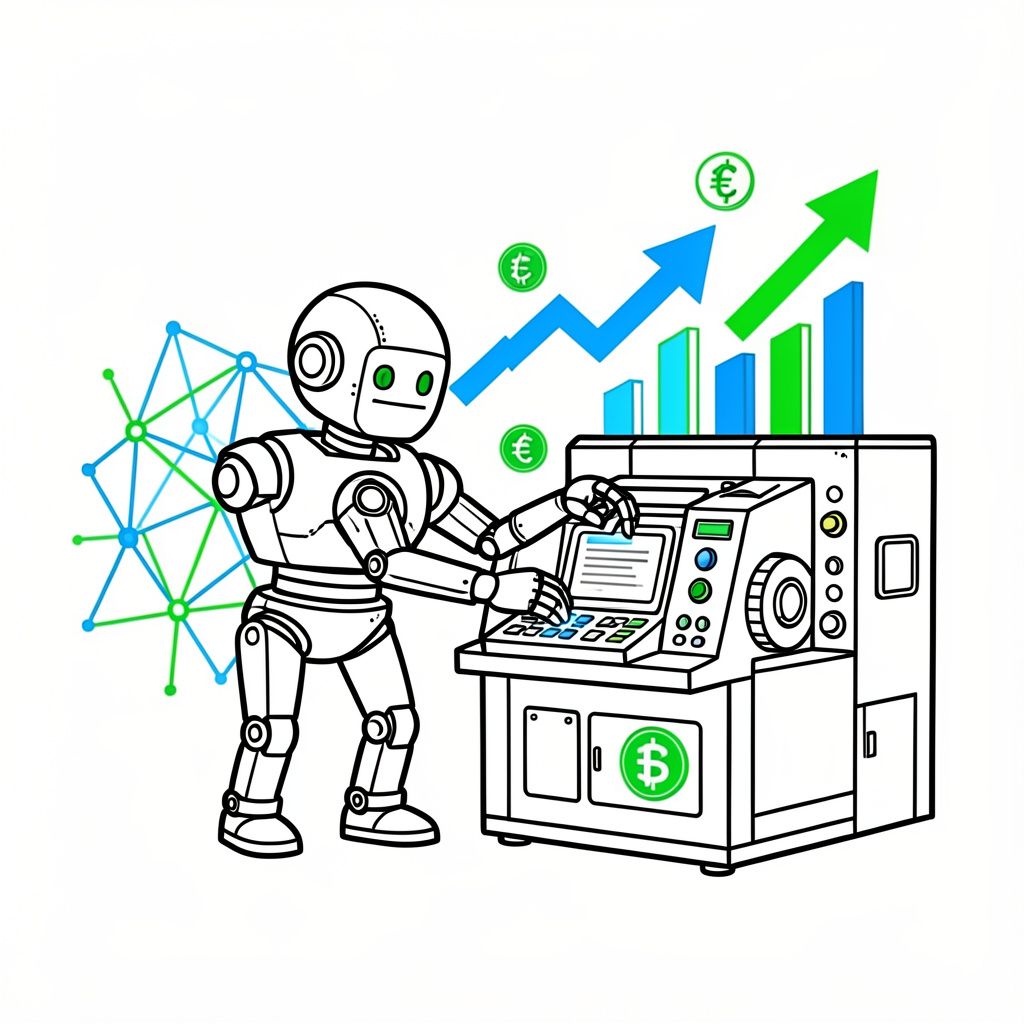
On 20 October 2026, Bigwave Robotics unveiled Hyper Foundry, an integrated Physical AI platform engineered to collapse the traditional barriers between robot data collection, AI model training, and real-world deployment [1][2][3]. The platform is composed of four interconnected modules—Data Studio for raw sensor capture, Model Studio for algorithm training, Mission Studio for deployment workflows, and Data Library for version-controlled datasets—all designed to operate on-premises within customer infrastructure [3]. According to Minkyo Kim, CEO of Bigwave Robotics, the initiative is a deliberate response to what he describes as the industry’s critical infrastructure gap: ‘For Physical AI to move beyond the lab and become a core industrial technology, integrated infrastructure that links data collection, AI training, and real-robot deployment is essential’ [1][2].
From Seoul to Troy: A Global Launch Strategy
Hyper Foundry was launched globally at the BIGWAVE SHIFT 2026 – Industrial Physical AI Summit in Seoul on 22 October 2026, just two days after its debut in Troy, Michigan [1][2]. This dual-location launch underscores Bigwave’s ambition to position itself as a foundational software infrastructure provider for industrial robotics, not merely a hardware integrator [GPT]. The platform’s architecture is engineered to support both imitation learning and reinforcement learning paradigms, enabling developers to iterate models in silico before validating them on live robotic systems [1][3]. This capability is particularly critical for humanoid and collaborative robots, where safety and precision are non-negotiable [GPT].
Stock Market Reaction: A 30% Surge in a Single Session
The announcement catalyzed a dramatic market response. On 26 October 2026, Bigwave Robotics’ shares closed at ₩28,950 (KRW), surging ₩6,650—or 29.821 = 29.82%—from the previous trading day, hitting the daily upper price limit [2][4]. This surge followed a volatile post-IPO trajectory: after peaking at ₩60,000 intraday on its debut in September 2026, the stock had fallen to ₩13,860 by 15 October 2026 before beginning a recovery trajectory that culminated in the 26 October rally [2][4]. Analysts attribute the spike to heightened expectations around Physical AI commercialization, with one securities firm official noting that the stock’s upward momentum now hinges on ‘concrete earnings to back the Physical AI narrative’ [2][4].
Partnerships and Platform Synergies
Hyper Foundry is not operating in isolation. Bigwave Robotics has entered into a memorandum of understanding with Rainbow Robotics to co-develop hardware-software solutions, with a specific focus on penetrating the North American robotics market [2]. This collaboration aligns with Bigwave’s broader software strategy, as evidenced by its existing enterprise customers—including Samsung, SK, and Hyundai Motor Group—which already utilize platforms such as SOLlink and Hyper Foundry for automation workflows [1][2]. The integration of Hyper Foundry with SOLlink, Bigwave’s robot integration management software, is expected to amplify the platform’s value proposition by unifying data pipelines across heterogeneous robotic fleets [2][3].
Financial Trajectory and Strategic Ambitions
Bigwave Robotics’ financial trajectory reflects a high-stakes transition from platform operator to software infrastructure leader. The company, founded in 2020 and listed on KOSDAQ in September 2026, reported standalone revenues of ₩6.854 billion in 2023, ₩13.851 billion in 2024, and ₩20.743 billion in 2025, achieving an operating profit of ₩673 million in the latter year [2]. For 2026, the company has set ambitious targets: ₩35.9 billion in revenue and ₩1.8 billion in operating profit, followed by ₩49.3 billion and ₩4.3 billion in 2027 [2]. However, mid-year results for 2026 reveal significant execution risk: in the first half, revenue totaled ₩9.978 billion but incurred an operating loss of ₩859 million, implying a second-half revenue requirement of approximately ₩25.9 billion to meet the annual target [2]. ‘Software sales expansion and North American market entry are key levers for profitability improvement,’ stated Kim during the IPO briefing in September 2026 [2].
Industrial Validation: Case Studies and Real-World Impact
Hyper Foundry’s practical value is being demonstrated through real-world automation case studies. In a CNC machining deployment using a Hyundai Robotics industrial robot equipped with a 220 kg payload capacity and a SCHUNK 2Head gripper, the system increased hourly production from 1.67 to 3.34 units, reduced the defect rate from 2.22% to 1.17%, and enabled unattended night operations [3]. This outcome aligns with broader industry benchmarks: SOLlink, Bigwave’s automation system, has similarly demonstrated a doubling of throughput and a halving of defect rates in comparable environments [3]. These results underscore the platform’s potential to deliver measurable ROI for manufacturers seeking to integrate AI-driven autonomy into legacy industrial systems [GPT].