Big 12 vs. Texas Tech: A Legal Showdown That Could Reshape College Football
Dallas, Tuesday, 16 June 2026.
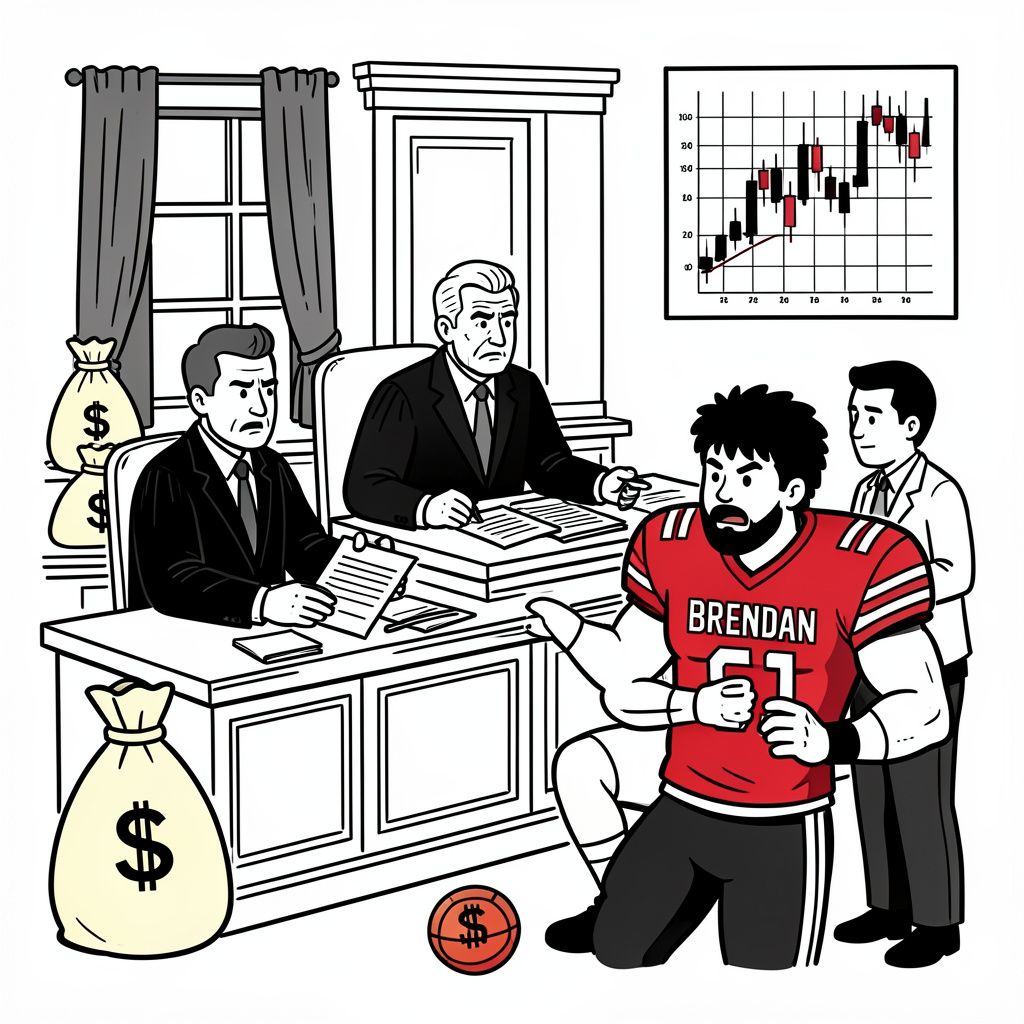
The Big 12’s federal lawsuit against Texas Tech over quarterback Brendan Sorsby isn’t just about one player—it’s a high-stakes battle over who controls college sports. With a 47-page complaint filed in Dallas, the conference is fighting to enforce its own rules on gambling and player eligibility, even as Texas Attorney General Ken Paxton threatens antitrust action. The outcome could redefine how conferences, universities, and states navigate NIL deals, transfers, and athlete mobility. Sorsby’s fate hangs in the balance, with a June 22 deadline looming for him to enter the NFL’s supplemental draft—or risk missing the 2026 season entirely. This case may set the precedent for how college sports govern themselves in an era of unprecedented change.
The Legal Chessboard: Federal vs. State Jurisdiction
The Big 12’s decision to file in federal court rather than state court represents a calculated strategic move. By choosing the Northern District of Texas in Dallas, the conference has positioned itself before a judge with lifetime tenure, insulated from the localized political pressures that might influence state court decisions [1][2]. This federal forum also provides a more neutral playing field for a dispute that has already seen Texas Tech benefit from hometown advantage in Lubbock County, where a district judge with Texas Tech ties initially recused himself from the case [1]. The federal lawsuit specifically targets Texas Tech University System, Chancellor Tedd L. Mitchell, President Lawrence Schovanec, Athletic Director Kirby Hocutt, and Texas Attorney General Ken Paxton, framing the dispute as a matter of national governance rather than local collegiate policy [1][3].
The Gambling Controversy at the Heart of the Dispute
Brendan Sorsby’s case centers on allegations that he violated NCAA gambling rules while playing for Indiana, including bets placed on his own team’s games [1][4]. The 47-page complaint filed by the Big 12 references historical gambling scandals from the 1919 Black Sox to Pete Rose, underscoring the conference’s position that allowing Sorsby to play would undermine the integrity of college athletics [1]. The Big 12’s board of directors issued a statement declaring, ‘Universities should not field players who have bet on their own team’s games in college athletics,’ framing the dispute as a matter of fundamental ethical principles rather than mere regulatory compliance [1][4]. The conference’s bylaws explicitly prohibit such conduct, and the lawsuit seeks to establish the Big 12’s independent authority to enforce these rules regardless of NCAA determinations [1].
Antitrust and Commerce Clause: The Legal Arguments Unpacked
The lawsuit presents a complex web of legal arguments that could reshape college sports governance. The Big 12 seeks a declaratory judgment that its enforcement of gambling-related bylaws does not violate federal antitrust laws, while simultaneously arguing that Texas Attorney General Ken Paxton’s threatened litigation against the conference would itself violate the Commerce Clause [1][5]. Paxton’s June 11 letter to the Big 12 warned that any sanctions against Texas Tech could constitute an antitrust violation, setting up a direct conflict between state and conference authority [5]. Oklahoma Attorney General Gentner Drummond countered Paxton’s position, calling the arguments ‘meritless’ and urging the Big 12 to proceed with enforcement actions [5]. This interstate legal battle highlights the growing tension between state-level protections for universities and conference-level governance structures that span multiple jurisdictions.
The NIL Factor: How Financial Incentives Complicate the Case
The dispute over Sorsby’s eligibility cannot be separated from the broader context of name, image, and likeness (NIL) agreements that have transformed college athletics since 2021 [1][4]. The NCAA’s June 11 motion to stay the Lubbock County injunction specifically argued that allowing Sorsby to play would ‘teach schools to circumvent NCAA rules via NIL agreements,’ suggesting that financial incentives are driving institutional decisions about player eligibility [4]. While the Big 12’s complaint attempts to differentiate between NCAA bylaws and conference bylaws, the practical reality is that NIL deals have created new economic pressures that influence both player transfers and institutional compliance decisions [1]. Texas Tech’s decision to recruit Sorsby despite the gambling allegations appears to reflect this new calculus, where athletic performance and revenue generation may outweigh traditional compliance concerns.
The Stakes: Potential Sanctions and Revenue Implications
The Big 12’s lawsuit outlines potential sanctions that could significantly impact Texas Tech’s athletic program, including postseason bans and restrictions on revenue distributions [1][3]. These financial penalties would come at a particularly sensitive time for the conference, which has already experienced substantial membership turnover in recent years. The Big 12’s revenue distribution model, which allocates approximately 2.857 million million USD annually to each member institution, could be disrupted if sanctions are imposed [GPT]. For Texas Tech, which received 38.1 million USD in Big 12 distributions for the 2024-25 fiscal year, the financial implications of this dispute extend far beyond one quarterback’s eligibility [GPT]. The conference’s willingness to pursue legal action suggests a determination to maintain consistent enforcement standards across its member institutions, even at the risk of alienating one of its most prominent members.
The Precedent: Why This Case Matters for College Sports
The Big 12’s lawsuit against Texas Tech represents more than an isolated dispute over one player’s eligibility—it tests the fundamental governance structures of college athletics in an era of unprecedented change [1][5]. The case challenges the traditional authority of conferences to enforce their own rules independently of NCAA determinations, while simultaneously confronting the growing influence of state attorneys general in collegiate sports governance [1]. Legal experts suggest that the outcome could establish important precedents regarding the scope of conference authority, the limits of state intervention in interstate athletic associations, and the enforceability of gambling-related bylaws in the NIL era [5]. The dispute also highlights the growing complexity of player mobility, where transfers and eligibility determinations are increasingly influenced by financial considerations and legal strategies rather than purely athletic factors. As Kansas Attorney General Kris Kobach, Oklahoma Attorney General Gentner Drummond, and Utah Attorney General Sean Reyes have all released statements supporting the Big 12’s position, the case has evolved into a multi-state governance crisis that could reshape how college sports are regulated for years to come [3].