Preserving Tech Innovation: Bill Gates Helps Launch Dayton's New Corporate Archive Center
Dayton, Sunday, 31 May 2026.
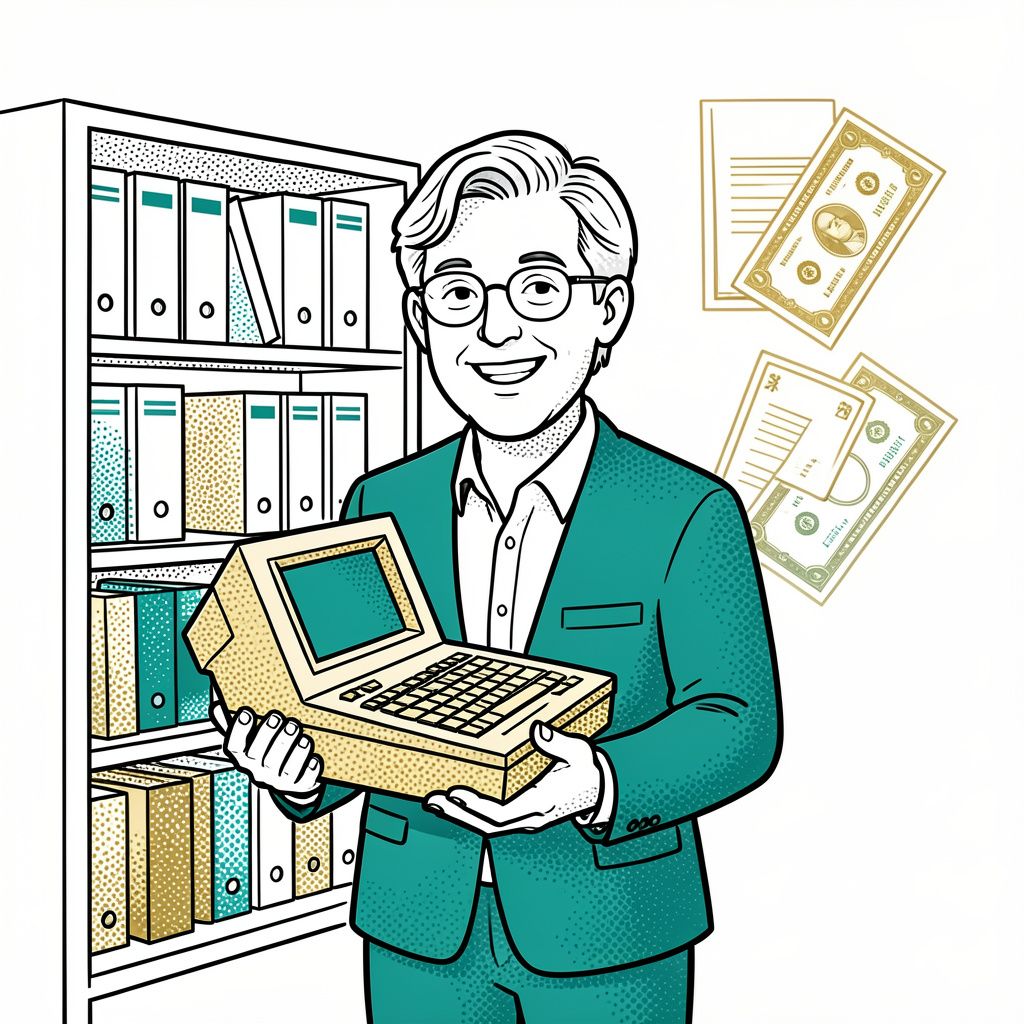
Reciprocating a vital 1979 corporate order, Bill Gates dedicated Dayton’s new NCR Archive Center on May 30, 2026, funding the preservation of foundational technology and regional business history.
A Philanthropic Nod to Corporate Synergies
On Saturday, May 30, 2026, Microsoft co-founder and billionaire philanthropist Bill Gates attended the ribbon-cutting ceremony for the newly established Mark and Paula Hurd NCR Archive Center in Dayton, Ohio [1][2]. The facility’s creation was spearheaded by a lead gift from Paula Hurd, who dedicated the center in honor of her late husband, Mark Hurd, the former chief executive officer and president of NCR Corporation [1][2]. Paula Hurd brings her own deep ties to the enterprise, having spent nearly two decades working in sales and service positions at NCR [1][2].
Charting Decades of Technological Collaboration
The archive serves as a repository for the history of a company that deeply influenced early computing and enterprise data management [1][2]. Gates noted during the event that Microsoft and NCR collaborated on an early data-entry terminal, laying the groundwork for future joint ventures [1][2]. This synergy continued into the early 1990s, specifically with the inception and joint development of the Windows NT Server in 1992, a critical era for enterprise computing architecture [1][2].
Preserving Dayton’s Business Heritage
Currently situated in the former Neil’s Heritage House building at 2323 W. Schantz Ave. in Dayton, the archive is not yet open to the general public [1][2]. Once accessible, it will house extensive two-dimensional records of NCR’s corporate history, including engineering drawings, blueprints, photographs, and a curated collection of more than 300 historical scrapbooks [1][2]. The overarching preservation effort was undertaken in collaboration with Dayton History and Brady Kress, ensuring that the physical artifacts of Dayton’s industrial legacy remain intact for future researchers [3].