US 30-Year Mortgage Rates Breach Key 6% Threshold Ahead of Spring Season
Washington, Thursday, 26 February 2026.
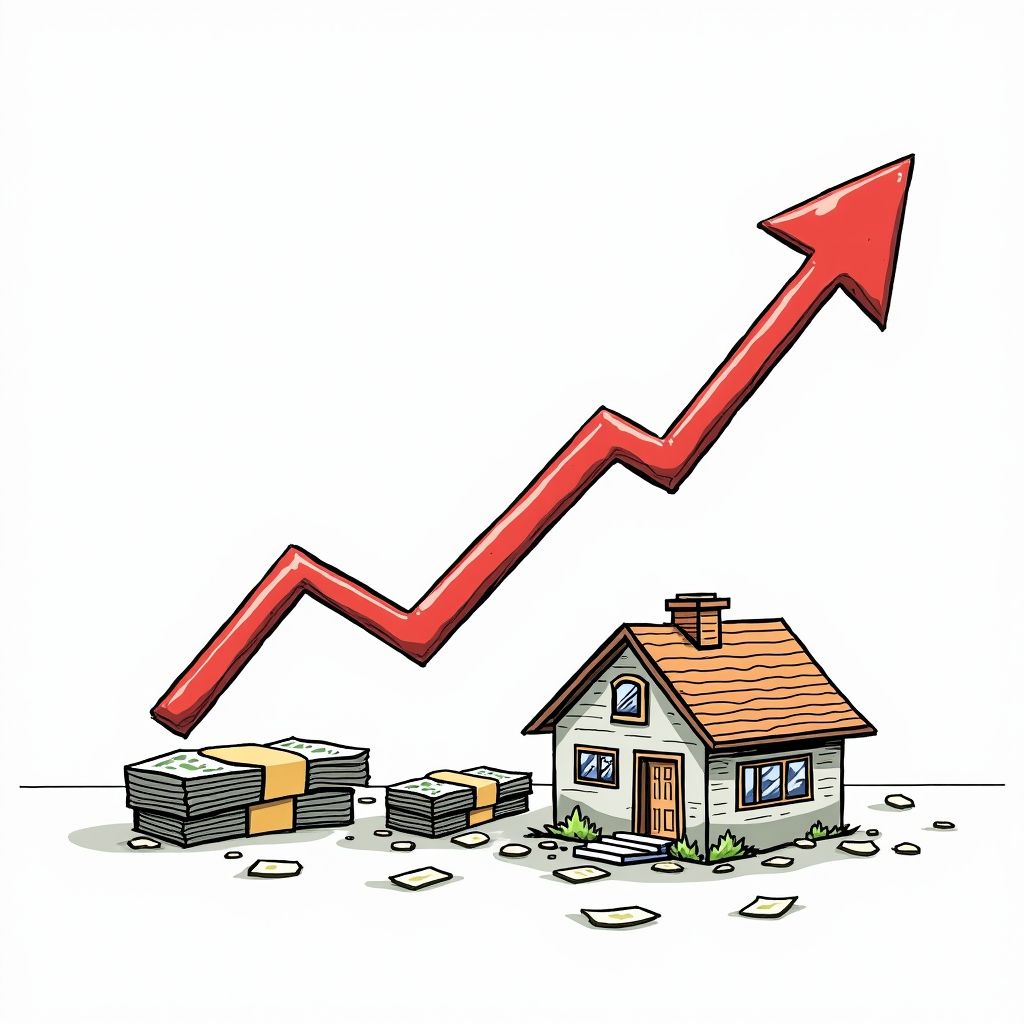
Marking a pivotal shift for the housing economy, the 30-year fixed mortgage rate dropped to 5.98% today—the first sub-6% reading since September 2022. This psychological milestone arrives precisely at the start of the spring buying season, potentially unlocking frozen inventory and reinvigorating buyer demand.
Market Mechanics and Rate Trajectory
According to data released Thursday by Freddie Mac, the average interest rate for a 30-year fixed loan slipped to 5.98%, a decrease from 6.01% the previous week [1][4]. This represents a notable improvement from one year ago, when the average sat at 6.76% [1][4]. While the benchmark 30-year rate declined, the trend was not uniform across all lending products; the 15-year fixed-rate mortgage actually ticked upward, averaging 5.44% compared to 5.35% the week prior [3][7]. The downward pressure on the 30-year rate correlates with movement in the bond market, specifically the 10-year Treasury yield, which lenders utilize as a guide for pricing loans [4]. By midday Thursday, the 10-year yield had fallen to 4.02%, down from approximately 4.07% a week earlier [4]. Sam Khater, Freddie Mac’s Chief Economist, emphasized the significance of this shift, noting that the rate drop combined with improving inventory is “meaningful” and expected to drive potential buyers into the market [7].
Reviving Market Activity
Early indicators suggest that borrowers are already responding to the easing monetary environment. As rates tracked lower, conventional refinance applications jumped 5%, while VA refinances surged by 26% as of February 18 [7]. For prospective buyers, the decline from the October 2023 peak of nearly 7.8% [6] represents a substantial change in financing costs. This reduction amounts to 1.82 percentage points, which Stijn Van Nieuwerburgh, a professor of real estate at Columbia Business School, notes translates to a reduction of hundreds of dollars in monthly mortgage payments [6]. Market analysts are cautiously optimistic that this breach of the 6% psychological level [5] will catalyze the spring season. Lisa Sturtevant, chief economist at Bright MLS, posited that if rates remain below this threshold, the coming months could be a “barn burner” for homebuying activity [4].
Structural Challenges Persist
Despite the optimism surrounding interest rates, the housing sector faces significant headwinds. Danielle Hale, chief economist at Realtor.com, cautioned that the recovery mechanism is “more of a dimmer switch” than a light switch [6]. The market remains sluggish, with sales of previously occupied homes stuck at 30-year lows throughout last year [4]. In January 2026, sales of existing homes fell sharply, a decline partly attributed to adverse weather conditions [6]. Furthermore, transaction volatility remains high. In January, approximately 40,000 home-sale agreements were canceled, equating to 13.7% of all contracts [7]. This instability highlights that while rates are falling, higher home costs and broader economic uncertainty continue to restrain the real estate market [2].
Political and Future Outlook
The cooling rate environment has also entered the political arena. President Trump highlighted the decline in mortgage rates during his State of the Union address on Tuesday, framing it as a boost for the administration [2]. While the current rate of 5.98% is the lowest since September 8, 2022 [4], it remains to be seen if this momentum can fully reverse the slump that has defined the market since rates began spiking four years ago [2]. The housing market’s recovery relies not just on financing costs, but on whether this latest dip is sufficient to convince homeowners, who are currently locked into lower legacy rates, to list their properties and increase supply [1].
Sources
- www.bloomberg.com
- www.axios.com
- www.theglobeandmail.com
- halifax.citynews.ca
- www.barrons.com
- www.nytimes.com
- www.mpamag.com