Bethesda’s Six Million Dollar Bid Crushed Original Creators’ Hopes to Reclaim Fallout
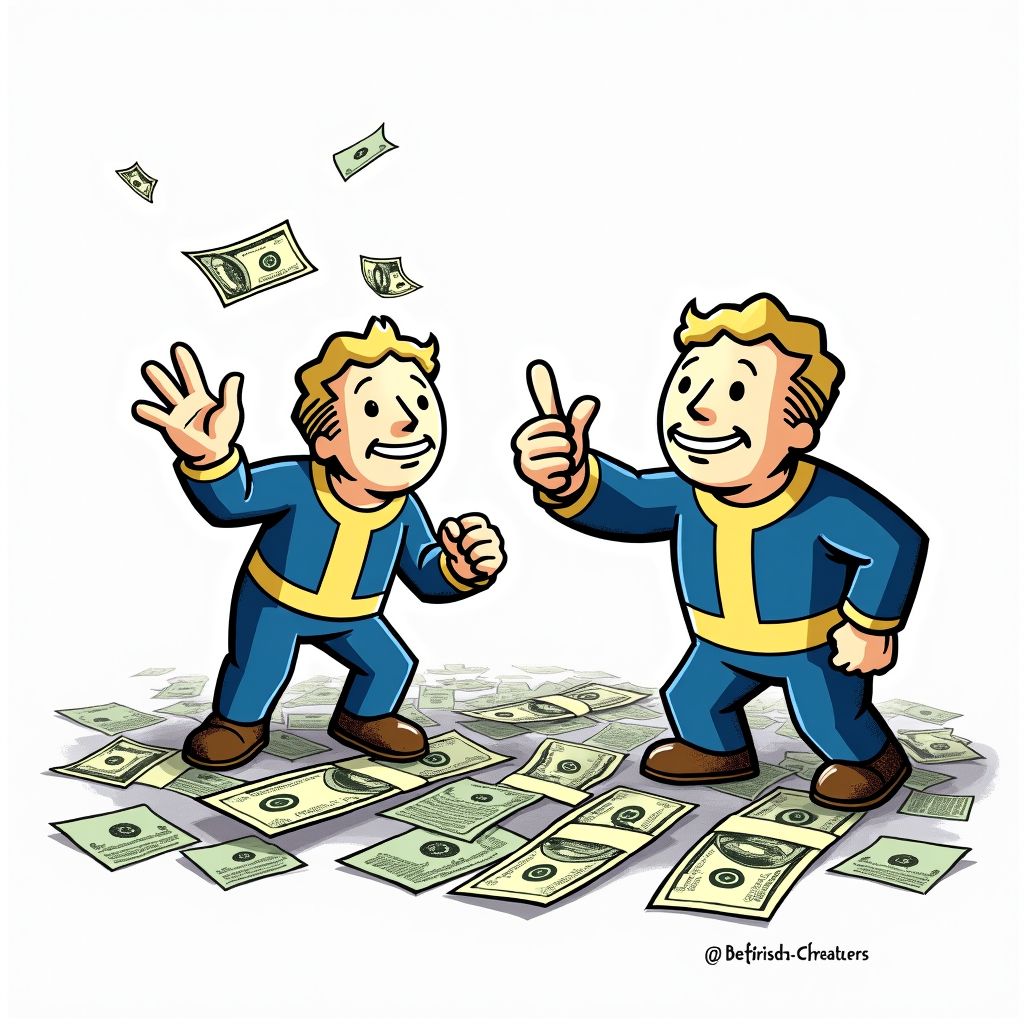
Rockville, Saturday, 10 January 2026.
Original developers secured funding to repurchase Fallout, yet never made an offer; Bethesda’s aggressive $6 million valuation rendered competing bids irrelevant, cementing the franchise’s multi-billion dollar trajectory.
The Financial Weight of a Lost Legacy
New insights into the mid-2000s acquisition of the Fallout franchise underscore the insurmountable financial barrier that separated its original creators from retaining their work. While Interplay Entertainment faced a severe liquidity crisis that compelled the liquidation of its assets to satisfy payroll obligations, it has been revealed that the original creative team—operating under Troika Games—had successfully secured investor interest to repurchase the intellectual property [1][5]. However, Bethesda Softworks’ aggressive offer, valued at approximately $5.75 million, was so dominant that the creators were effectively barred from the negotiation table [1][5]. Leonard Boyarsky, the original art director for Fallout, disclosed that despite lining up potential financial backers, the disparity in capital resources was absolute. “We never even got a chance to make an offer,” Boyarsky stated, noting that Bethesda’s financial leverage was such that competing offers would have likely been dismissed immediately as irrelevant [1][2].
The Capital Advantage
The sale was necessitated by Interplay’s dire financial condition, a period where the company was forced to sell off key holdings to remain solvent [2]. Interplay co-founder Brian Fargo identified Fallout as the “only truly marketable asset” remaining at the time, creating a buyer’s market that Bethesda capitalized on with decisive speed [5]. This transaction not only secured the rights for Fallout 3 but eventually consolidated total ownership of the IP, leading to a lengthy legal settlement regarding MMO rights that concluded in 2012 for an additional $2 million [6]. The acquisition price, while significant at the time for a distressed asset, now appears trivial against the franchise’s modern valuation. The deal effectively transferred the post-apocalyptic RPG series from its desperate creators to a publisher capable of transforming it into a global phenomenon, rendering the creators’ emotional and historical claim to the IP financially moot [2][5].
Ownership Versus Preservation
This consolidation of rights has had lasting implications for video game preservation, a topic of increasing relevance in early 2026. As of January 7, 2026, reports indicate that Interplay founder Rebecca Heineman possesses the original source code for Fallout 1 and 2—code previously thought lost—but cannot release it without express permission from the current rights holder, Bethesda [7]. This situation highlights the ongoing tension between legal ownership and historical preservation, mirroring the original sale where capital trumped creative origin. Just as the creators were priced out of ownership in the mid-2000s, the preservation of the franchise’s foundational code now rests entirely on the authorization of the corporate entity that purchased it [7].
A Multi-Billion Dollar Return
In the two decades since the acquisition, Bethesda has leveraged the IP into a transmedia empire. Following the massive success of the Amazon Prime Video television adaptation, which saw its second season premiere on December 17, 2025, the franchise’s value has skyrocketed far beyond the initial $5.75 million investment [6]. With Fallout 5 reportedly fully greenlit as of mid-2025, the $6 million “blowout” bid is historically contextualized as one of the most efficient capital deployments in the gaming industry [6]. This strategic acquisition secured a flagship asset that continues to drive revenue and cultural relevance well into 2026, proving that while the original creators held the vision, Bethesda held the capital necessary to secure the future.
Sources
- tech.yahoo.com
- www.gamesradar.com
- www.reddit.com
- www.weareiowa.com
- se7en.ws
- en.wikipedia.org
- www.techdirt.com