Consumer Complaints Surge as Federal Watchdog Pulls Back on Enforcement
Washington, Thursday, 12 November 2026.
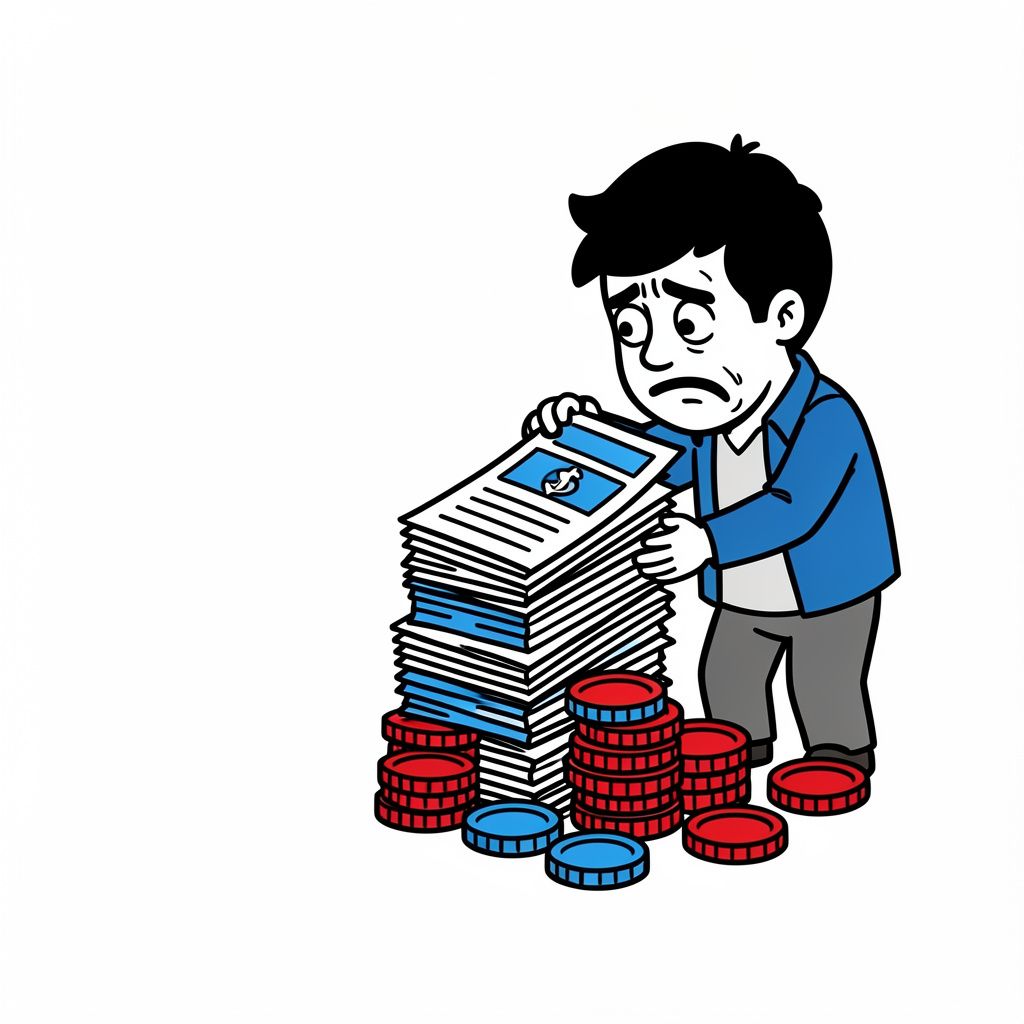
Federal complaint filings surged to 6.3 million by late 2026, yet the Consumer Financial Protection Bureau largely halted enforcement actions, triggering heightened regulatory and legal risks.
A Growing Chasm Between Complaints and Enforcement
By November 2026, the Consumer Financial Protection Bureau’s (CFPB) public complaint database had swelled to 6.3 million filings, a (6.3m - 2.7m)/2.7m*100 ≈ 133% increase from 2024’s 2.7 million complaints [1]. This surge occurred amid a dramatic pullback in enforcement actions under the Trump administration’s second term, which began on 20 January 2025 [1]. The disconnect has raised concerns among consumer advocates and lawmakers about the agency’s evolving priorities and their implications for financial accountability [1][4].
Regulatory Rollbacks and Their Consequences
Since January 2025, the CFPB has initiated only two public enforcement actions, a stark contrast to the nearly 400 launched between mid-2012 and early 2025, which secured over $21 billion in restitution and canceled debts [1]. The agency’s decision to drop lawsuits against major financial institutions—including JPMorgan Chase, Bank of America, and Berkshire Hathaway’s Clayton Homes and Vanderbilt Mortgage & Finance—was followed by a 75%+ increase in complaints against the defendants [1]. For example, complaints against Rocket Mortgage rose by more than 130% after the CFPB dropped a lawsuit involving Rocket Homes, while Branch Messenger Inc. saw a 315% surge following the dismissal of a case tied to Walmart’s $10 million in disputed banking fees [1].
Political and Operational Shifts Under Scrutiny
The CFPB’s shift under Trump’s second term has drawn criticism from Democrats, who accuse the agency of prioritizing corporate interests over consumer protection. Representative Bill Foster of Illinois has vowed to investigate the ‘unconstitutional dismantling of the CFPB’ in the next Congress [1]. Meanwhile, Acting Director Russell Vought has framed the agency’s actions as a correction of prior ‘overreach,’ citing a March 2025 report that labeled many dismissed enforcement actions as such [5]. Critics, however, argue the move has left consumers vulnerable, with Erie Meyer, a former CFPB chief technologist, stating, ‘People are getting screwed twice: first by the company, second by the agency that’s supposed to stick up for them’ [1].
Military Families Bear the Brunt of Diminished Oversight
Military families, already disproportionately targeted by financial scams, have been particularly hard hit by the CFPB’s reduced enforcement. Through October 2026, military families filed 86,430 complaints tagged as ‘servicemember,’ a projection of 103,772 for the full year—up from 103,325 in 2025 [5]. In the first half of 2026 alone, service members and dependents reported losing $370 million to fraud, with an annualized projection of $740 million [5]. The CFPB’s actions—or inaction—have drawn sharp rebukes, with Better Markets noting that the agency ‘failed military families’ by conducting fewer exams, halting compliance checks for the Military Lending Act, and settling cases by reducing relief for consumers [5].
New Rules Further Complicate Consumer Access to Justice
On 24 June 2026, the CFPB implemented rules requiring consumers to first dispute credit report inaccuracies with agencies like Equifax, Experian, and TransUnion—waiting up to 45 days—before filing complaints with the bureau [3]. Senators Andy Kim and Elizabeth Warren criticized the move, stating it ‘discourages consumers from seeking assistance from the agency’ and appears to reflect the ‘urging of credit reporting companies’ [3]. The rules, which include mandatory two-factor authentication for the CFPB’s complaint portal, have further alienated advocates who argue the changes prioritize procedural hurdles over consumer relief [3].
Corporate Responses and Legal Fallout
Financial institutions have largely defended their practices in the face of rising complaints. Vanderbilt Mortgage & Finance, for instance, dismissed a 39% increase in complaints—from 84 to 117—as ‘extraordinarily small’ given its loan volume of over 20,000 originations and 165,000 serviced loans annually [1]. Rocket Mortgage attributed its 131% complaint surge to business growth, stating that only 0.040% of its clients had filed complaints [1]. However, the legal and reputational risks for corporations may be mounting as Democrats prepare to scrutinize the CFPB’s enforcement rollbacks in the next Congress [1].
The Road Ahead: Accountability and Reform
With midterm elections in November 2026 delivering significant gains for Democrats [1], the political landscape suggests heightened scrutiny of the CFPB’s actions. Senators Kim and Warren’s overdue request for clarification on the agency’s new rules, due by 30 July 2026, remains unanswered [3]. Meanwhile, private lawsuits—such as one involving Vanderbilt and a borrower described as ‘handicapped and reads at only a kindergarten level’—are poised to test the legal fallout of the CFPB’s enforcement pullback [1]. As the agency navigates these challenges, the long-term consequences for consumer protection and corporate accountability remain uncertain [alert! ‘Pending congressional actions and court rulings may redefine the CFPB’s role in the coming year’].
Sources
- www.theguardian.com
- www.consumerfinance.gov
- financebuzz.com
- consumerfed.org
- bettermarkets.org
- www.americanbanker.com