The 2026 American Exodus: Why Record Emigration and Citizenship Renunciations Threaten the Domestic Economy
Washington, D.C., Wednesday, 20 May 2026.
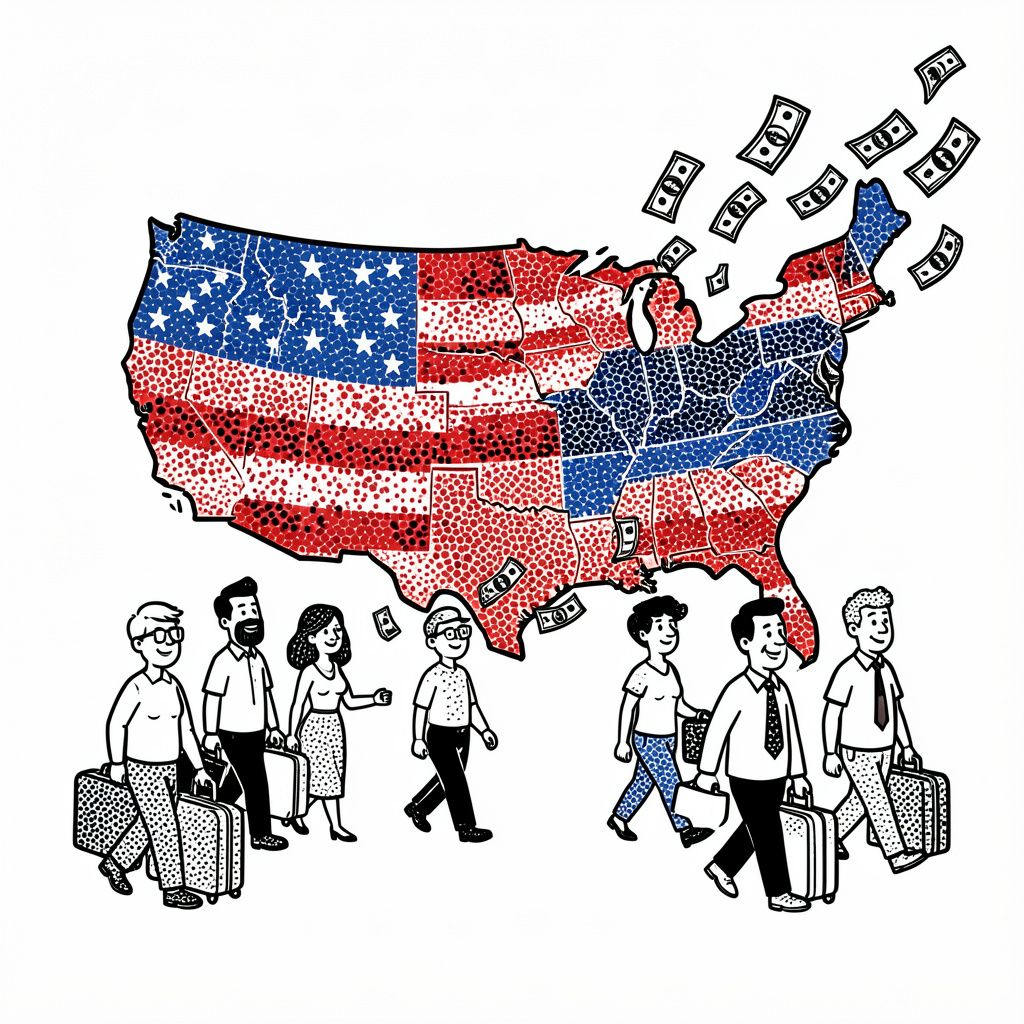
Driven by economic shifts, US citizenship renunciation demand eclipsed 30,000 following an April 2026 fee reduction. This historic wealth and talent exodus poses significant domestic economic risks.
Quantifying the Expatriate Surge
The United States is currently witnessing an unprecedented demographic shift that threatens to reshape its economic landscape. According to the Pew Research Center, an estimated 180,000 American citizens emigrated in 2025, marking the largest outbound migration in decades [1]. This exodus is not an isolated anomaly but the manifestation of a growing national sentiment. By November 2025, polling data from Gallup revealed that 20 percent of Americans—one in five—expressed a desire to relocate abroad permanently [1]. This sentiment is echoed across digital platforms; in May 2026, the advocacy group Gen-Z for Change noted that the United States is increasingly viewed as “less desirable for ordinary people,” coinciding with a broader decline in international visitors [2].
The Financial Mechanics of Renunciation
Beyond mere relocation, a record number of citizens are severing their legal and financial ties to the United States entirely. Historically, before 2009, citizenship renunciations were a statistical rarity, averaging between 200 and 400 individuals annually [1]. By 2025, that estimate approached 5,000 [1]. The financial barrier to this legal severance was significantly lowered in April 2026, when the federal government reduced the renunciation fee from $2,350 to $450—a -80.851 percent decrease [1]. Consequently, analysts now estimate that the global demand for renunciation appointments exceeds 30,000 [1].
Navigating European Pathways
As capital and talent flow outward, European nations have emerged as primary beneficiaries. As of 2023, countries such as Germany, Spain, France, Italy, the Netherlands, Switzerland, and Portugal held the highest number of residence permits issued to United States nationals [1]. Many Americans are securing their footing in these economies through “golden visa” investment programs or ancestry-based second passports, with Portugal being a particularly popular destination [1]. Acquiring a second passport allows individuals to maintain a foothold in the European market while navigating the complex tax implications of United States citizenship [GPT].
Structural Risks to the Domestic Economy
The accelerating pace of emigration in 2026 presents a structural risk to the United States economy. When skilled professionals and affluent citizens relocate, they take their taxable income, entrepreneurial capital, and consumer purchasing power with them [GPT]. While the exact long-term macroeconomic damage remains difficult to quantify [alert! ‘The long-term economic impact of the 2026 emigration wave lacks definitive predictive data in the provided reports’], the immediate indicators are clear. The combination of a reduced renunciation fee, tightening overseas citizenship laws prompting rushed applications, and widespread domestic economic dissatisfaction has created a perfect storm. For business leaders and federal policymakers, reversing this talent and wealth drain will require addressing the core cost-of-living and quality-of-life issues driving Americans away [GPT].