Aviation Safety Alert: Why the Next Generation of Airline Pilots is Losing Manual Flying Skills
Washington, Tuesday, 17 March 2026.
Analyzing 150,000 safety records reveals a growing aviation crisis: modern cockpit automation is eroding the fundamental manual flying skills of new commercial pilots, creating significant operational risks.
The Automation Paradox in Modern Cockpits
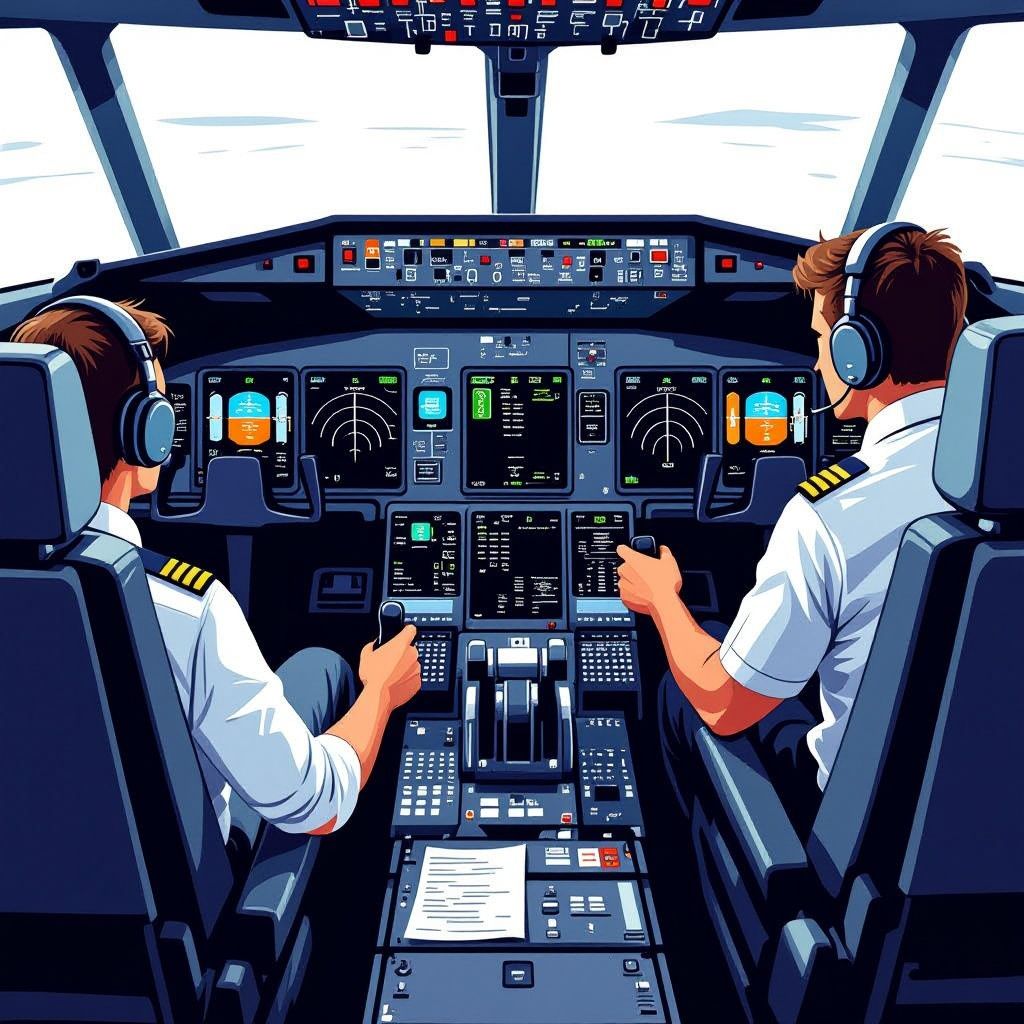
In 2023, the general aviation fatal accident rate dropped to a historic low of 0.65 per 100,000 flight hours [1]. However, this safety milestone masks a growing operational liability for the industry. According to a March 17, 2026 report analyzing 150,000 federal safety records, newer commercial pilots—often referred to as the “Children of the Magenta Line”—are losing fundamental manual flying skills [1]. This dependency stems from modern cockpit technology that, while designed to enhance safety and reduce pilot workload, has inadvertently created aviators who struggle to maintain control when automated systems fail [1].
Balancing Artificial Intelligence with Human Leadership
Despite these manual proficiency warnings, the aviation market continues to aggressively integrate advanced technologies. On March 16, 2026, Axiom Aviation released a report detailing how artificial intelligence is reshaping private aviation by optimizing flight planning and reducing pilot workload through AI-powered avionics [2]. While these tools can forecast mechanical issues and lower maintenance costs, they also accelerate the industry’s reliance on digital autonomy [2]. David Fairman, Chief Information Officer and Chief Security Officer for APAC at Netskope, warns that if AI systems malfunction, the failure could happen rapidly and at a massive scale [3]. He advocates that while keeping a “human in the loop” might not always be practical in split-second scenarios, humans must remain “at the helm” to provide moral judgment and contingency planning [3]. Fairman is scheduled to further discuss these technological risks at the upcoming World Data Symposium in Singapore from April 8 to 9, 2026 [3].
Expanding Airspace Complexity and New Markets
The urgency to address pilot training is compounding as the airspace becomes increasingly crowded with new, highly automated aircraft. The global drone market is projected to reach $58 billion by 2026 [alert! ‘This valuation is a projection and may fluctuate based on emerging FAA regulatory developments’], with over 1.5 million drones already registered in the United States alone as of late February 2026 [4]. This influx introduces significant safety hazards, as the Federal Aviation Administration (FAA) currently receives over 100 reports each month detailing near misses between drones and manned aircraft [4]. Commercial drone operators, who can earn between $75,000 and $150,000 annually, rely heavily on autonomous features like AI-powered hazard detection and obstacle avoidance, further normalizing flight without manual intervention [4].