Why Abandoned Homes Are Disappearing Across the United States
Irvine, Thursday, 29 October 2026.
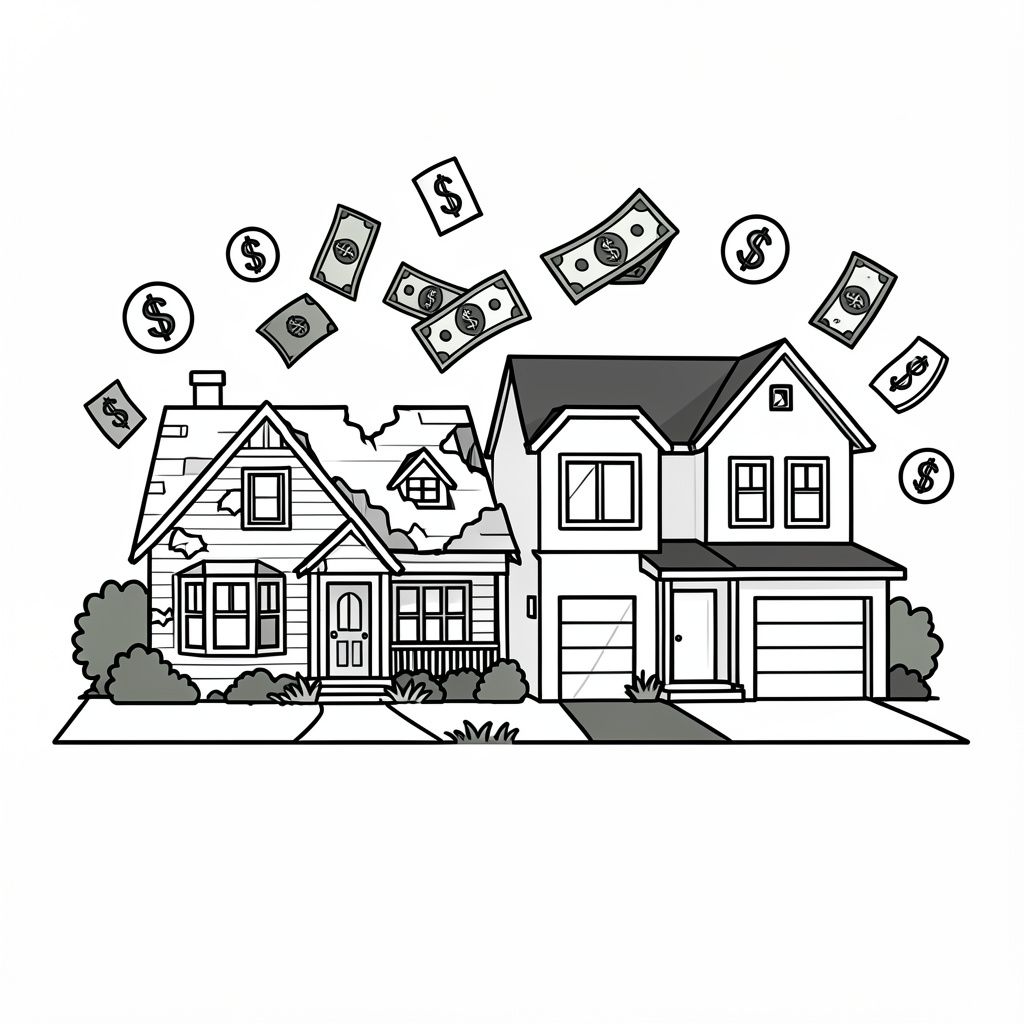
Despite a four-million-home national shortage, abandoned foreclosures dropped to just 3% late this year. Strong buyer demand is compelling lenders to rapidly absorb distressed properties rather than leave them empty.
A Market Under Strain: The Paradox of Rising Demand and Falling Abandonment
The U.S. housing market remains locked in a structural paradox in late 2026: despite a national shortage of approximately 4 million homes [1][2][3], the share of abandoned foreclosures—so-called ‘zombie properties’—has fallen to just 3%, according to the most recent analysis by ATTOM [1][2][3]. This phenomenon reflects a broader shift in how distressed properties are being handled across the country. Lenders, buoyed by strong buyer demand, are increasingly prioritizing the rapid absorption of foreclosed homes rather than allowing them to sit vacant. The result is a modest but meaningful decline in residential vacancies, which dropped to 1.2% in the fourth quarter of 2026, down from 1.3% in both the third quarter of 2026 and the fourth quarter of 2025 -7.692 = -7.7% [1][2][3]. This rate remains historically low, underscoring the persistent structural imbalance between supply and demand. As Rob Barber, CEO of ATTOM, noted in the company’s October 2026 report, “While trends vary from state to state, vacant and abandoned homes continue to represent a relatively small share of the nation’s housing stock” [1][2][3].
Regional Dynamics: Where Zombie Foreclosures Are Rising and Falling
While the national trend is one of decline, the landscape is far from uniform. A closer examination reveals sharp regional disparities. Wisconsin saw the largest quarter-over-quarter increase in zombie properties, rising 20.9% to 52 homes, followed by Maryland (up 19.2% to 180) and Pennsylvania (up 17.2% to 252) [1][2][3]. Conversely, states like Arizona experienced a dramatic 34.9% reduction in zombie foreclosures, falling to 56 properties, while Florida (-19.6%) and California (-10.4%) also saw significant declines [1][2][3]. These variations often correlate with local economic conditions, including job growth, population shifts, and the pace of new construction. Metropolitan areas such as Baltimore, MD, and Youngstown, OH, continued to post the highest zombie foreclosure rates in the fourth quarter, at 13% each, signaling ongoing distress in legacy industrial markets [2][3]. Meanwhile, metro areas such as Bridgeport, CT, El Paso, TX, and Little Rock, AR, reported zero zombie properties, reflecting healthier housing dynamics in those regions [3].
Institutional Investors and the Vacancy Gap
The role of institutional investors in the housing market has become increasingly visible, particularly in the context of vacancy rates. While the national home vacancy rate stands at 1.2%, properties held by institutional investors show a vacancy rate more than double that, at 2.7%—equivalent to over 840,000 vacant homes out of 30.6 million investor-owned properties [1][4]. This discrepancy highlights the operational challenges faced by large-scale landlords, who may struggle with property management efficiency or tenant placement in certain markets. The highest investor-owned vacancy rates were reported in Indiana (6.5%), Alabama (5.8%), and Oklahoma (5.4%) [3], regions where housing demand may be insufficient to absorb available stock. In contrast, states like New Hampshire (0.6%) and Connecticut (0.4%) reported the lowest investor-owned vacancy rates, reflecting tighter local housing conditions [3]. Such patterns underscore how institutional behavior can either exacerbate or mitigate broader housing shortages, depending on local market dynamics.
Implications for Buyers, Sellers, and Policymakers
For prospective buyers, the decline in zombie foreclosures presents both opportunities and challenges. While fewer abandoned properties are entering the market, the persistent shortage of 4 million homes means competition remains fierce, particularly for affordable entry-level housing [1][2][3]. Real estate investor Jesse Wyatt cautioned that “there is a big difference between seeing potential and rushing into a mess,” emphasizing the importance of due diligence when evaluating distressed properties [1]. For lenders, the trend reflects improved operational efficiency in managing distressed assets, reducing the risk of blight in neighborhoods affected by foreclosure. However, the underlying shortage of housing supply continues to drive up prices and delay homeownership for millions of Americans. The median age of first-time homebuyers rose to 40 in 2025, up from 33 in 2020, a shift attributed in part to affordability constraints and tighter lending conditions [1][2]. As ATTOM’s Barber summarized, “The fourth-quarter data showed modest declines in both vacancy and zombie foreclosure rates nationwide,” but he emphasized that these improvements are relative to a market still grappling with decades of underbuilding [1][2][3]. For policymakers, the data suggests that targeted interventions—such as incentives for rapid property rehabilitation or support for small-scale landlords—could further reduce abandonment while addressing the structural supply deficit. Without such measures, the housing market’s tightness is likely to persist, keeping pressure on prices and affordability for years to come.