US Treasury Signals Tariff Relief for India as Russian Oil Imports Collapse
Washington D.C., Sunday, 25 January 2026.
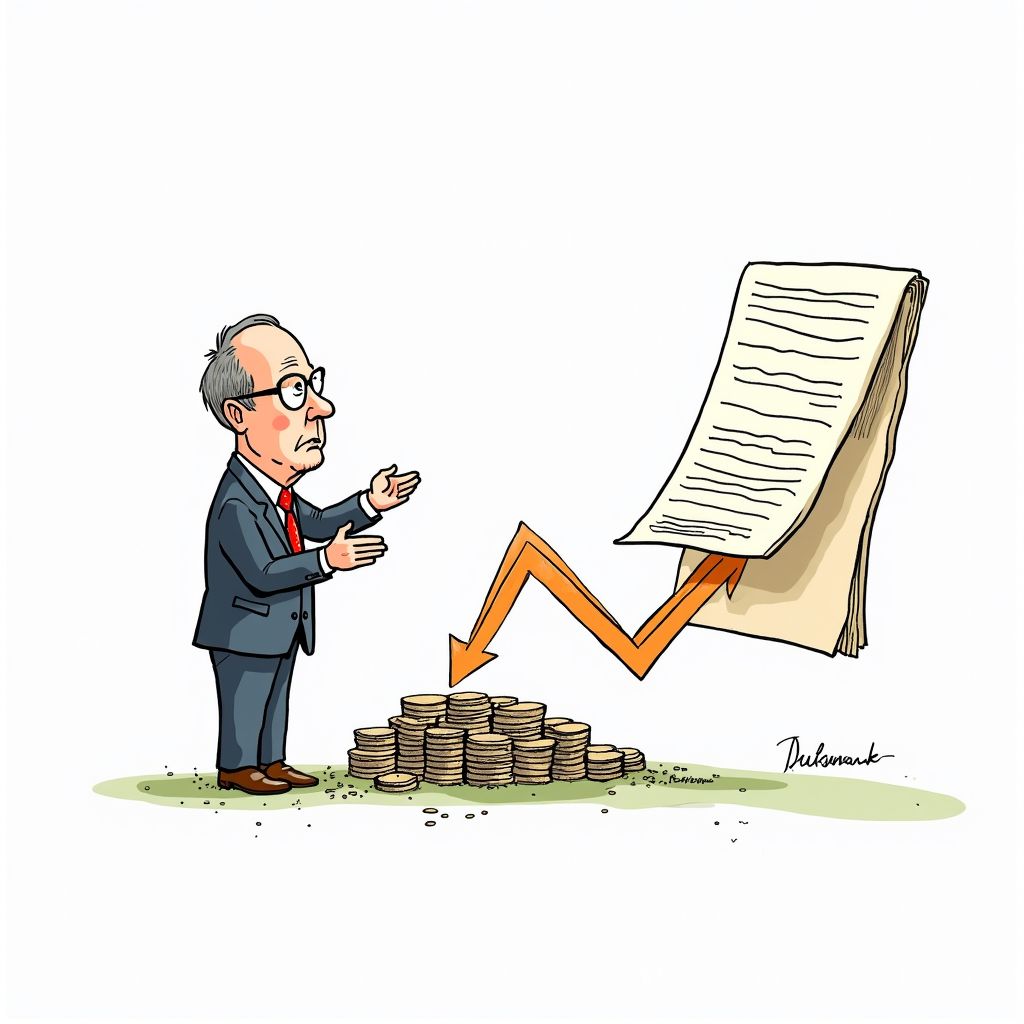
Treasury Secretary Scott Bessent has signaled a potential rollback of the 25% tariff on India, declaring the policy a “huge success” after Indian refineries drastically reduced Russian oil imports. Highlighting a divergence in Western strategy, Bessent contrasted this US leverage against European allies, whom he accused of “irony and stupidity” for avoiding tariffs to safeguard a pending trade deal with New Delhi.
Sanctions as a Lever: The Mechanics of Compliance
Speaking at the World Economic Forum in Davos on Friday, January 23, 2026, U.S. Treasury Secretary Scott Bessent characterized the current trade restrictions as a strategic victory, noting that Indian refinery purchases of Russian oil have effectively “collapsed” [1][2]. While the 25% tariff specifically targeting Russian oil imports remains in force, Bessent explicitly stated that he imagines “there is a path to take them off,” marking the first clear signal of de-escalation since tensions peaked last year [1]. The economic pressure stems from a decisive move in August 2025, when President Donald Trump escalated trade tensions by doubling tariffs on Indian goods to 50%, a policy package that included the specific 25% levy aimed at curbing India’s energy ties with Moscow [1][4]. The effectiveness of this hard-power approach is evident in recent trade data; India’s imports of Russian oil dropped to their lowest level in two years in December 2025, forcing a pivot back to traditional suppliers and lifting OPEC’s share of Indian imports to an 11-month high [1].
Quantifying the Pivot
The volatility in India’s energy sourcing underscores the scale of the geopolitical disruption caused by the conflict in Ukraine. Prior to the invasion, Russian crude accounted for a marginal 2.5% average (approximately 2-3%) of India’s oil imports [2][4]. Following the imposition of Western sanctions, which allowed New Delhi to access discounted crude, this figure surged dramatically, with Russian oil capturing between 17% and 19% of the Indian market [2][4]. This shift represented a massive increase in volume—roughly a 9 -fold rise at its peak—before the recent U.S. tariff intervention forced a reversal. Despite the reduction, New Delhi has consistently defended its energy policy, describing the U.S. tariff actions as “unfair, unjustified and unreasonable” while prioritizing energy security for its 1.4 billion citizens under an “India First” policy [2][3].
Transatlantic Divergence: The EU’s Soft Power Gamble
Secretary Bessent’s comments also highlighted a sharp strategic rift between Washington and Brussels regarding the handling of the Indian economy. Bessent criticized European allies for refusing to impose similar tariffs, accusing them of “virtue signalling” while simultaneously purchasing refined Russian oil products from Indian refineries—a dynamic he termed an “act of irony and stupidity” that amounts to financing the war against themselves [2][4]. According to the Treasury Secretary, the European Union avoided hardline economic measures to protect negotiations for the India-EU Free Trade Agreement, a pact European Commission President Ursula von der Leyen has described as the “mother of all deals” [4].