Why Soaring AI Hardware Demand Is Squeezing Server Makers' Profits
Round Rock, Tuesday, 24 November 2026.
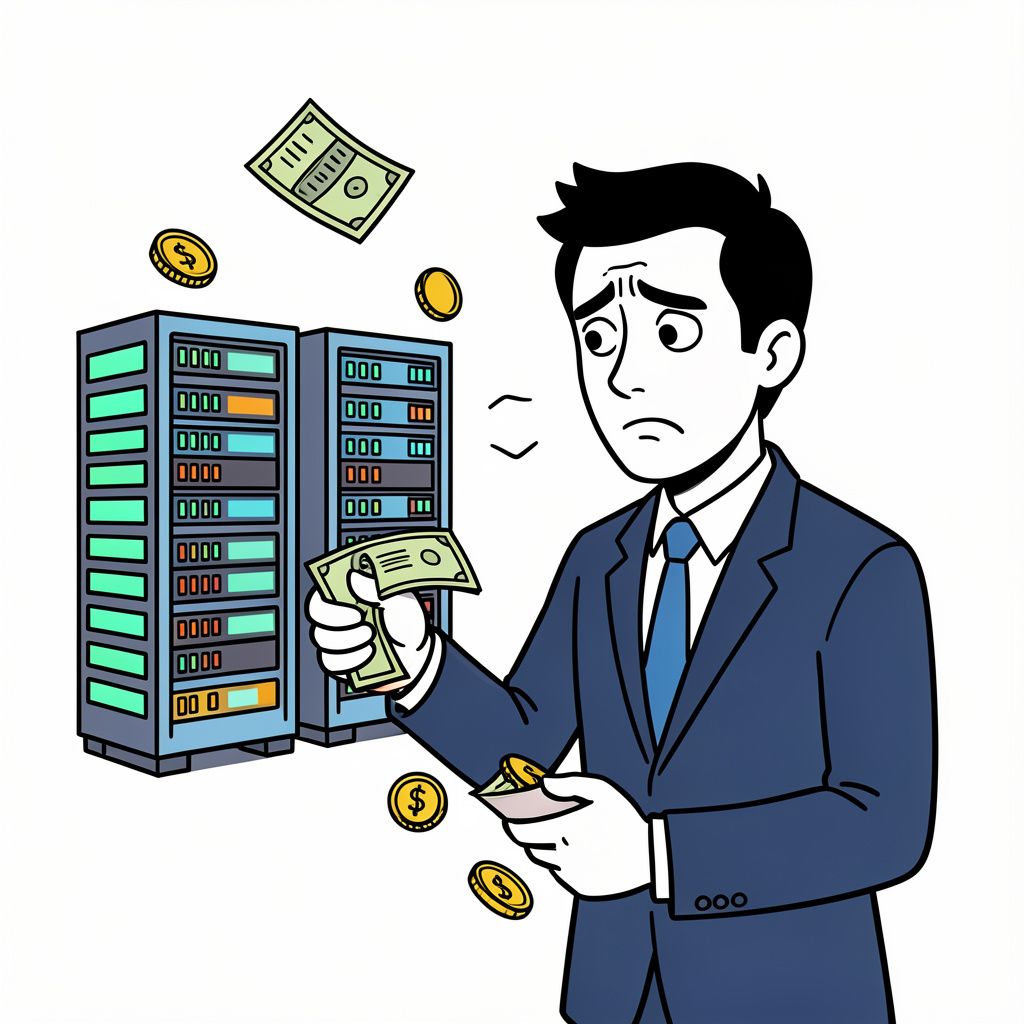
Despite Dell’s massive $95 billion backlog, mounting component costs and severe margin compression triggered sharp stock sell-offs for major computer infrastructure providers.
Record AI Backlogs Mask Margin Pressures
Dell Technologies (NYSE: DELL) entered Tuesday’s earnings call with a record $95 billion AI server backlog, a figure that underscores the explosive demand for compute infrastructure driving the artificial intelligence boom.[1][3][6] The company’s second-quarter results, reported in September 2026, showed AI server orders of $60.9 billion and a revised full-year AI server revenue forecast of $74 billion, up from $60 billion.[1][3] Yet despite these headline numbers, market sentiment has turned sharply negative. Dell’s stock fell nearly 11% on November 24, 2026, while Hewlett Packard Enterprise (NYSE: HPE) declined approximately 16%, reflecting investor concern over profitability in an environment of soaring demand.[1][5][6]
Component Cost Inflation Undermines Revenue Gains
The core contradiction facing server manufacturers lies in the dual dynamics of surging AI infrastructure demand and eroding profit margins. Dell’s Infrastructure Solutions Group reported operating margins of about 15.0% in its second quarter, down from 8.8% in the same period a year earlier, even as revenue surged by 69% year-over-year to $47.0 billion.[1][5][6] HPE, meanwhile, reported a non-GAAP operating margin of 16.2% in its third quarter, up from 8.5% in the prior year, but warned of sustained margin deterioration in its AI server segment due to escalating component costs, particularly memory chips.[1][3][5] These cost pressures are being exacerbated by supply chain bottlenecks, with critical component lead times stretching from 28 to over 40 weeks, further constraining production flexibility and squeezing margins.[5]
Pricing Power Erodes Amid Competitive Pressures
Server manufacturers have attempted to offset rising costs by raising prices on signed contracts, with some agreements reflecting increases of up to 45%.[6] However, this pricing power is uneven and increasingly fragile. Analysts at Morgan Stanley have noted that hyperscaler capital expenditures are projected to rise over 70% in 2027, exceeding $1.6 trillion, which suggests continued investment in AI infrastructure.[1] Yet, the competitive landscape is intensifying, as rival chipmakers like Advanced Micro Devices (NASDAQ: AMD) ramp up their AI server offerings, further pressuring pricing and margins for established players like Dell and HPE.[3] AMD’s revenue grew 74.7% from $7.7 billion in Q4 2024 to $13.4 billion in Q3 2026, reflecting its rapid ascent in the AI hardware market.[3]
Market Sentiment Reflects Broader AI Stock Rout
The sell-off in Dell and HPE shares is part of a broader correction in AI-related equities, which saw the S&P 500 drop 3.7% to 6,910.39 on November 20, 2026, alongside declines in the Nasdaq Composite and Dow Jones Industrial Average.[7] Nvidia, a bellwether for AI infrastructure, shed over $2.5 trillion in market value from its October 6, 2026 peak, amplifying concerns about the sustainability of AI-driven growth.[7] Technical indicators for Dell, including a MACD sell signal and neutral RSI, further underscored the bearish sentiment, with analysts at Evercore ISI and Morgan Stanley downgrading their price targets to $400 and $403, respectively, citing skepticism over cash conversion rates and enterprise AI hardware expenditure.[5]
Sources
- ceoeconomy.com
- www.tradingkey.com
- www.fool.com
- www.instagram.com
- www.tradingkey.com
- pomegra.io
- www.facebook.com