Inside China's Economic Strategy: Funding Tech Dominance at the Consumer's Expense
Beijing, Monday, 1 June 2026.
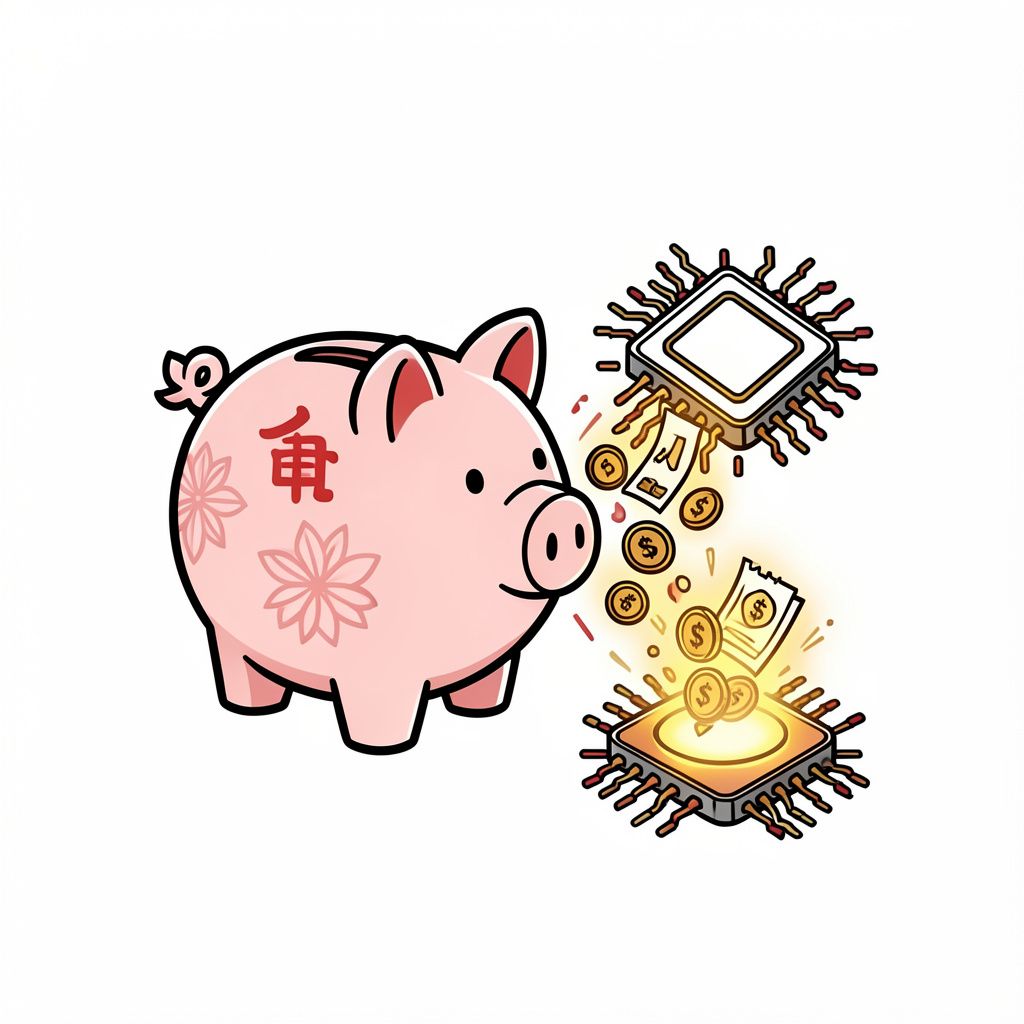
China deliberately suppresses domestic consumption, capturing 44% of GDP in household savings to fund state-backed tech dominance, setting the stage for a looming global trade war in 2026.
The Anatomy of a Diverging Economy
Recent economic data from May 2026 lays bare the stark reality of China’s economic bifurcation [2]. The official National Bureau of Statistics (NBS) Purchasing Managers’ Index (PMI) flatlined at exactly 50.0 points, while the private-sector S&P/RatingDog PMI climbed to 51.8 points [2]. This divergence is not a temporary glitch but a deliberate structural design engineered to win strategic competition against the United States and establish global hegemony [1]. By utilizing a closed capital account and a state-dominated financial system, Beijing captures cheap domestic savings to fund state-directed investments in high-end manufacturing [1]. Consequently, Chinese household savings sit at approximately 44 percent of the gross domestic product (GDP)—the highest rate globally [1]. This financial repression is compounded by underdeveloped social safety nets, which force citizens into high precautionary savings; a policy stance intentionally maintained by President Xi Jinping due to his explicit skepticism of “welfarism” [1].
High-Tech Triumphs and Domestic Involution
On the global stage, China’s supply-side strategy has yielded formidable results. The nation now commands approximately 18 percent of global manufacturing exports and accounts for 90 percent of global solar panel capital expenditures [1]. Chinese firms have secured global leadership in electric vehicles, with BYD overtaking Tesla, and dominate battery production through companies like CATL [1]. Furthermore, despite restrictive United States chip embargoes, Chinese artificial intelligence development remains robust, evidenced by DeepSeek’s rapid commercialization and a 54 percent year-over-year surge in integrated circuit imports in March 2026 [1]. Looking ahead, the 15th Five-Year Plan for 2026 to 2030 prioritizes “new quality productive forces,” putting national AI investment on a trajectory to exceed $100 billion annually by the end of 2026 [1].
Constrained Policies and the Real Estate Anchor
Traditional macroeconomic remedies remain largely out of reach for Beijing. The People’s Bank of China (PBoC) is severely constrained; aggressive monetary easing is off the table as it would widen the interest rate differential with the United States and risk accelerating capital outflows [1]. Fiscal policy is similarly paralyzed. While the official budget deficit reached a record high of 4 percent of GDP in 2025, these funds were predominantly diverted to restructure mounting local government debt rather than stimulate consumer spending [1]. Furthermore, the foundational wealth of the Chinese consumer has been deeply eroded by the ongoing real estate crisis [1]. Since the default of Evergrande in late 2021, the collapse of the property market—a sector that traditionally houses 60 to 70 percent of Chinese household assets—has generated a massive negative wealth effect, severely dampening retail consumption [1].
Looming Deadlines and Global Trade Frictions
The immediate horizon presents critical challenges for Chinese export markets. The recent surge in export-oriented orders, which pushed the private PMI near a five-year high in May 2026, is largely attributed to the artificial front-loading of shipments [2]. Importers are rushing to beat major impending trade policy deadlines [2]. Specifically, the European Union is scheduled to abolish the duty-free status for small consignments under €150 on July 1, 2026, while the potential expiration of the US-China tariff truce looms in November 2026 [2]. Transport costs are simultaneously rising, driven not by organic economic growth, but by logistical bottlenecks as shipping companies redirect capacity to European routes, leaving intra-Asian freight space scarce [2].