Trump Reads Rubio’s Private Note Aloud During High-Level Oil Executive Summit
Washington D.C., Saturday, 10 January 2026.
During a televised White House meeting, President Trump broke protocol by reading Secretary Rubio’s private note aloud, revealing a specific strategic instruction to prioritize discussions with Chevron.
Unscripted Diplomacy in the Oval Office
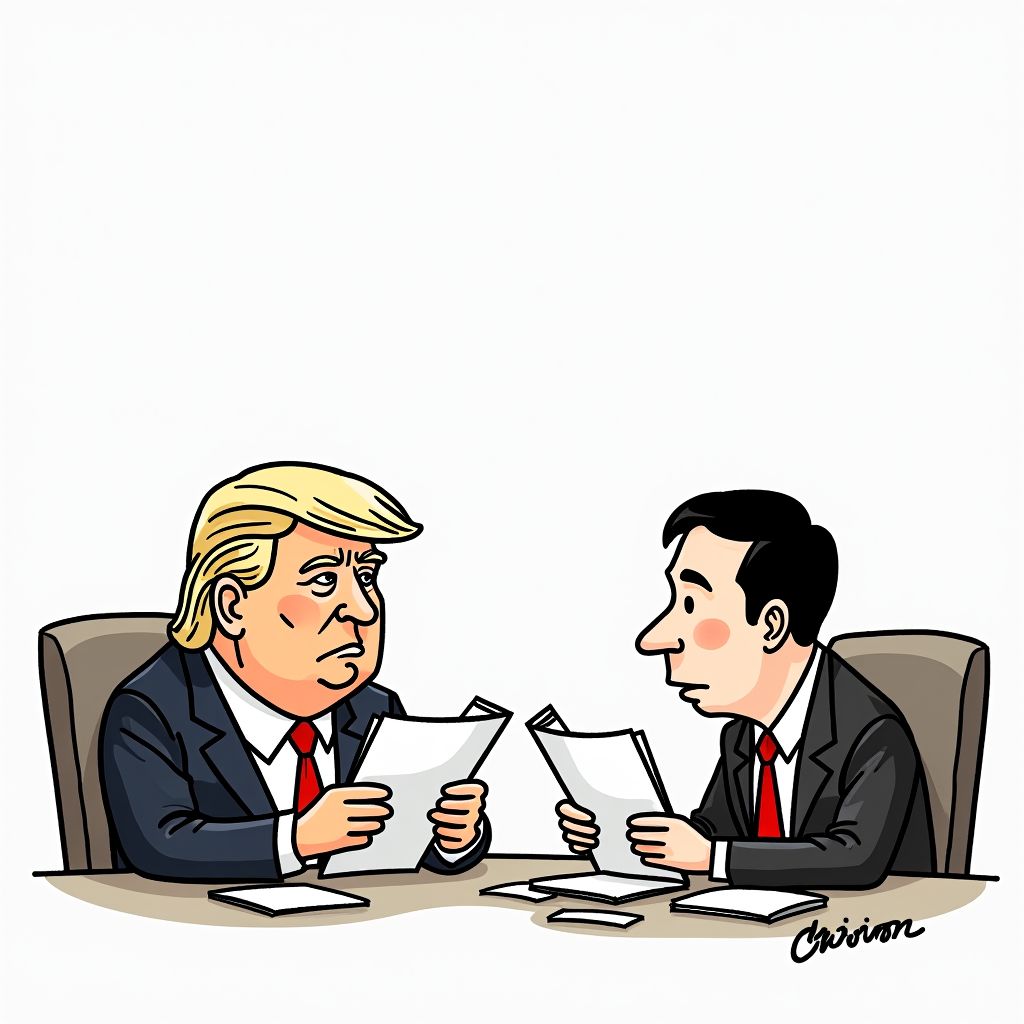
On Friday, January 9, 2026, President Donald Trump convened a high-profile televised meeting with executives from 17 leading oil and gas companies to discuss the administration’s energy strategy, specifically focusing on the revitalization of Venezuela’s petroleum sector [2][3]. The summit, intended to reassure industry leaders regarding security and investment returns following the U.S. military’s capture of Venezuela’s former president, took an unexpected turn when Secretary of State Marco Rubio attempted to discreetly guide the conversation [2][6]. While President Trump was engaged in a discussion with Ryan Lance, the CEO of ConocoPhillips, regarding financial recovery from previous losses in the region, Rubio slid a handwritten note across the Resolute Desk [1][6]. Rather than reading it privately, the President halted the proceedings to announce, “Marco just gave me a note,” before reading the confidential guidance aloud to the assembled press and executives: “Go back to Chevron. They want to discuss something. Go back to Chevron” [1][6].
Executive Reactions and Immediate Fallout
The immediate reaction within the room highlighted the awkward nature of the disclosure. Vice President J.D. Vance, seated beside the President, appeared visibly amused and laughed at the breach of protocol, while Secretary Rubio appeared uncomfortable as the President patted him on the back, saying, “Thank you, Marco” [1][6]. The disclosure seemed to confuse the room momentarily; Chevron CEO Mark Nelson was reportedly unsure if a question had been posed to him directly [6]. Energy Secretary Chris Wright intervened to stabilize the dialogue, formally inviting Nelson to provide an operational update on what Chevron could achieve on the ground in Venezuela over the next 12 to 18 months [3][6]. This intervention steered the meeting back toward the administration’s technical objectives: securing the extraction of vast energy reserves from a nation previously controlled by a regime the administration described as a security threat [6].
Strategic Focus on Venezuelan Reserves
The specific emphasis on Chevron outlined in Rubio’s note underscores the company’s unique position in the administration’s foreign energy policy. Among the 17 corporations present, Chevron is the only entity with current, active involvement in Venezuela [2]. The Trump administration is actively courting these major players, including ExxonMobil and Shell, to revive the South American nation’s oil infrastructure, promising that the United States government would guarantee security for companies aiding this effort [2][6]. During the meeting, President Trump assured the executives that they would recoup investments lost under previous administrations, stating, “You’ll make it back, one way or the other” [6]. Rubio had earlier framed this economic push as a matter of national security, noting that the previous regime had utilized the country’s wealth to fund repressive activities and cooperate with adversaries [6].
A Recurring Pattern of Disclosure
This incident marks a recurring dynamic in the President’s handling of sensitive internal communications. A similar event occurred on October 8, 2025, when Secretary Rubio passed a note to President Trump during a meeting with conservative influencers [3]. That correspondence, which urged the President to approve a social media statement regarding a peace agreement between Israel and Hamas, was also made public by the President, who told the room he had received a note indicating they were “very close to a deal on the Middle East” [1][3]. These repeated public readings of private counsel suggest a management style that prioritizes transparency and performative governance over traditional diplomatic discretion, a trait that continues to define the administration’s interactions with both domestic stakeholders and international partners.
Sources
- www.ndtv.com
- www.the-independent.com
- people.com
- www.youtube.com
- www.youtube.com
- www.yahoo.com
- www.youtube.com
- www.facebook.com