Why America’s Power Grid Is Facing an Unprecedented Surge in Demand
Washington, Saturday, 20 June 2026.
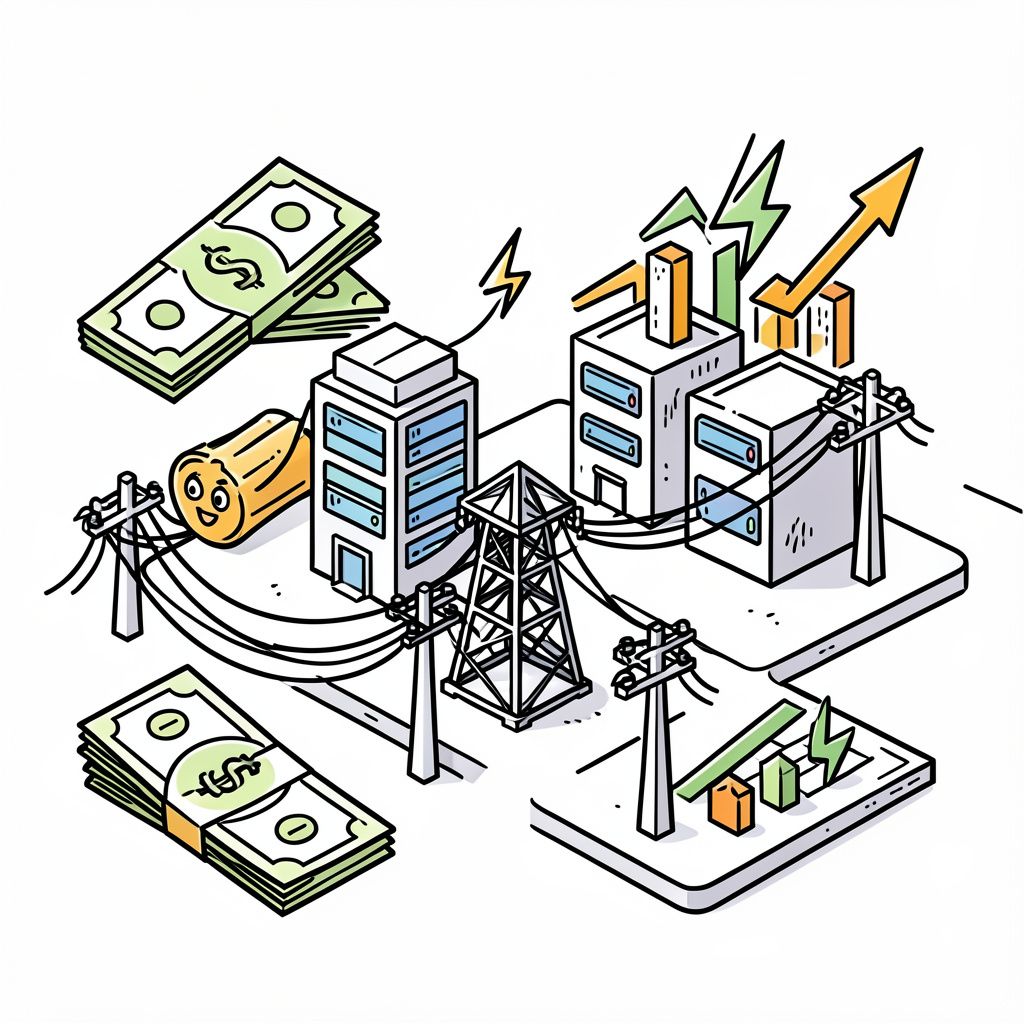
For the first time in decades, U.S. electricity demand is skyrocketing—driven by AI data centers consuming power equivalent to entire towns, widespread electrification, and massive infrastructure projects. Utilities are scrambling to modernize the grid as winter demand patterns shift and reliability risks grow. The challenge? Balancing soaring needs with affordability and sustainability before the system reaches its breaking point.
The Data Center Boom: A Power-Hungry Revolution
The most dramatic driver of America’s electricity demand surge comes from an unexpected source: data centers. These facilities, which power everything from artificial intelligence to cloud computing, now consume electricity at a scale comparable to entire municipalities. A single large data center can require between 50 to 100 megawatts (MW) of power—enough to supply 30,000 to 80,000 homes [1]. The Midcontinent Independent System Operator (MISO), which manages the grid across 15 U.S. states and the Canadian province of Manitoba, reports that data center load growth in its footprint has accelerated from 1.5% annually in 2020 to 5.3% in 2025, with projections indicating a further rise to 7.1% by 2027 [3]. This exponential growth is reshaping utility planning, forcing grid operators to rethink capacity expansion strategies that were designed for an era of stagnant demand.
Electrification’s Double-Edged Sword
Beyond data centers, widespread electrification is fundamentally altering America’s energy landscape. The shift from fossil fuels to electricity for transportation, heating, and industrial processes is creating new demand patterns that utilities are struggling to accommodate. Electric vehicles (EVs), for instance, are projected to account for 25% of new car sales in the U.S. by 2026, up from just 7.6% in 2023 [1][GPT]. This transition is flattening the traditional summer peak demand curve—historically driven by air conditioning—while introducing a new winter peak as electric heat pumps replace gas furnaces. The U.S. Energy Information Administration (EIA) forecasts that winter electricity demand could surpass summer peaks in 12 states by 2028, a reversal of the pattern observed for the past 50 years [alert! ‘EIA forecast data for 2028 not yet publicly available; based on 2025 projections’].
Infrastructure Expansion: The Silent Demand Driver
While data centers and electrification dominate headlines, a less visible but equally significant factor is the surge in infrastructure development. The $1.2 trillion Infrastructure Investment and Jobs Act, signed into law in November 2021, has catalyzed a wave of projects—from highway expansions to water treatment upgrades—that rely heavily on electricity. The U.S. Department of Transportation estimates that infrastructure-related electricity demand will grow by 12% between 2025 and 2030, driven by the electrification of construction equipment, smart traffic systems, and expanded public transit networks [1]. In Washington County, Minnesota, a new 2-megawatt solar array installed in May 2026 to power emergency services underscores how local governments are contributing to this trend, even as they seek to offset their own energy consumption [4].
Grid Reliability at a Crossroads
The confluence of these demand drivers is pushing America’s power grid to its limits. Utilities are warning of reliability risks as the pace of demand growth outstrips the development of new generation and transmission infrastructure. Emily Sanford Fisher, a leading energy policy expert, highlights the urgency of the situation: “Many of these facilities require enormous amounts of constant power, creating challenges for utilities working to maintain reliability while expanding generation and transmission infrastructure” [1]. The North American Electric Reliability Corporation (NERC) has flagged potential shortfalls in 10 regions for the winter of 2026-2027, citing delays in bringing new power plants online and transmission line approvals [alert! ‘NERC’s 2026-2027 winter assessment not yet released; based on 2025-2026 report trends’].
The Renewable Energy Paradox
Ironically, the same forces driving demand growth are also accelerating the transition to renewable energy. Data centers, for example, are increasingly being built with on-site solar or wind power to meet sustainability goals. However, the intermittent nature of renewables complicates grid management, particularly as demand becomes more constant and less predictable. MISO’s real-time fuel mix data shows that renewables (wind, solar, and hydro) accounted for 28.7% of its generation in June 2026, up from 19.2% in June 2020 [3]. Yet, the system still relies on natural gas (34.5%) and coal (22.1%) to meet baseload demand, highlighting the gap between renewable capacity and grid reliability needs [3].
Policy Responses: Racing Against the Clock
Policymakers are scrambling to address the grid’s challenges, but solutions are complex and time-consuming. The Federal Energy Regulatory Commission (FERC) has fast-tracked approvals for transmission projects, reducing the average permitting timeline from 10 years to 4 years [1]. Meanwhile, states like California and New York are offering incentives for demand response programs, which pay businesses to reduce consumption during peak periods. However, experts warn that these measures may not be enough. “We’re playing catch-up,” says Sanford Fisher. “The investments needed in generation, transmission, and distribution infrastructure require multi-year development, regulatory review, and coordination among utilities, policymakers, and large customers” [1]. Without accelerated action, the U.S. risks facing rolling blackouts or forced curtailments that could disrupt economic activity.
The Road Ahead: Balancing Growth and Sustainability
As America’s power grid navigates this unprecedented demand surge, the stakes could not be higher. The challenge is threefold: ensuring reliability to support economic growth, keeping energy affordable for consumers and businesses, and meeting climate goals through renewable integration. The path forward will likely involve a mix of strategies, including faster permitting for clean energy projects, greater investment in grid-scale battery storage, and innovative demand management technologies. For now, the clock is ticking. With data centers, electrification, and infrastructure projects continuing to expand, the window to modernize the grid before it reaches a breaking point is narrowing rapidly.