Federal Court Blocks White House Attempt to Restrict Mail-In Ballots
Oakland, Sunday, 26 July 2026.
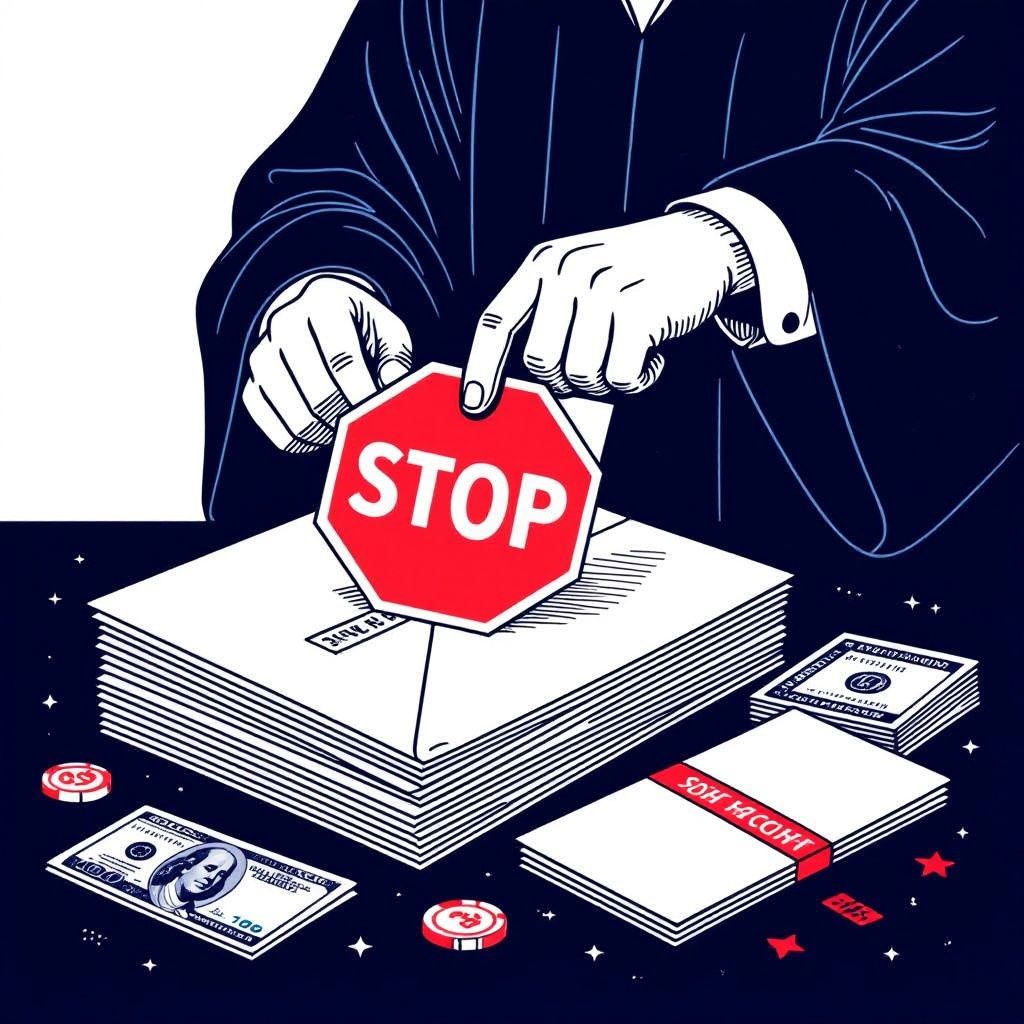
An appeals court has blocked President Trump’s executive order, halting federal attempts to restrict mail-in ballots and establish shadow voter lists for the upcoming midterm elections.
A Decisive Appellate Ruling on Executive Authority
On July 25, 2026, the U.S. Court of Appeals for the First Circuit delivered a major setback to the Trump administration by unanimously denying a request by the U.S. Department of Justice to stay a district court injunction against Executive Order No. 14399 [1]. This executive order, representing a key implemented policy of Republican President Donald Trump, sought to restrict the U.S. Postal Service from delivering mail-in ballots to any individuals not on federally “enrolled” lists [1]. Additionally, the order had directed the Department of Homeland Security (DHS) to compile state voter eligibility databases and authorized federal prosecution of local election officials for distributing ballots [1]. The appellate court’s decision ensures these controversial provisions remain blocked as the nation prepares for the upcoming 2026 midterm elections [1].
A Decisive Appellate Ruling on Executive Authority
The successful legal challenge was co-led by California Attorney General Rob Bonta, a Democrat, alongside Pennsylvania Governor Josh Shapiro and a coalition of 23 other state attorneys general [1]. Originally filed in April 2026, the lawsuit argued that the federal government was unconstitutionally encroaching on state police powers and sovereign administrative choices [1][4]. Following the appellate court’s decision, Bonta emphasized that the Trump administration does not possess the constitutional authority to dictate how individual states administer their elections, framing the victory as a critical defense of the rule of law and voter access [1].
The Funding Battleground: Emergency Grants and Election Mandates
This appellate victory is part of a broader, multi-front legal battle between Democratic state leaders and the Republican administration over federal overreach. Just days prior, on July 23, 2026, California Attorney General Bonta, leading a coalition of 27 plaintiffs including Illinois, New Jersey, and New York, filed a separate lawsuit (Case No. 1:26-cv-00485) in the U.S. District Court for the District of Rhode Island [4]. This action targets DHS Secretary Markwayne Mullin and FEMA Senior Official Robert J. Fenton, challenging new contract terms that condition essential public safety and emergency preparedness grants on states adopting the administration’s preferred election and immigration policies [4].
The Funding Battleground: Emergency Grants and Election Mandates
Under the disputed FY 2026 Homeland Security Grant Program (HSGP) terms, the federal government has mandated that states verify voter citizenship using federal databases, transition to hand-marked paper ballots, and conduct post-election audits [2][3][4]. Non-compliance risks a withholding of at least 20% of the $740 million in national HSGP allocations, representing a threatened penalty of 148 million ($148 million) across the states [4]. For California, which receives $150 million annually in HSGP funding to support first responders and counterterrorism efforts [2][3], the administration has threatened to withhold between 20% and 100% of these funds, risking an immediate loss of at least 30 million ($30 million) [3][4].
Constitutional Overreach and the ‘Economic Dragooning’ Precedent
State plaintiffs argue that these funding conditions violate the Spending Clause of the U.S. Constitution and constitute arbitrary administrative action under the Administrative Procedure Act [4]. Legal precedents strongly favor the states; in October 2025, the U.S. District Court for the District of Rhode Island permanently enjoined previous DHS attempts to tie emergency funding to immigration enforcement in Illinois v. FEMA, with the court labeling the federal coercion as unconstitutional “economic dragooning” [4]. Furthermore, the coalition notes that Congress has never authorized DHS or FEMA to regulate state election mechanics or withhold congressionally approved public safety resources to force political compliance [4].
Constitutional Overreach and the ‘Economic Dragooning’ Precedent
As the legal battles proceed, the timeline for these policies remains highly contested. While the First Circuit’s July 25 ruling provides immediate relief for the 2026 midterms by keeping the ballot restrictions blocked [1], the administration is actively attempting to expand its powers. The Office of Management and Budget (OMB) and federal agencies proposed a rule to allow “termination for convenience” of discretionary grants that do not align with shifting federal priorities [4]. This rule is scheduled to take effect no earlier than October 1, 2026, for the fiscal year 2027 grant cycle [4]. With a federal court in Massachusetts already ruling on July 17, 2026, that agencies cannot retroactively terminate grants based on post-award priorities, state officials remain confident in their efforts to dismantle the administration’s election nationalization campaign [4].