Federal Aviation Administration Expands Artificial Intelligence System Across United States Airspace
Washington, Friday, 13 November 2026.
Initial trials revealed the $875 million system saved flights an average of 303 liters of fuel and 10 minutes, despite union pushback over controller training and oversight.
Nationwide Expansion of SMART AI System
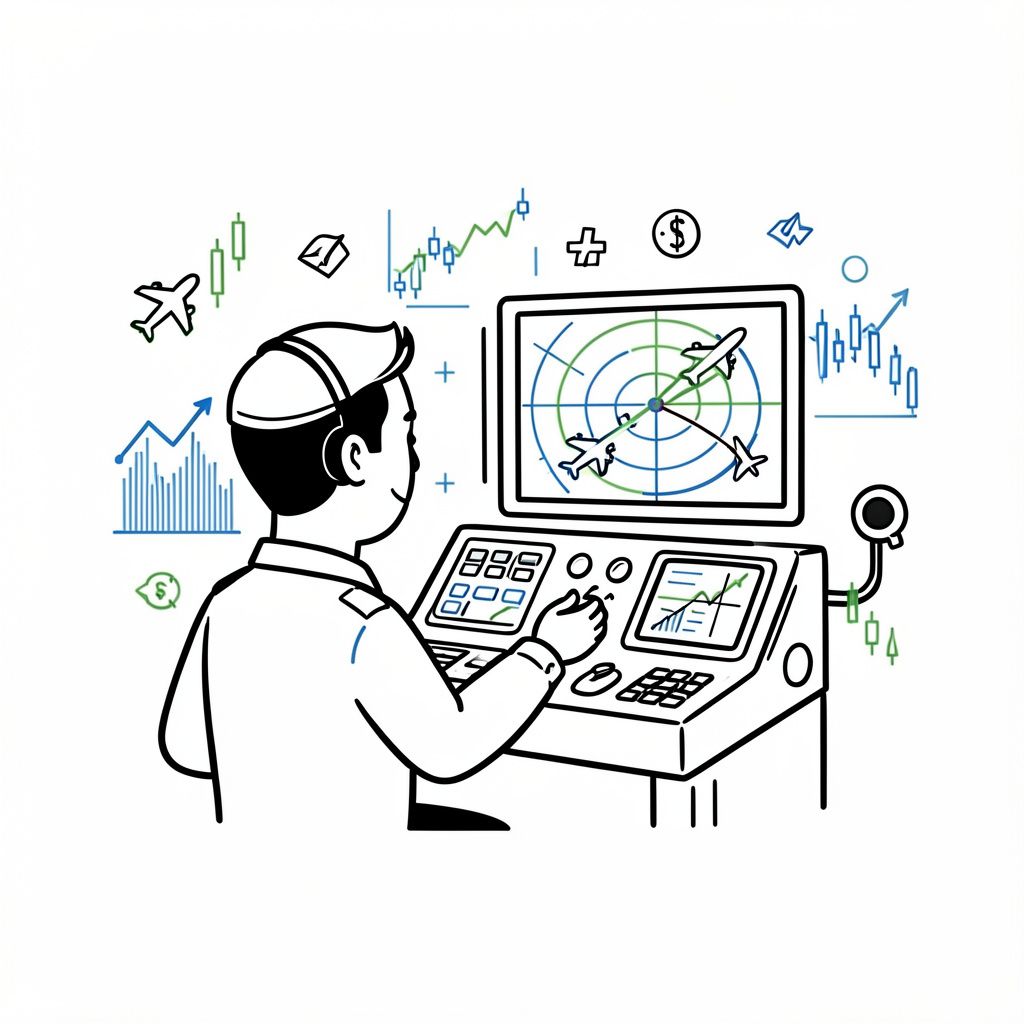
The Federal Aviation Administration (FAA) has officially deployed its $875 million artificial intelligence platform, SMART (Strategic Management of Airspace Routing Trajectories), across all 22 air traffic control centers in the United States as of 2026-11-10 [1][2][3]. The nationwide rollout follows a successful pilot program in the Washington, D.C. airspace that began in September 2026, where the system rerouted 180 flights, saving an average of 10 minutes and 303 liters (80 gallons) of jet fuel per flight [1][2][3]. SMART operates as an advisory tool, providing real-time predictive modeling to optimize flight routes, forecast air traffic bottlenecks, and recommend adjustments to flight schedules based on weather patterns, traffic flow, and airspace capacity [2][3]. While FAA specialists validate SMART’s recommendations before implementation, the system’s deployment has sparked debate over controller oversight and training.
Economic and Operational Impact on Airlines
The immediate financial benefits of SMART are already evident, with fuel savings translating to lower operating costs for airlines. Given the average jet fuel price of $1.14 per liter ($4.31 per gallon) as of 2026-11-12, the per-flight savings of 303 liters (80 gallons) equates to approximately $345 in reduced fuel expenditures [1][2]. For a major hub like Atlanta’s Hartsfield-Jackson International Airport, where SMART was deployed in October 2026, the cumulative impact on airline profitability could be substantial [3]. Delta Air Lines, which operates a significant portion of flights at Atlanta, has praised the system’s early results, with Chief Technology Officer Rebecca Guy noting improved route efficiency and reduced delays [3]. American Airlines, which controls roughly 90% of flights at Charlotte Douglas International Airport, anticipates serving over 8 million passengers between 2026-11-19 and 2026-12-01, a period that includes the Thanksgiving holiday rush. The FAA’s SMART system is expected to play a critical role in managing this surge by forecasting congestion and recommending optimized routes [4].
Labor Concerns and Regulatory Scrutiny
Despite the operational and economic advantages, SMART has faced pushback from labor groups and lawmakers. The National Air Traffic Controllers Association (NATCA) stated it was not involved in the design, testing, or implementation of the system, raising concerns about safety oversight [1]. House Democrats echoed these concerns in a letter to the Government Accountability Office (GAO) on 2026-11-12, requesting a review of SMART’s implementation strategy, performance metrics, and safety risk management [1]. The lawmakers highlighted the lack of input from frontline aviation safety workers and the potential for AI to interfere with controller decision-making or ‘hallucinate’ safety-critical information [1]. Transportation Secretary Sean Duffy has emphasized that humans remain in control of airspace management, stating, ‘There’s always going to be a human that manages the airspace in America’ [1][4]. However, the debate underscores the broader challenges of integrating AI into critical infrastructure while balancing innovation with workforce concerns.
Broader Implications for U.S. Airspace Modernization
The nationwide deployment of SMART aligns with a broader federal push to modernize the U.S. air traffic control system, a project led by Secretary Duffy in response to a January 2025 midair collision near Washington, D.C. that resulted in 67 fatalities [3]. The FAA’s transition from a reactive to a predictive air traffic management approach is designed to reduce delays, lower fuel consumption, and improve the travel experience for passengers [2][4]. For Charlotte Douglas International Airport, SMART’s ability to recommend route adjustments during severe weather has already demonstrated tangible benefits. A recent flight from Charlotte to Philadelphia used a SMART-recommended detour to avoid a storm, saving 30 minutes and 219 nautical miles [4]. As the holiday travel season approaches, the FAA’s AI-driven tool is poised to play a pivotal role in mitigating congestion and ensuring smoother operations across the country’s busiest airports.
Sources
- gizmodo.com
- arstechnica.com
- www.ajc.com
- www.charlotteobserver.com
- www.facebook.com
- www.facebook.com
- www.facebook.com
- www.facebook.com