Why In-Person Office Mandates Are Failing to Deliver Real Collaboration
New York, Wednesday, 4 November 2026.
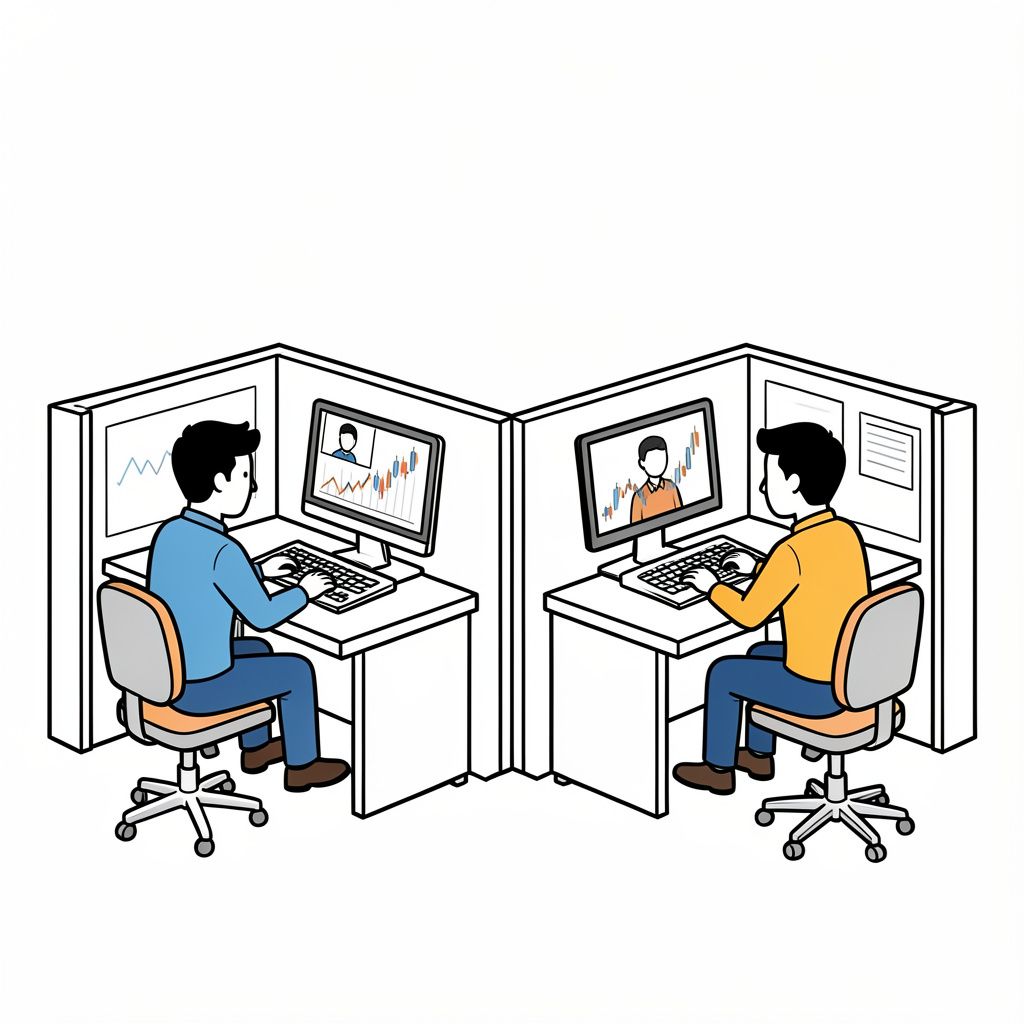
Despite strict office mandates, a Federal Reserve study reveals 37% of workers still hold video calls with coworkers sitting in the exact same building, highlighting widespread workplace isolation.
The Paradox of Office Mandates
Corporate America’s aggressive return-to-office mandates, implemented to restore collaboration and corporate culture, are backfiring according to a newly published study from the Federal Reserve Bank of New York. The October 2026 research reveals that despite employers requiring an average of 3.74 office days per week, actual attendance hovers around 2.59 days, creating a paradox where physical presence does not translate to meaningful interaction [1][2][3]. The study, co-authored by Natalia Emanuel (NY Fed research economist) and Emma Harrington (University of Virginia economics professor), found that 48.8% of in-office workers reported zero in-person meetings on their most recent office day, effectively turning their workstations into solo work pods [1][2][3]. This phenomenon, described by researchers as ‘in-office remote work,’ challenges the foundational premise of corporate return-to-office policies aimed at enhancing team integration and productivity.
Digital Dominance in Physical Spaces
The disconnect between mandated office attendance and actual collaboration is stark. The NY Fed study found that 37% of employees participated in virtual meetings despite all participants being physically present in the same building, turning what should be in-person interactions into screen-mediated exchanges [1][2][3]. Zoom’s CEO Eric Yuan corroborated these findings, stating that video conferencing platforms are inherently limited for complex discussions: ‘On Zoom, it’s really hard. We cannot have a great conversation. We cannot debate each other well’ [1][2]. This digital dominance over physical spaces underscores a critical failure in office design and managerial oversight. While companies mandate office attendance for collaboration, the survey reveals that 70.6% of employees have at least one teammate absent on in-office days, with the average team seeing 34.3% of members missing [1][2][3]. This structural absenteeism, combined with the prevalence of virtual meetings in shared physical spaces, renders office mandates ineffective in achieving their stated goals.
Economic and Psychological Consequences
The broader economic implications of this workplace dysfunction are significant. A separate analysis of Fortune 500 companies showed that 60% of corporate employees now have at least one distant teammate, up from 22% pre-pandemic, reflecting a 172.7% increase 172.727 [2][3]. This geographic dispersion, compounded by organizational sprawl where employees are assigned to different offices or work remotely, creates ‘organizational sprawl’—a structural inability to colocate with teammates even when all commute to offices [5]. The psychological toll is equally concerning. The NY Fed research highlights that Americans now spend more time physically alone on office days compared to pre-pandemic levels, with typical in-person office work time spent alone increasing by 59.1% from 7.1 hours to 6.3 hours [2][3]. This isolation is reflected in broader workforce sentiment data: Gallup reported U.S. worker engagement sank to 29% in Q3 2026, the lowest level since 2011 [3][4]. The disconnect between office mandates and actual collaboration opportunities is not just an operational failure but a cultural and economic liability.
Rethinking Return-to-Office Strategies
The NY Fed findings suggest that simply mandating office attendance does not address the root causes of workplace isolation. Researchers emphasize that physical presence does not guarantee communication, timely information access, or managerial support, identifying five key gaps: information, support, participation, relationship, and focus [4]. The data reveals that 15.1% of workers reported having no casual face-to-face conversations at all on their most recent in-office day, highlighting a critical failure in fostering organic collaboration [2]. To combat these issues, experts recommend that employers shift from blanket attendance mandates to targeted interventions, such as documenting key decisions in shared, searchable platforms and scheduling structured in-person interactions for tasks requiring creativity [4]. The study’s authors warn that without addressing these structural and cultural barriers, return-to-office policies will continue to underdeliver on their promises, exacerbating both productivity and employee well-being challenges.