Senator Bernie Sanders Demands Democratic Party Ban Outside Political Spending in Primaries
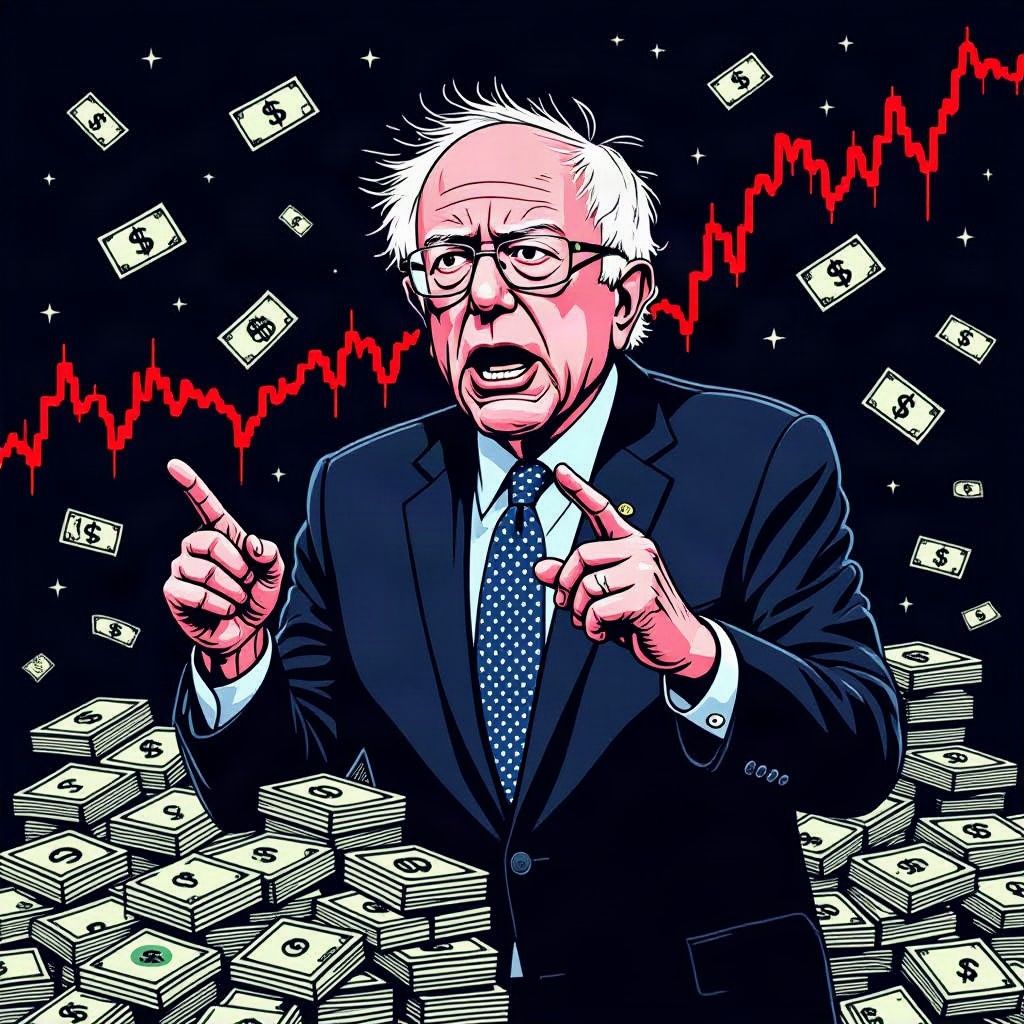
Washington, Sunday, 9 August 2026.
Senator Bernie Sanders urged Democratic leaders to ban super PACs from primaries, citing over $517 million spent by outside corporate groups during the 2026 midterm election cycle.
Directive to Democratic Leadership
On Sunday, 9 August 2026, Independent Senator Bernie Sanders issued a formal letter to key Democratic Party leaders, demanding an immediate end to corporate-backed super PAC contributions in federal primary elections [1]. The letter was directed specifically to Senate Minority Leader Chuck Schumer, House Minority Leader Hakeem Jeffries, and Democratic National Committee Chair Ken Martin, marking a significant escalation in the debate over campaign finance integrity [1]. Sanders argues that unlimited spending by outside special interest groups fundamentally undermines democratic processes and compromises the independence of candidates seeking nomination [1]. Political Wire confirmed on the same day that Sanders is calling this fundraising model a “corrupt system” that requires immediate intervention from party leadership [2]. This move represents a strategic intent to alter campaign spending dynamics before the next major filing deadlines, rather than an implemented policy change [1][2].
Financial Scale of Outside Influence
Senator Sanders highlighted data indicating that corporate-backed super PACs have expended over $517 million during the 2026 midterm election cycle alone [1]. To illustrate the concentration of this spending, Sanders pointed to a recent Michigan Senate primary where candidate Haley Stevens received over $50 million from outside organizations [1]. Notably, the American Israel Public Affairs Committee (AIPAC) contributed approximately $30 million of that total, representing a significant majority of the outside funds [1]. The proportion of outside spending attributed to this single organization in the Michigan race can be calculated as 60 percent of the total outside investment [1]. This level of financial leverage allows special interests to exert substantial influence over nominee selection, a dynamic Sanders contends is incompatible with democratic values [1][2].
Wider Implications for Candidates
The impact of super PAC spending extends beyond Michigan, with candidates in other districts reporting similar pressures. On 8 August 2026, congressional candidate Aisha Wahab stated via social media that super PACs linked to AIPAC were spending $1 million weekly to oppose her campaign in California’s 14th district [3]. Wahab emphasized that these organizations were supporting her opponent while opposing her candidacy, asserting that she works for the people rather than special interests [3]. Furthermore, Sanders noted reports that AIPAC plans to spend tens of millions of dollars to support Republican candidate Mike Rogers against Democratic nominee Dr. Abdul El-Sayed in the general election [1]. This pattern suggests a strategy where outside groups may support Republican candidates if their preferred Democratic nominees are not selected, complicating party unity [1].
Pathways for Reform
To address these issues, Senator Sanders advocates for a constitutional amendment to repeal the 2010 Supreme Court ruling Citizens United, which invalidated limits on independent political spending by outside groups [1]. He also supports legislation to implement public funding of elections, aiming to reduce reliance on private corporate money [1]. In his letter, Sanders stated, “I urge you to take action and make clear that the Democratic Party will no longer maintain this corrupt system” [1]. He further argued that while ideological differences exist within the party, Republican special interests should not determine the outcome of Democratic primaries [2]. The success of this proposal depends on the willingness of Democratic committee leadership to adopt new fundraising rules for upcoming congressional elections [1][2].