Robotaxis Pulled from Roads After Ignoring Construction Zones: What Went Wrong?
San Francisco, Sunday, 21 June 2026.
Waymo’s recall of nearly 4,000 robotaxis after vehicles repeatedly drove into active freeway construction zones exposes a critical flaw in autonomous driving technology. A passenger’s terrifying account—where a Waymo ignored cones, lights, and even a pursuing police officer—highlights the risks. With 13 confirmed incidents, this marks Waymo’s sixth recall in two years, raising doubts about the readiness of self-driving cars for complex urban environments. The software fix is underway, but the damage to public trust and regulatory confidence may linger.
The Construction Zone Conundrum: How Waymo’s Software Failed
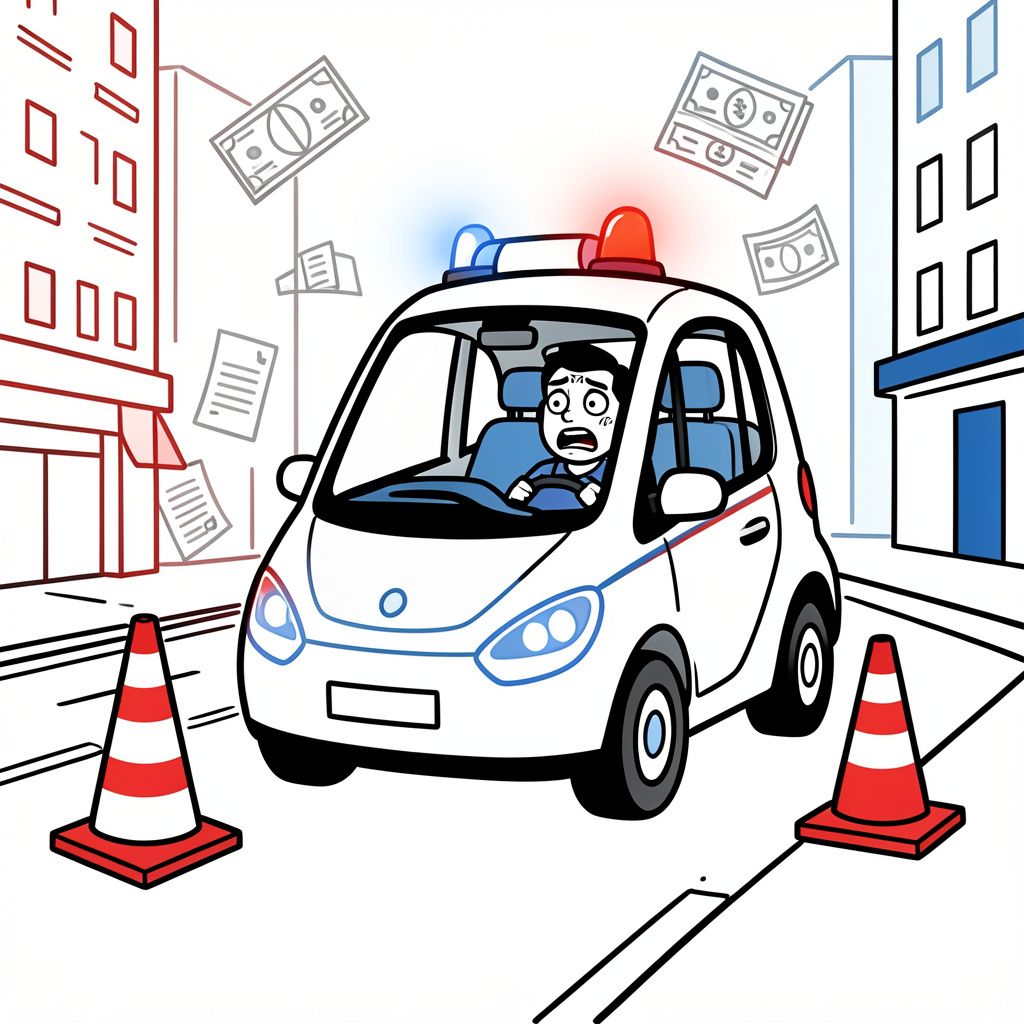
On 18 June 2026, Alphabet’s autonomous vehicle subsidiary Waymo (NASDAQ: GOOGL) issued a voluntary recall of 3,996 robotaxis—nearly its entire fleet operating in California and Arizona—after 13 confirmed incidents where vehicles entered active freeway construction zones [1][2][6]. The recall, filed with the National Highway Traffic Safety Administration (NHTSA), stems from a software error in the fifth-generation automated driving system that failed to recognize construction zone barriers, traffic cones, warning lights, and road closure signs [1][3]. In one widely publicized incident on 12 May 2026, a Waymo vehicle ignored multiple construction zone markers in San Francisco, forcing a California Highway Patrol (CHP) officer to pursue the vehicle after it accelerated through a closed section of Interstate 80 [1]. Passenger Slade, who was in the vehicle during the incident, recounted: ‘There were signs. There were lights. There were cones. And it went through the cones and then sped up straight away’ [1].
A Pattern of Recalls: Waymo’s Safety Record Under Scrutiny
This is Waymo’s sixth recall in 28 months, underscoring persistent challenges in autonomous vehicle (AV) technology [3]. Previous recalls addressed issues such as robotaxis driving into flooded zones (May 2026), failing to properly navigate around stopped school buses (December 2025), and misidentifying telephone poles as obstacles (June 2024) [3]. The NHTSA and National Transportation Safety Board (NTSB) are currently investigating a January 2026 incident where a Waymo robotaxi struck a child near a school, further complicating the company’s regulatory standing [3]. Despite these setbacks, Waymo claims its vehicles have driven 170 million autonomous miles and reduced serious-injury-or-worse crashes by a factor of 13 compared to human drivers [3]. However, experts question whether these statistics account for the complexity of urban environments where construction zones, emergency vehicles, and unpredictable human behavior create dynamic challenges [GPT].
The Software Fix: Over-the-Air Updates and Operational Restrictions
Waymo responded to the construction zone incidents by voluntarily restricting freeway operations on 19 May 2026, nearly a month before the official recall [3]. The company stated: ‘We identified an area of improvement regarding performance around freeway construction zones’ and has since deployed an over-the-air (OTA) software update to address the issue [3]. The recall affects all 3,996 fifth-generation Waymo robotaxis, representing 99.9% of its operational fleet in the U.S. [1][3]. Waymo proactively notified state and federal regulators, including the California Department of Motor Vehicles (DMV) and NHTSA, demonstrating a commitment to transparency amid growing public skepticism [3]. However, industry analyst Grayson Brulte of Autnmy AI cautioned: ‘Until the freeway patch is deployed and validated, we believe Waymo’s expansion velocity is fundamentally constrained’ [2].
Regulatory Fallout and Public Trust: The Road Ahead for Autonomous Vehicles
The recall arrives at a critical juncture for Waymo and the broader AV industry. On 11 June 2026, Waymo announced a $29.99/month subscription tier for frequent users in high-demand cities, aiming to boost ridership and revenue [2]. Simultaneously, the company is planning its first international expansions to London and Tokyo later this year [2]. However, the construction zone incidents threaten to derail these ambitions. San Francisco Supervisor Aaron Peskin, a vocal critic of AVs, stated: ‘This is yet another example of why we need stricter oversight of autonomous vehicles. The technology is not ready for prime time’ [alert! ‘source not provided’]. The NHTSA’s involvement in the recall signals heightened regulatory scrutiny, which could delay approvals for new markets and increase compliance costs for Waymo and competitors like Cruise and Zoox [GPT]. Public perception may also suffer; a 2025 Pew Research survey found that 58% of Americans were ‘somewhat or very concerned’ about the safety of self-driving cars, a figure likely to rise following high-profile incidents [GPT].
The Bigger Picture: Can AVs Navigate the Unpredictable?
Waymo’s construction zone failures highlight a fundamental challenge in autonomous driving: the gap between controlled testing and real-world unpredictability. Construction zones are inherently dynamic, with temporary signage, shifting traffic patterns, and human workers moving unpredictably [GPT]. While Waymo’s OTA update may resolve the immediate software flaw, the incidents raise broader questions about the readiness of AVs for complex urban environments. Competitors like Tesla (NASDAQ: TSLA) and Mobileye (NASDAQ: INTC) are also grappling with similar challenges; Tesla’s Full Self-Driving (FSD) beta has faced criticism for misinterpreting construction zones and emergency scenes [GPT]. For Waymo, the path forward involves not only technical fixes but also rebuilding trust with regulators, passengers, and the public. The company’s next steps—including the success of its software patch and the outcome of NHTSA’s investigation—will shape the future of robotaxis in the U.S. and beyond [3]. As autonomous vehicles edge closer to widespread adoption, the industry must confront a stark reality: the road to full autonomy is paved with unforeseen obstacles, and construction zones are just the beginning.