California Wealth Tax Sparks Massive Campaign Spending Ahead of Key November Vote
Sacramento, Friday, 21 August 2026.
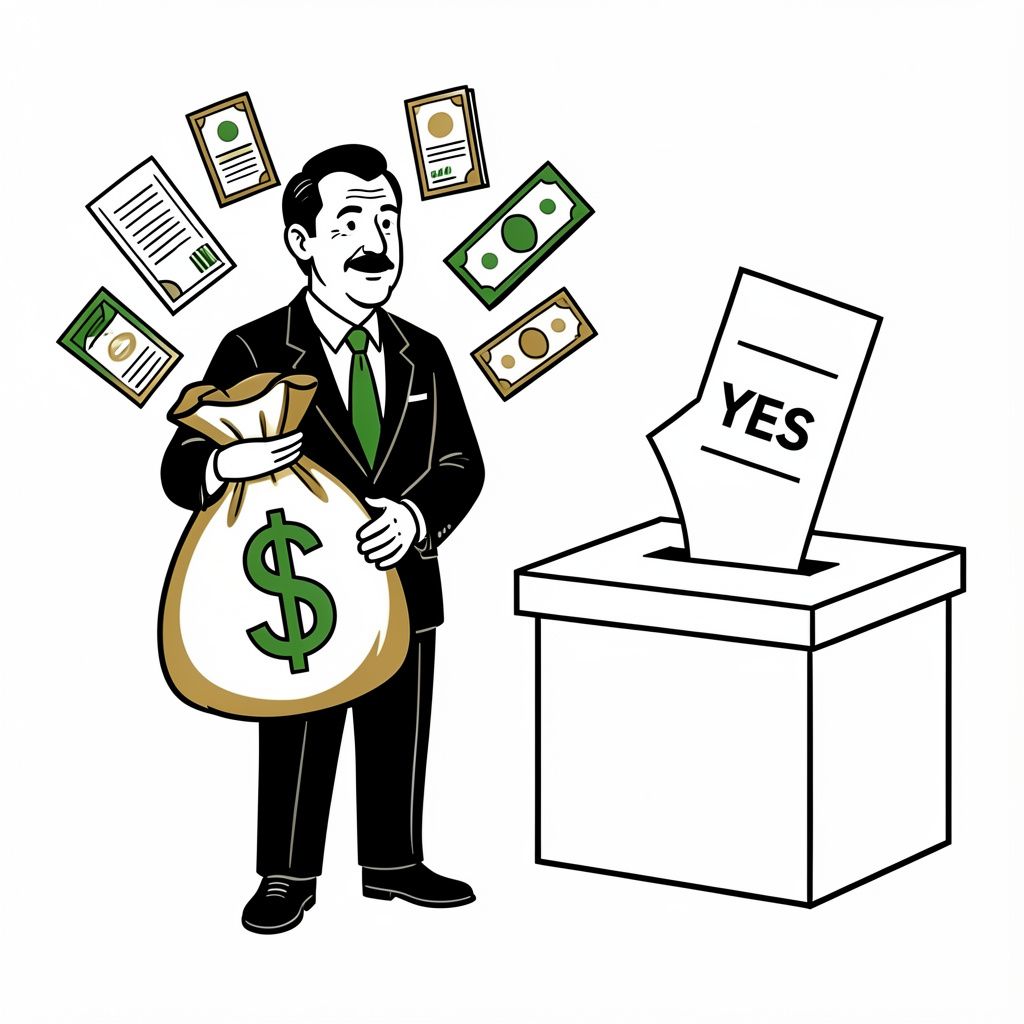
Billionaires have amassed over $110 million to defeat Proposition 40, a proposed 5% wealth tax on California residents worth over $1 billion. Polls show 48% voter support.
The High-Stakes Battle for California’s Billions
As California marches toward the November 3, 2026, election, a fierce political battle is raging over Proposition 40, a proposed ballot initiative that would impose a historic, one-time 5% wealth tax on state residents with a worldwide net worth exceeding $1 billion [1][2][7]. The campaign has triggered an unprecedented financial counter-offensive from the state’s ultra-wealthy [1]. Recent campaign filings from August 14, 2026, reveal that high-profile billionaires have poured millions into the political action committee (PAC) ‘Building a Better California’ [1]. Venture capitalist John Doerr contributed $7.5 million, while Ripple cofounder Chris Larsen injected $10 million, combining for a joint contribution of 17.5 million [1]. Other notable tech figures, including John Hering and Neil Mehta, contributed $946,000 and $250,000 respectively, bolstering a PAC that already boasted a $110 million endowment in late June 2026 [1].
Strategic Spending and Counter-Initiatives
The opposition campaign is also heavily backed by Google cofounder Sergey Brin, who moved his assets out of California in late 2025 but has still contributed a total of $102 million to defeat the wealth tax, including a $20 million infusion between August 1 and August 10, 2026 [1]. To defeat Proposition 40, ‘Building a Better California’ is leveraging a sophisticated multi-pronged strategy [1]. The PAC has reserved $87 million in advertising time for the upcoming November election and is actively backing two counter-measures: Proposition 41, which mandates state auditor reviews of special tax proposals, and Proposition 42, which bans taxes on asset ownership [1][6]. If either of these counter-initiatives receives more votes than Proposition 40, they could effectively nullify the wealth tax before any revenue is collected [1][2].
A Deepening Ideological and Political Divide
The fight over Proposition 40 has exposed deep ideological fractures within the Democratic Party and the broader electorate [1][4]. In early August 2026, the California Democratic Party officially endorsed the wealth tax [1]. However, mainstream Democratic leaders, including Governor Gavin Newsom and gubernatorial candidate Xavier Becerra, have voiced strong opposition [1]. Newsom’s stance is particularly notable given his previous advocacy for a national wealth tax, highlighting the tension between state-level economic pragmatism and progressive tax policies [2]. This local debate mirrors national efforts, such as the ‘Make Billionaires Pay Their Fair Share Act’ introduced in March 2026 by Senator Bernie Sanders (I-VT) and Representative Ro Khanna (D-CA), which proposed a similar 5% federal wealth tax [1]. Observers note that the outcome of Proposition 40 will serve as a critical bellwether for whether the Democratic Party takes a hard-left turn ahead of the 2028 election cycle [4].
Voter Sentiment and Constitutional Concerns
With approximately 20% of the nation’s 1,000 billionaires residing in California, the stakes are incredibly high for the state’s tax base [4]. Public awareness is high, with an August 17, 2026, UC Berkeley Institute of Governmental Studies poll showing that 72% of registered voters are aware of the billionaire tax [1]. The poll of over 4,000 registered voters revealed a highly divided electorate, with 48% supporting the measure and 41% opposing it [1]. Unaffiliated voters are split, with 50% in support, while 80% of Republicans remain opposed [1]. Meanwhile, less than 33% of voters are aware of the counter-initiatives, Propositions 41 and 42 [1]. Prominent business figures like Mark Cuban have publicly criticized the measure, warning that ‘only idiot startup founders stay’ in California if the tax passes [1].
Economic Projections and Implementation Hurdles
While proponents argue the tax is necessary to offset federal changes restricting Medicaid (Medi-Cal) funding mechanisms [3], fiscal analysts warn of severe unintended consequences [3][5]. A white paper released on August 20, 2026, by Jared Walczak of the California Tax Foundation, identified major legal and administrative flaws in Proposition 40, including marriage penalties, double-taxation of foreign assets, and a lack of residency apportionment [5]. Walczak warns that the state faces years of costly litigation and estimated that the tax could actually reduce annual state revenues by $3.53 billion to $4.49 billion due to billionaire departures, resulting in a midpoint estimated annual loss of 4.01 billion [5]. Furthermore, while supporters claim the tax will generate $100 billion, independent economic projections estimate it would only raise $40 billion over five years [3], leaving a massive 60 billion gap in expected revenues. With Hoover Institution research indicating that nearly 30% of the potential wealth tax base had already left the state before the measure even qualified for the ballot [3], the upcoming November vote represents a pivotal moment for California’s economic future [3][7].