Why the Market for Conservative Political Apparel Is Suddenly Collapsing
Washington, Monday, 7 September 2026.
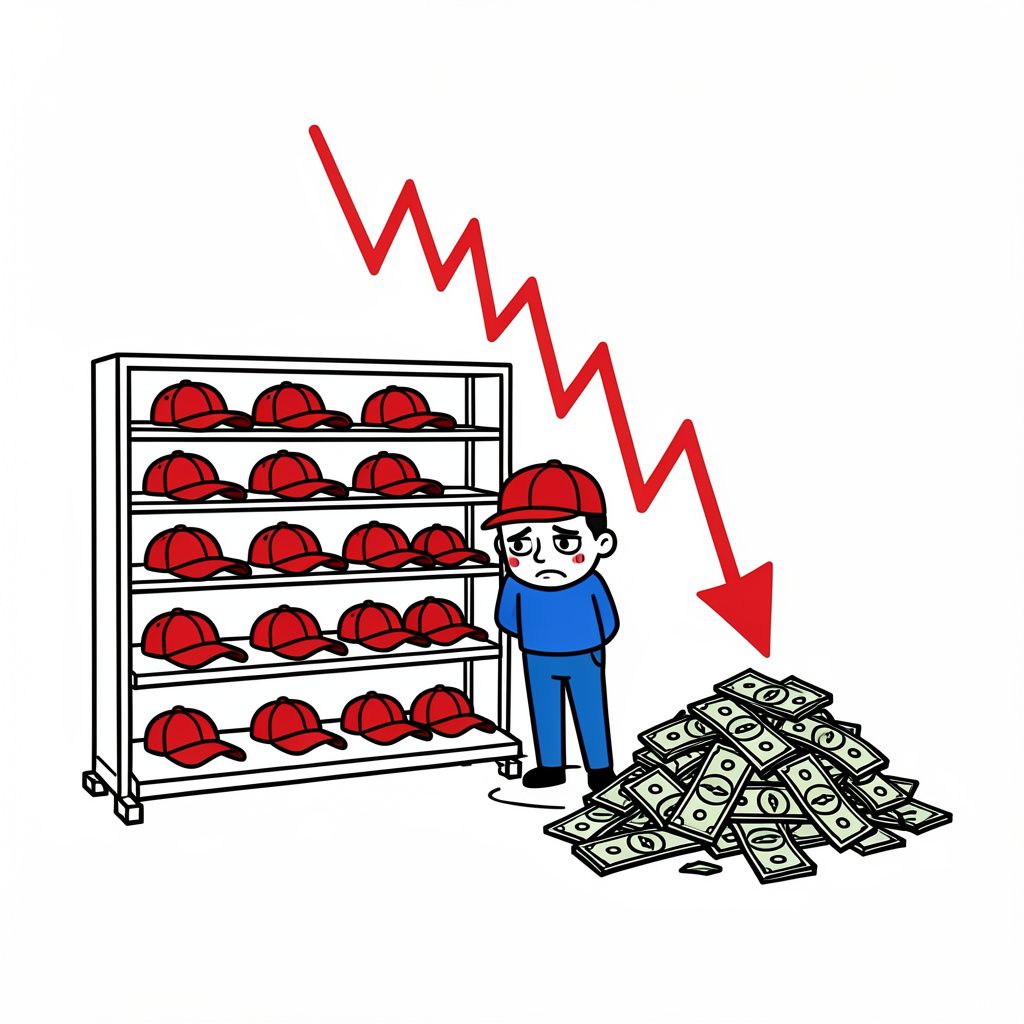
MAGA merchandise sales have plummeted by 90 percent, with flagship vendors seeing daily revenues crash from $15,000 to $1,500 amid persistent inflation and shifting consumer priorities.
Retail Revenue Collapse in Virginia
The economic strain on conservative retail outlets is exemplified by Trump Town USA in Boones Mill, Virginia, where owner Donald “Whitey” Taylor reports a drastic reduction in daily revenue. During the 2024 election cycle, the store generated upwards of $15,000 per day, marking the best sales pace in the business’s 11-year history [1]. However, current figures indicate a daily average of just $1,500, a decline calculated as -90 percent from the previous peak [1]. Taylor attributes this downturn to persistent inflation and rising gas prices linked to geopolitical tensions, specifically citing the Iran war as a factor impacting customer disposable income [1].
Shifting Political Sentiment Among Republicans
Parallel to the retail slowdown, political analysts observe a strategic distancing by Republican candidates ahead of the midterm elections. Reports indicate that vulnerable members of the party are scrubbing photos and endorsements related to President Trump from their websites to mitigate electoral risk [2]. This behavior suggests a growing perception within the party that the former president may act as a liability in the upcoming midterms, contrasting with the unified support seen during the 2024 campaign season [2]. Observers note that candidates are finding excuses to skip major conventions, signaling a divergence between party loyalty and practical campaigning needs [2].
Economic and Geopolitical Drivers
The convergence of economic pressure and political recalibration highlights the volatility of niche market sectors tied to political branding. High fuel costs resulting from the Iran war have reduced discretionary spending among the demographic most likely to purchase political memorabilia [1]. Furthermore, the saturation of political messaging strategies has led to diminishing returns on merchandise sales as consumer sentiment evolves [1][2]. As the November 2026 midterms approach, the correlation between economic hardship and political merchandise demand remains a key indicator of broader consumer confidence within conservative constituencies [1][2].