Samba TV Bridges Linear and Streaming with New Measurement Tool
San Francisco, Thursday, 19 November 2026.
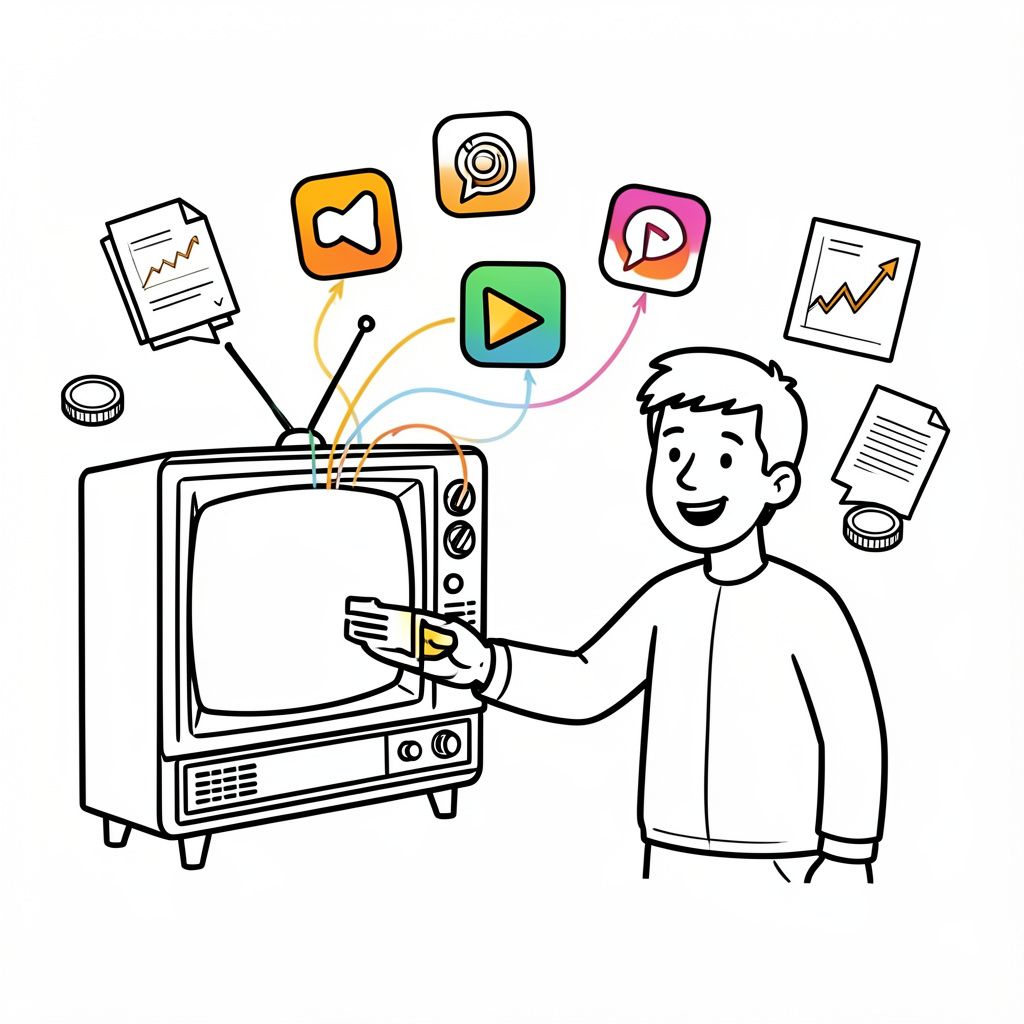
Samba TV launched a single feed uniting linear television and over 600 streaming apps, eliminating critical industry blind spots by tracking 400 billion monthly media signals across eight countries.
The Fragmentation Crisis in Television Measurement
The television industry has long grappled with a fundamental measurement challenge: fragmented data silos that obscure a complete view of audience behavior. Traditional linear TV measurement relied on panel-based systems that failed to capture streaming activity, while streaming platforms operated in isolation, leaving advertisers and content creators without a unified picture of cross-platform consumption [1][3][5]. This fragmentation created critical blind spots in reach calculations, as linear panels missed streaming activity and individual streaming datasets only captured activity on their respective platforms [1]. The consequence was a persistent inability to accurately measure unduplicated reach—the number of unique individuals exposed to a campaign across both linear and streaming platforms [alert! ‘industry consensus based on multiple sources’]. The pressure on advertisers and network executives to demonstrate campaign effectiveness across screens has intensified as media consumption patterns continue to fragment across connected TV devices and traditional cable systems [GPT].
The Birth of a Unified Measurement Platform
In response to these systemic gaps, Samba TV has introduced what industry observers describe as the first comprehensive measurement platform to integrate linear and streaming television data into a single feed [1][3][5]. The San Francisco-based media intelligence firm announced this breakthrough solution on 19 November 2026, positioning it as a transformative development for the $200 billion global television advertising market [1]. The platform’s architecture, built on Samba TV’s existing linear TV coverage, now incorporates data from over 600 streaming applications worldwide, including major services in the U.S., Canada, U.K., France, Spain, Germany, Italy, and Australia [1][3][5]. This expansion represents a significant leap from previous industry attempts, which were constrained by hardware-specific datasets that could only track streaming activity on their own devices [alert! ‘as noted in industry coverage’].
Technical Architecture and Data Capabilities
At the core of Samba TV’s innovation is a technical infrastructure capable of processing 400 billion media consumption signals monthly from more than 1.5 billion opted-in user profiles [1][3]. The platform’s data processing capabilities are enhanced by partnerships with major cloud providers, including AWS, Databricks, Snowflake, and InfoSum, which enable enterprise clients to access the unified feed in real time [1]. A key technical advancement is the platform’s ability to provide device-level visibility, identifying whether consumption occurs through native apps, streaming players, gaming consoles, or set-top boxes [3][5]. This granularity extends to advertising measurement, with every ad exposure record carrying detailed source information that allows clients to evaluate performance across national, local, and addressable buys [3]. The platform’s calibration methodology projects streaming viewership at the national level, ensuring models reflect the full audience rather than just panel participants [1][5].
Industry Impact and Competitive Differentiation
Samba TV’s unified platform is positioned to disrupt traditional television measurement paradigms that have remained largely unchanged since the 20th century [1][3]. Industry analysts note that competitors remain anchored in linear-first measurement approaches, creating an opportunity for Samba to redefine how the industry works with TV data [1]. The company’s leadership emphasizes this differentiation, with Senior Vice President of Product Management Kelly Barrett stating that the platform closes the longstanding gap between incomplete streaming and linear data [1][3][5]. This claim is substantiated by the platform’s comprehensive coverage, which spans more than 100,000 streaming titles across eight major markets [1][3]. The enhanced content classification and expanded streaming coverage are expected to deliver substantially more accurate media mix modeling, according to Ryan Williams, Senior Data Scientist at Amazon [1]. Williams highlights that the two critical factors in TV data—coverage and accuracy—are both addressed through Samba’s unified approach [1].
Strategic Implications for Advertisers and Content Creators
The introduction of Samba TV’s unified measurement platform arrives at a pivotal moment for the advertising industry, which has seen television advertising budgets increasingly shift toward streaming platforms [GPT]. Industry observers note that marketers have historically relied on fragmented data sources or modeling based on estimates rather than observed behavior [3]. The new platform provides a single source of truth for analytics and insights, targeting, audience planning, measurement, and identity resolution, all running on the same comprehensive signal [1][3][5]. This unified approach enables more precise campaign planning and optimization, addressing longstanding concerns about cross-platform reach and frequency calculations [alert! ‘based on industry commentary’]. For content creators, particularly in Hollywood’s creative community, the platform offers unprecedented transparency into audience behavior, helping writers and producers understand who is watching their content and how engagement evolves across seasons [7]. This data transparency is becoming a strategic bargaining chip in entertainment negotiations, with creators using insights to inform pitches and creative decisions [7].
Future Outlook and Industry Evolution
The launch of Samba TV’s unified measurement platform coincides with broader industry discussions about the future of connected TV advertising surfaces, including pause ads, home screen placements, and overlay units [9]. While these innovative formats offer new engagement opportunities, industry experts argue that the underlying infrastructure remains fragmented and built on legacy technology [9]. Jason Higgins, co-founder and CEO of OpenGlass, emphasizes the need for unified programmatic access through demand-side platforms, proposing a single deal ID and creative that can access these advanced formats [9]. This evolution in CTV advertising surfaces is occurring alongside the proliferation of measurement solutions like Samba TV’s, suggesting a period of rapid transformation in how television advertising is planned, executed, and measured. As the industry moves toward more sophisticated cross-screen measurement, the pressure on established players to adapt their methodologies will intensify, creating both challenges and opportunities for innovation.
Sources
- www.newswire.com
- www.tvtechnology.com
- www.advanced-television.com
- www.linkedin.com
- www.linkedin.com
- www.facebook.com
- www.beet.tv