Global Power Emissions Flat as Asia's Green Push Counters US Coal Surge
Washington, Tuesday, 27 January 2026.
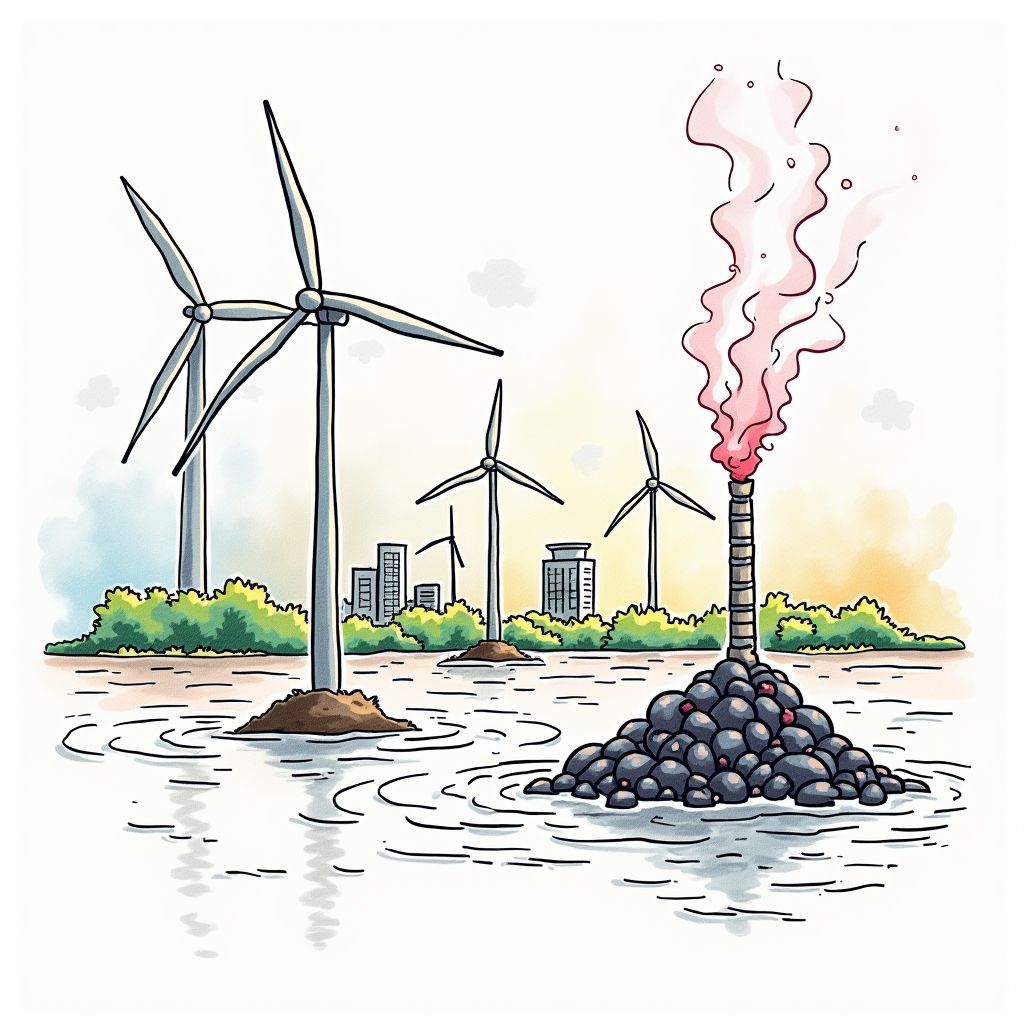
Data from 2025 reveals a significant geopolitical shift in energy markets: accelerated clean energy deployment in China and India has successfully offset a 3.3% rise in United States power sector emissions, resulting in a rare stabilization of global pollutants. While US coal-fired output jumped 13.1%—the fastest increase this century—China and India recorded simultaneous emission declines for the first time in five decades. This development underscores the growing influence of Asian renewable infrastructure in mitigating global climate risks, effectively neutralizing the environmental costs of the recent American return to coal.
A Historic Reversal in Emissions Trends
The 2025 data marks a pivotal moment in environmental economics, primarily because China and India have historically been the primary drivers of global emissions growth. In the decade leading up to 2024, these two nations accounted for 93% of the total increase in global carbon dioxide discharges from power generation [1][2]. However, 2025 saw a simultaneous decline in power sector emissions from both countries for the first time in over 50 years [5]. This shift suggests that the aggressive integration of renewable energy sources in Asia is finally outpacing the region’s surging electricity demand, creating a buffer against rising fossil fuel consumption elsewhere.
United States: Policy and Grid Pressures Drive Coal
The resurgence of coal in the United States, which saw a 13.1% increase in coal-fired power output in 2025, represents the fastest annual increase this century [1][5]. This spike has been attributed to a combination of policy incentives under the administration of President Donald Trump and a deceleration in the closure of coal plants [1]. Consequently, US emissions rose by 3.3% in 2025, reversing a previous trend where emissions had fallen by an average of 2.4% annually over the prior decade [1][2].
Asia’s Renewable Infrastructure Boom
In contrast to the US, the emissions drop in Asia is underpinned by a record-breaking deployment of clean energy infrastructure. Analysts note that the capacity added in 2025 was more than sufficient to cover the rise in electricity consumption in both China and India [1][5]. India alone added approximately 38 gigawatts (GW) of clean energy capacity in 2025 [7]. However, the Indian government is currently recalibrating its procurement strategy; on January 27, 2026, officials announced a halt to setting annual clean energy tender targets [7]. This decision follows a buildup of unsold projects, with developers holding rights to construct roughly 43 GW of renewable power that currently lacks secured buyers [7].
Sources
- www.reuters.com
- tribune.com.pk
- renewablesnow.com
- www.tradingview.com
- www.asiaone.com
- www.reuters.com
- www.reuters.com