Tackling High Costs: A New Plan to Stabilize Essential Prices and Protect Democracy
New York, Friday, 16 October 2026.
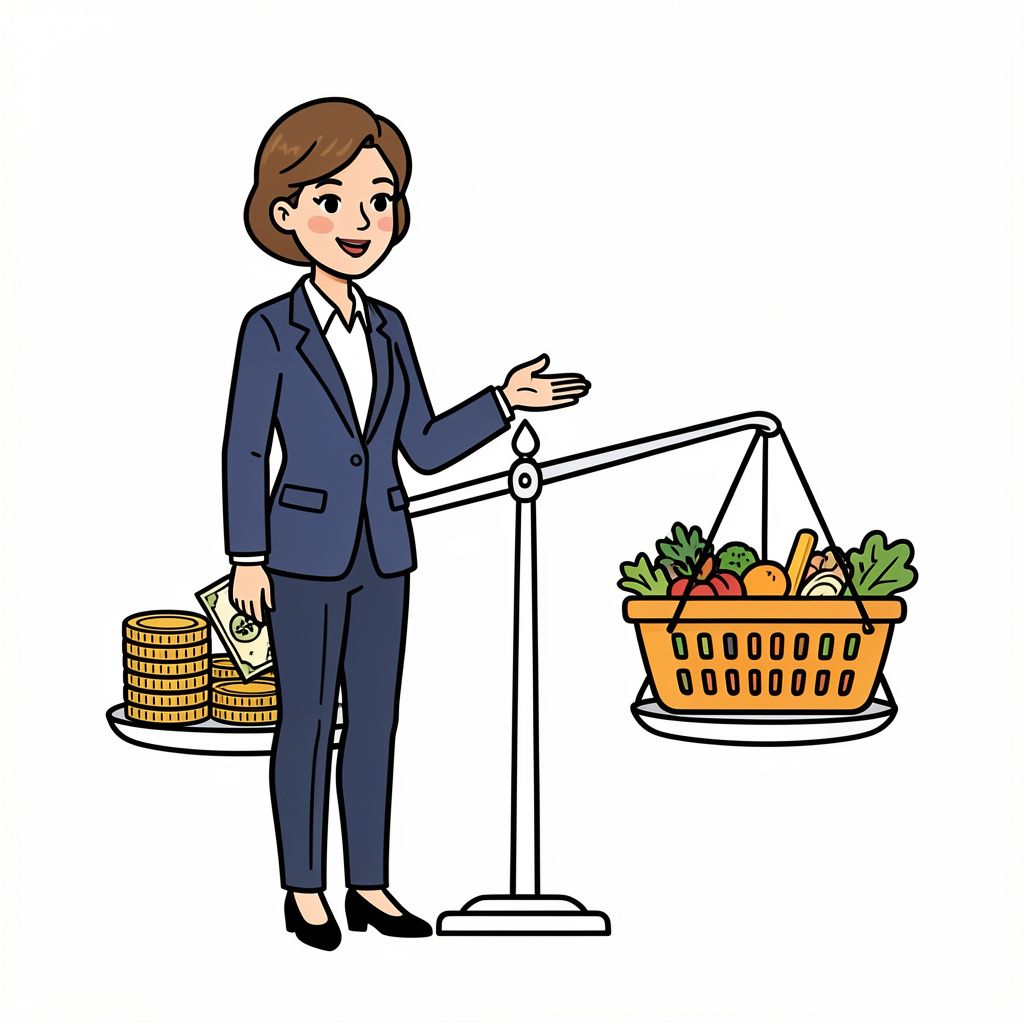
Economist Isabella Weber proposes capping essential prices and establishing strategic stockpiles to combat inflation, offering an alternative to central bank interest rate hikes that protects household purchasing power.
Rethinking Monetary Tightening in Modern Economics
As central banks historically rely on interest rate hikes to temper inflation, economists are increasingly pointing to the compounding economic burdens placed on working households [2]. In a Wall Street Journal commentary, Isabella Weber, an associate professor of economics at the University of Massachusetts Amherst and research associate at Harvard’s Fairbank Center, argued that raising interest rates to cool labor markets actively threatens employment and intensifies financial pressure on vulnerable consumers [1][2]. In September 2026, US inflation rose to 3.7%, driven largely by volatile gasoline prices [5]. Weber argues that traditional monetary tightening fails to address the root causes of seller-side price spikes, creating a livelihood crisis that directly fuels public frustration and political extremism [1][2].
Strategic Stockpiles and Corporate Concentration
Weber’s framework, detailed in her 2026 book Anti-Fascist Economics: In Defense of Affordability, Dignity, and Democracy, centers on price stabilization for essential goods—such as energy, food, housing, transport, water, and healthcare [1][2][8]. Rather than suppressing aggregate demand through higher borrowing costs, her approach advocates seller-side stabilization mechanisms and strategic stockpiles to absorb supply disruptions [1][2]. Historical evidence supports the efficacy of public sector involvement; during 2022, when average OECD inflation reached 9.5%, Switzerland—which avoided privatizing telecommunications, water, energy, and transport—recorded an inflation rate of just 2.8%, representing a gap of 6.7 percentage points [1].
Addressing Systemic Vulnerabilities in Food and Energy
A core pillar of Weber’s proposal involves counteracting corporate market concentration by establishing public buffer stock systems [1][2]. Currently, four multinational corporations control between 70% and 90% of global grain trading, a dynamic Weber argues prioritizes market volatility over consumer affordability [1]. Similar structural imbalances exist in energy markets; in 2022, global oil and gas corporations recorded $916 billion in net income [1]. Out of these profits, 50% went to the top 1% of households, while the bottom 50% received only 1%, leaving ordinary citizens exposed to fossil fuel price fluctuations [1].
National Food Security and Vulnerable Supply Chains
The necessity for strategic interventions is equally clear in national food distribution systems [6]. In the UK, where the government abandoned its strategic food stockpile in the 1990s and nearly 10% of households face food insecurity, approximately 95% of retail food is funneled through just 131 distribution centers under vulnerable ‘just-in-time’ supply chain models [6]. Food policy experts warn that without strategic reserves, UK food prices could rise 50% higher by September 2027 compared to mid-2021 levels [6]. Moreover, the lowest-income 20% of the UK population would need to allocate 85% of their disposable income to afford a healthy diet based on official nutritional guidance [6]. Operational threats—such as the 11 October 2026 cyber-attack on French supermarket refrigerators that forced temperatures up to 50°C—further highlight the risks of relying solely on market-led efficiency over public resilience planning [6].
Policy Adoption Across Global Governments
Policymakers across several nations are increasingly exploring Weber’s affordability agenda to implement targeted interventions [1][4]. In Mexico, the government’s ‘canasta básica’ model offers a concrete precedent: retailers voluntarily cap prices on 24 essential consumer goods in exchange for tax relief and tariff advantages [1]. In September 2026, political leaders such as New York Mayor Zohran Mamdani and British Prime Minister Andy Burnham advocated or executed policies aligned with this vision, including rent caps, universal childcare, and public control over core infrastructure [1][4]. Furthermore, in October 2026, Canadian NDP Leader Avi Lewis hosted a conversation with Weber in Ottawa to evaluate how strategic price caps and corporate accountability could be adapted for Canada [4].
Framing Markets to Protect Democratic Institutions
Despite initial pushback—most notably in December 2021 when a Guardian op-ed by Weber proposing price controls drew sharp criticism before critics later acknowledged the validity of sector-specific price shocks—the policy landscape is shifting toward active market framing [1]. Weber has advised prominent lawmakers including U.S. Senators Elizabeth Warren and Bernie Sanders, Representative Alexandria Ocasio-Cortez, and UK cabinet ministers such as Ed Miliband [1]. Following the late August 2026 election in Saxony-Anhalt, where the Alternative für Deutschland (AfD) party won in one of Germany’s poorest regions, Weber maintains that stabilizing the cost of life’s essentials is a vital economic and democratic priority [1].
Sources
- www.theguardian.com
- www.umass.edu
- www.facebook.com
- www.instagram.com
- www.theguardian.com
- www.theguardian.com
- x.com
- thelefthook.substack.com