US Restores Embassy in Venezuela to Secure Strategic Energy Resources
Caracas, Sunday, 15 March 2026.
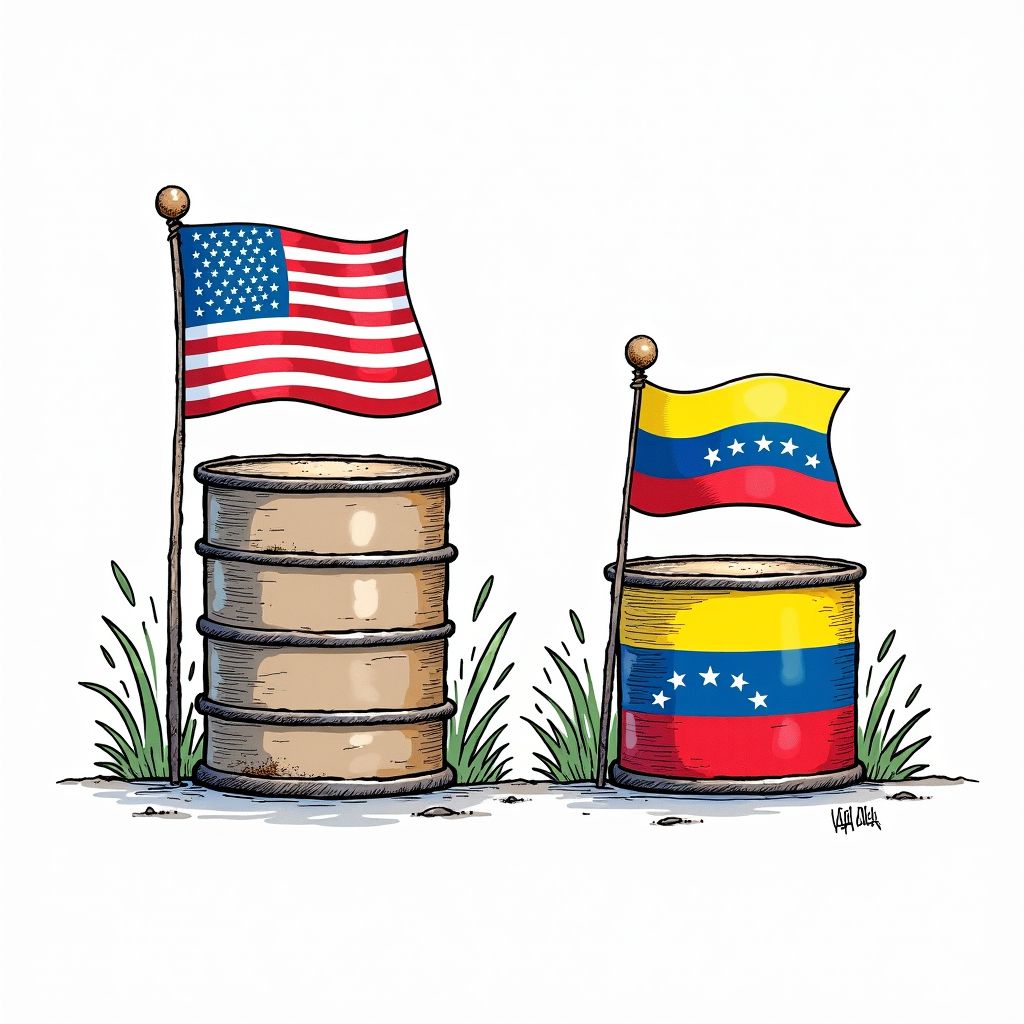
After a seven-year hiatus, the US reopened its Caracas embassy to secure vital energy resources, with Venezuela already transferring 80 million barrels of oil to American control.
A Symbolic Return with Economic Undertones
On Saturday, March 14, 2026, the American flag was hoisted over the United States Embassy in Caracas, marking the end of a diplomatic freeze that lasted 7 years [1][2][3]. U.S. Chargé d’Affaires Laura F. Dogu noted the historical symmetry, stating that the flag was raised at the precise time it had been taken down in 2019 [1][3]. While this diplomatic gesture signals a new chapter in bilateral relations, the embassy complex itself is still undergoing renovations, leaving the exact date for a full operational reopening uncertain [2].
The Economics of Extraction: Reclaiming Oil Assets
Beyond diplomatic symbolism, the embassy’s reopening is deeply intertwined with American economic interests and the pursuit of energy security [GPT]. The Trump administration has actively pressured the interim Venezuelan government to grant concessions regarding access to the nation’s substantial oil reserves [3]. This pressure has already yielded tangible economic transfers, with Venezuela handing over approximately 80 million barrels of oil to the United States [3]. These assets have subsequently been sold by the Trump administration, effectively redirecting Venezuelan petroleum revenues into American hands [3].
Navigating Geopolitical Leverage and Local Sentiment
To secure these economic advantages, President Trump has employed a dual strategy of public praise and severe threats toward interim President Delcy Rodríguez [1]. While Trump publicly commended Rodríguez for “doing a great job” and expressed optimism about making Venezuela “great again,” his administration simultaneously floated the possibility of indicting her on corruption and money laundering charges if she failed to cooperate [1]. In an interview published on January 4, 2026, the day after Maduro’s capture, Trump explicitly warned that Rodríguez would “pay a very big price, probably bigger than Maduro” if she did not align with American interests [3].