Kremlin Backs Trump’s Claim That Ukraine Is Stalling Peace Deal
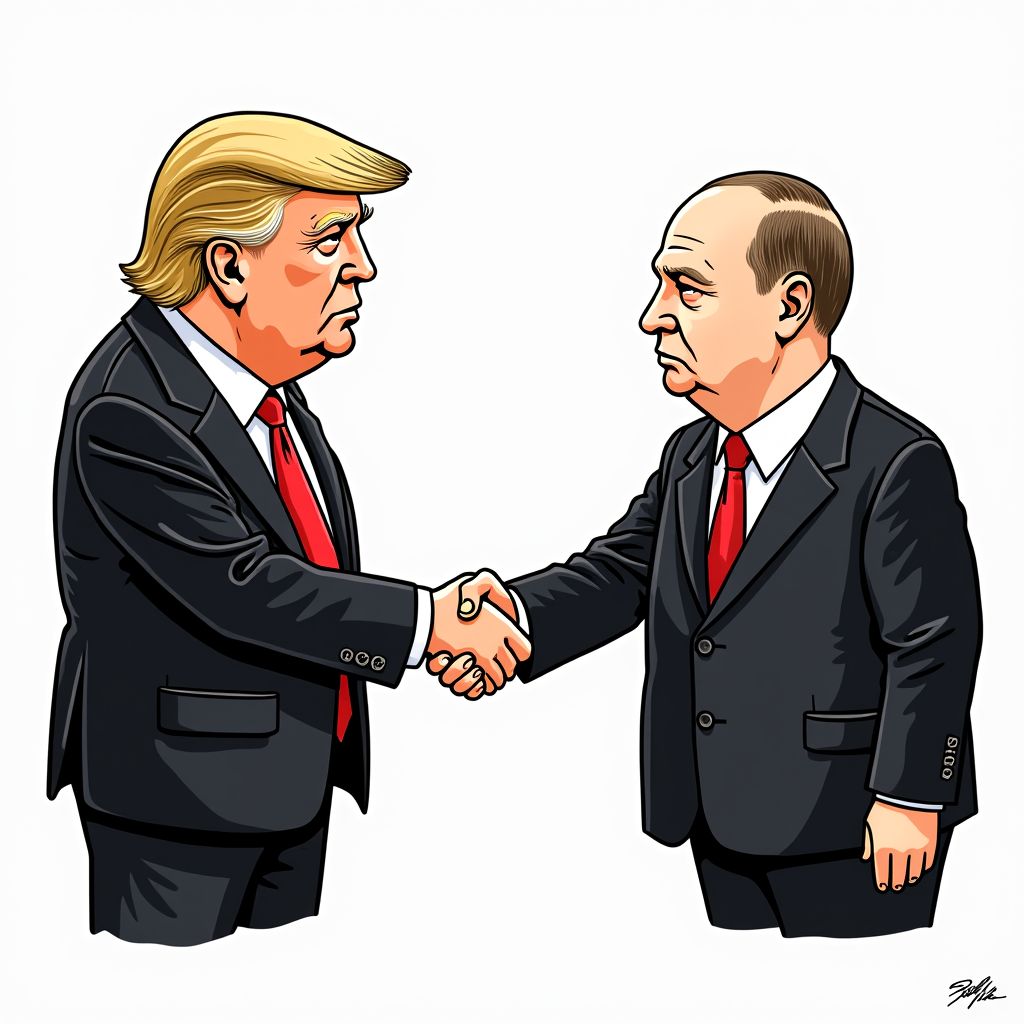
Moscow, Friday, 16 January 2026.
Moscow publicly endorsed President Trump’s assessment that Ukraine is the primary obstacle to peace, marking a sharp diplomatic convergence between the Kremlin and the White House against Kyiv.
A Unified Front Against Kyiv
On Thursday, the Kremlin explicitly endorsed President Trump’s evaluation of the stalled peace process. Kremlin spokesperson Dmitry Peskov stated, “Yes, we can agree with it, it’s indeed so,” referring to President Trump’s assertion that the Ukrainian leadership is the primary impediment to a ceasefire [1][2]. This diplomatic alignment follows an interview earlier this week in which President Trump told Reuters that while he believes President Vladimir Putin is “ready to make a deal,” he views Ukraine as “less ready” to negotiate an end to the conflict [3][5]. The convergence of narratives between Moscow and the White House places unprecedented pressure on Ukrainian President Volodymyr Zelenskyy as the war nears its fourth anniversary [1].
Fracturing Alliances and Security Demands
While Washington and Moscow find common rhetorical ground, key European allies are pushing back against this narrative. Polish Prime Minister Donald Tusk countered President Trump’s comments on Wednesday, asserting that “it is Russia who rejected the peace plan prepared by the U.S.” and arguing that the only appropriate response is increased pressure on Moscow [1][2]. Concurrently, President Putin maintained a rigid stance on Thursday, declaring that Moscow demands “universal” security guarantees and warning that, in their absence, Russia will “consistently pursue the goals it has set” [1][2]. This diplomatic friction occurs as the geopolitical landscape shifts; following Washington’s decision to suspend intelligence sharing with Ukraine in March 2025, French President Emmanuel Macron revealed on Thursday that Paris has stepped in to fill the void, now providing two-thirds of the intelligence information to Kyiv [4].
Escalation on the Ground
The diplomatic maneuvering is unfolding against a backdrop of intensified military strikes targeting Ukraine’s civilian and energy infrastructure. Overnight between Tuesday and Wednesday, a Russian drone strike in Lviv shattered over 100 windows in a playground area [1][2], followed by a strike on the top floors of a Kyiv apartment building on Thursday [3]. The energy sector remains a critical target; after Russian forces destroyed a large energy facility in Kharkiv on Wednesday, the UK announced today that it would provide a £20 million emergency support package to bolster Ukraine’s energy resilience [4]. These attacks have compounded the crisis, leading President Zelenskyy to declare a state of emergency regarding the energy situation on Thursday [4].
Diplomatic Channels Remain Open
Despite the escalating rhetoric and violence, diplomatic avenues have not been completely severed. President Trump has expressed a willingness to meet with President Zelenskyy at the upcoming World Economic Forum in Davos, Switzerland [5]. Furthermore, the Kremlin indicated on Thursday that it is open to receiving U.S. envoys Steve Witkoff and Jared Kushner for talks, pending an agreed-upon date [3]. However, the situation on the ground remains precarious, with the IMF chief Kristalina Georgieva visiting Kyiv on Thursday to inspect damaged infrastructure, underscoring the severe economic toll of the prolonged conflict [4].