Canada Prepares Contingency Plans for American Military Risk Amid Growing Trade Tensions
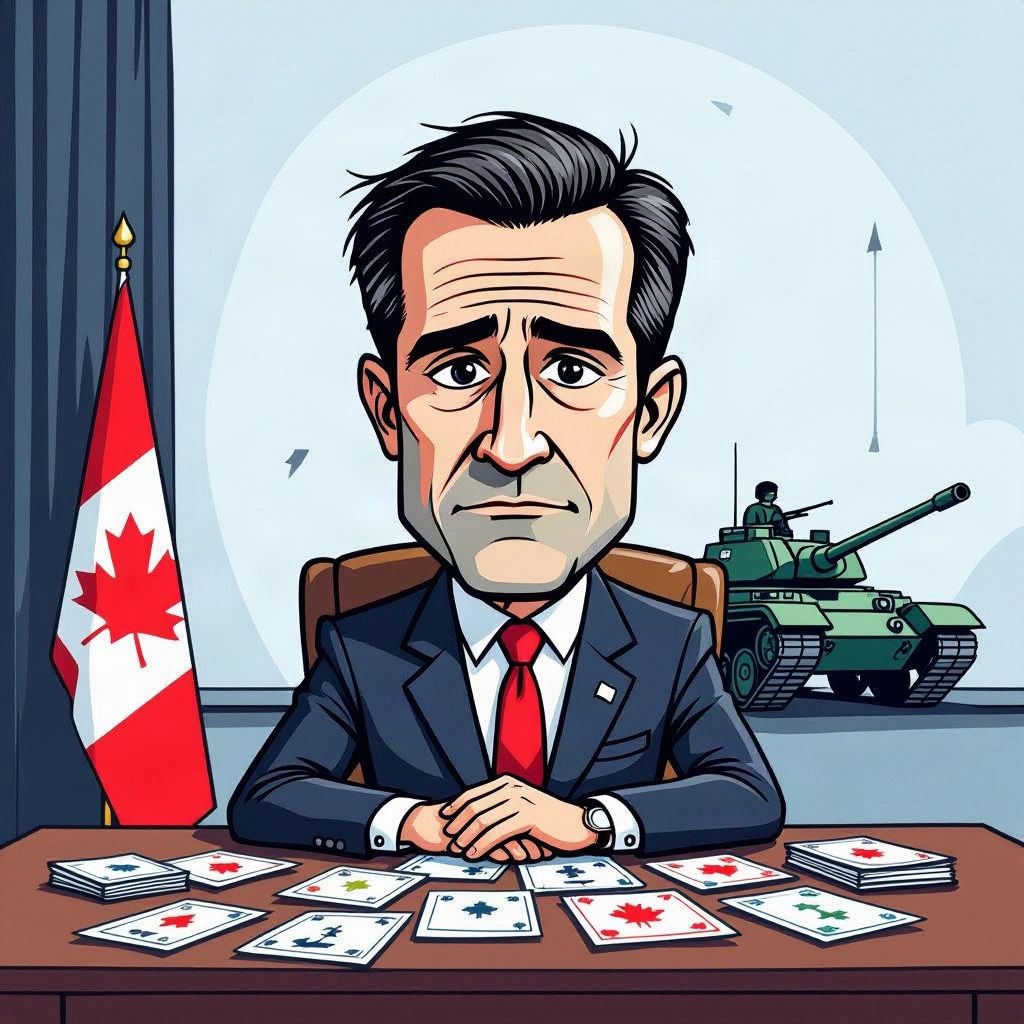
Ottawa, Thursday, 24 September 2026.
Canadian Prime Minister Mark Carney revealed Ottawa has modeled extreme tail risks, including potential U.S. military action, highlighting unprecedented friction in North American trade and defense relations.
Risk Management Protocols
Canadian Prime Minister Mark Carney confirmed in an interview published on Wednesday, 23 September 2026, that his administration has modeled extreme tail risks, including the remote possibility of U.S. military action [1][6]. Describing the scenario as an “extreme tail risk,” Carney emphasized that while such an event is not a base case, it would be irresponsible not to prepare for it as part of standard risk management protocols [5][6]. The disclosure highlights a significant shift in North American defense relations, underscored by stark disparities in military capacity between the two nations [1]. According to government data, the U.S. military maintains more than 2 million active-duty and reserve troops, while Canada has fewer than 200,000, representing a ratio of 10 to one in favor of the United States [1]. Additionally, as of 2024, the U.S. possessed 65 military submarines compared to Canada’s four, further illustrating the asymmetry in defense capabilities [1].
Government and Defense Response
Following the Prime Minister’s comments, key members of the Canadian cabinet defended the contingency planning as prudent and normal procedure. On 24 September 2026, Defence Minister David McGuinty stated that all militaries spend time analyzing risk scenarios, characterizing the planning as a standard operational requirement [4]. Artificial Intelligence Minister Evan Solomon echoed this sentiment, noting it is prudent to run any scenario regardless of likelihood [4]. Despite the public disclosure, officials refused to provide specific details on the contingency plans, citing ongoing analysis of various North American security risk scenarios [4]. This approach aligns with Carney’s assertion that leaders have a responsibility to look at extreme tail risks, even when the probability is low [2][5].
Economic Friction Points
The geopolitical tension is compounded by escalating trade disputes, with negotiations between Washington and Ottawa having collapsed in August 2026 [3][6]. President Donald Trump launched a tariff war in response, resulting in reciprocal tariffs on goods between the U.S. and Canada [3][4]. Compounding the economic strain, President Trump has repeatedly referred to Canada as the “51st state,” rhetoric that political analysts suggest drives the need for such extreme risk modeling [2][4]. On 23 September 2026, President Trump posted on Truth Social that Canada is “destroying itself” regarding immigration, while Statistics Canada reported the nation’s unemployment rate at 6.4% in August 2026, compared to the U.S. rate of 4.1% [4]. The trade conflict has also seen threats extend to European partners, with President Trump threatening heavy tariffs on Europe if Canada is perceived to be joining the EU as an associate member [2].
Strategic Diversification
In response to these vulnerabilities, Prime Minister Carney is systematically diversifying Canadian supply chains to reduce vulnerability to American influence [6]. This strategic pivot includes reconsidering the procurement of 88 U.S. F-35 fighter jets, with the remaining 72 units under review following U.S. tariffs on Canadian goods [4]. Additionally, the government is exploring replacements for Starlink satellite systems and deepening economic ties with China to mitigate over-reliance on the U.S. market [6]. Carney noted that the past 40 years of deeper economic integration with the United States constituted “easy business” but resulted in excessive reliance on one economic partner [2][3]. While Carney maintains that a path to resume trade negotiations exists, the government is committed to development and diversification rather than waiting for a return to previous economic conditions [2][4].