Why Massive Financial Hurdles Keep Justin Herbert Grounded in Los Angeles
Los Angeles, Sunday, 1 November 2026.
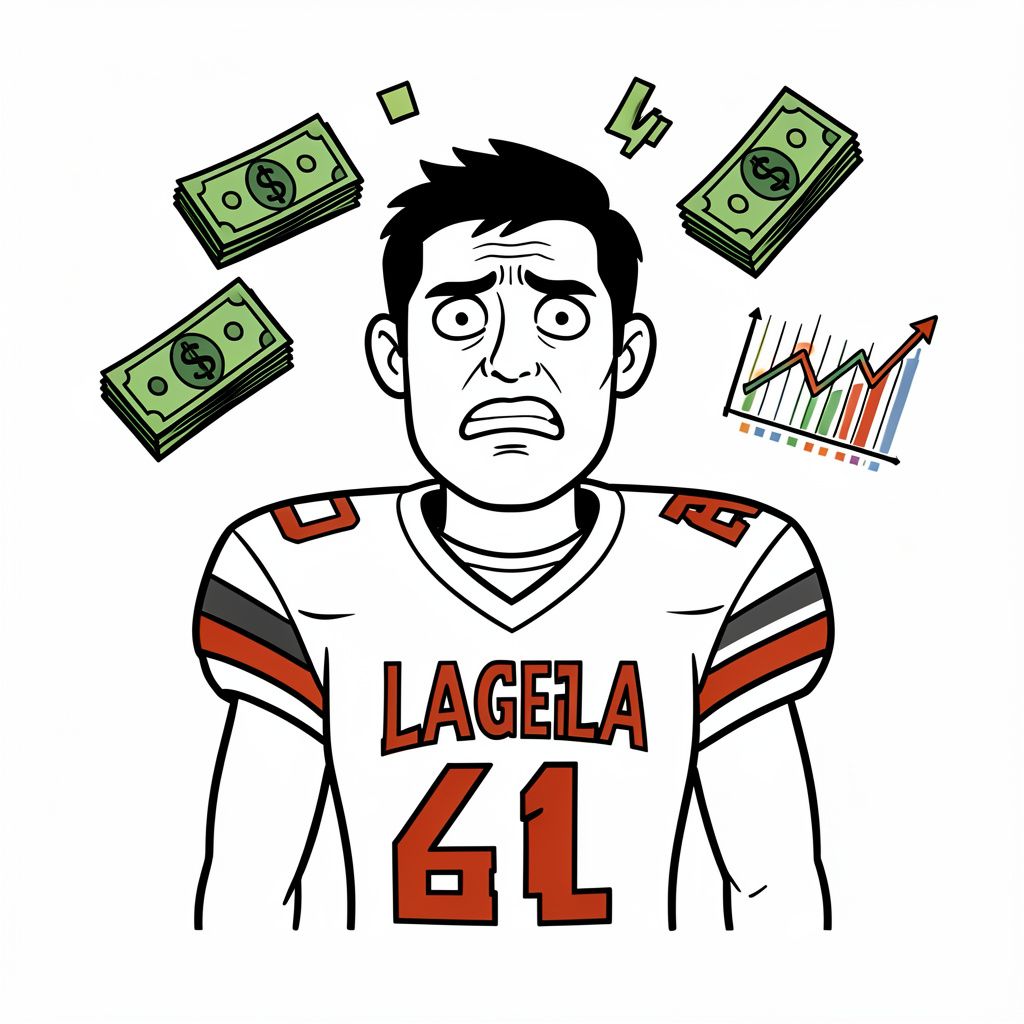
Despite a winless 0-6 start, moving Justin Herbert remains virtually impossible before the November deadline, as trading the quarterback would trigger a crippling $50 million dead-cap charge for Los Angeles.
Why Dead-Cap Charges Make a Justin Herbert Trade Impossible
As the NFL trade deadline approaches on November 10, 2026, the Los Angeles Chargers face an insurmountable financial obstacle in trading quarterback Justin Herbert: a $50.4 million dead-cap charge in 2027 [2]. This figure represents the portion of Herbert’s contract that would accelerate onto the Chargers’ 2027 salary cap if traded, effectively making any transaction economically unviable. The dead-cap hit stems from the remaining four years of Herbert’s contract, which totals $262.5 million and is practically guaranteed through 2028 [6]. For context, this dead-cap figure alone accounts for 27.692% of the Houston Texans’ 2027 cap overage of over $40.0 million [2]. The Chargers’ financial predicament underscores how modern NFL contracts, particularly for elite quarterbacks, are increasingly designed as long-term commitments rather than tradable assets.
Contract Structure: Guaranteed Money and No-Trade Clauses Lock Herbert in Place
Herbert’s contract includes fully guaranteed salaries of $36.0 million in 2027 and $52.0 million in 2028, with a no-trade clause that further complicates any potential deal [4][6]. The no-trade clause means Herbert would have to consent to any transaction, and given his recent struggles—including a league-leading eight interceptions in 2026 and a career 0-3 playoff record—such consent is highly unlikely [4][5]. Former NFL executive Joe Banner emphasized this point, stating, ‘I literally would say zero’ when asked about the possibility of a Herbert trade [1]. Banner added that Chargers head coach Jim Harbaugh is more focused on rebuilding the roster around Herbert than exploring trade options [1]. Even if a team like the Cleveland Browns were interested—given their 5-2 record and need for a long-term quarterback solution—the financial and contractual barriers remain insurmountable [4].
Market Reality: Teams Balk at Herbert’s Price Tag Despite His Declining Performance
Despite Herbert’s 2026 struggles—including a 59% completion percentage, 68.8 passer rating, and a league-leading eight interceptions—his contract remains prohibitively expensive for potential suitors [4][5]. A proposed trade pitch from the New York Jets, which included four first-round picks and three second-round picks across multiple drafts, highlights the market disconnect [6]. The Jets’ offer, which would have required surrendering picks through 2029, underscores how Herbert’s contract and dead-cap implications deter even aggressive suitors [6]. Spotrac analyst Mike Ginnitti noted that while the Jets are ‘spiraling’ and could use a quarterback upgrade, the financial burden of Herbert’s contract makes such a deal ‘overly aggressive’ [6]. The Chargers’ refusal to discuss a Herbert trade—despite internal and external pressures—reflects a broader trend in the NFL, where franchises are increasingly prioritizing salary cap flexibility and long-term roster building over mid-season asset reallocation.
Broader Implications: The NFL’s Shift Toward Long-Term Contracts as Trade Barriers
The Herbert trade impasse exemplifies a growing trend in the NFL, where salary cap constraints and complex contract structures are transforming player contracts into structural barriers to mid-season transactions [2][3]. The Philadelphia Eagles’ experience with Saquon Barkley—who would trigger a $26.0 million dead-cap charge in 2027 if traded—further illustrates this phenomenon [2]. The Eagles’ 2027 dead money already includes $42.0 million from recent trades of A.J. Brown and Cam Jurgens, highlighting how dead-cap charges can accumulate and limit franchise flexibility [2]. For the Chargers, the financial fallout from trading Herbert would not only derail their 2027 cap planning but also force them into a rebuild that could take years to recover from. As the NFL’s trade deadline looms, Herbert’s situation serves as a cautionary tale for franchises considering high-risk, high-reward trades in an era of rigid salary cap governance.