Trump Demands Ownership Stake to Permit Gordie Howe Bridge Opening
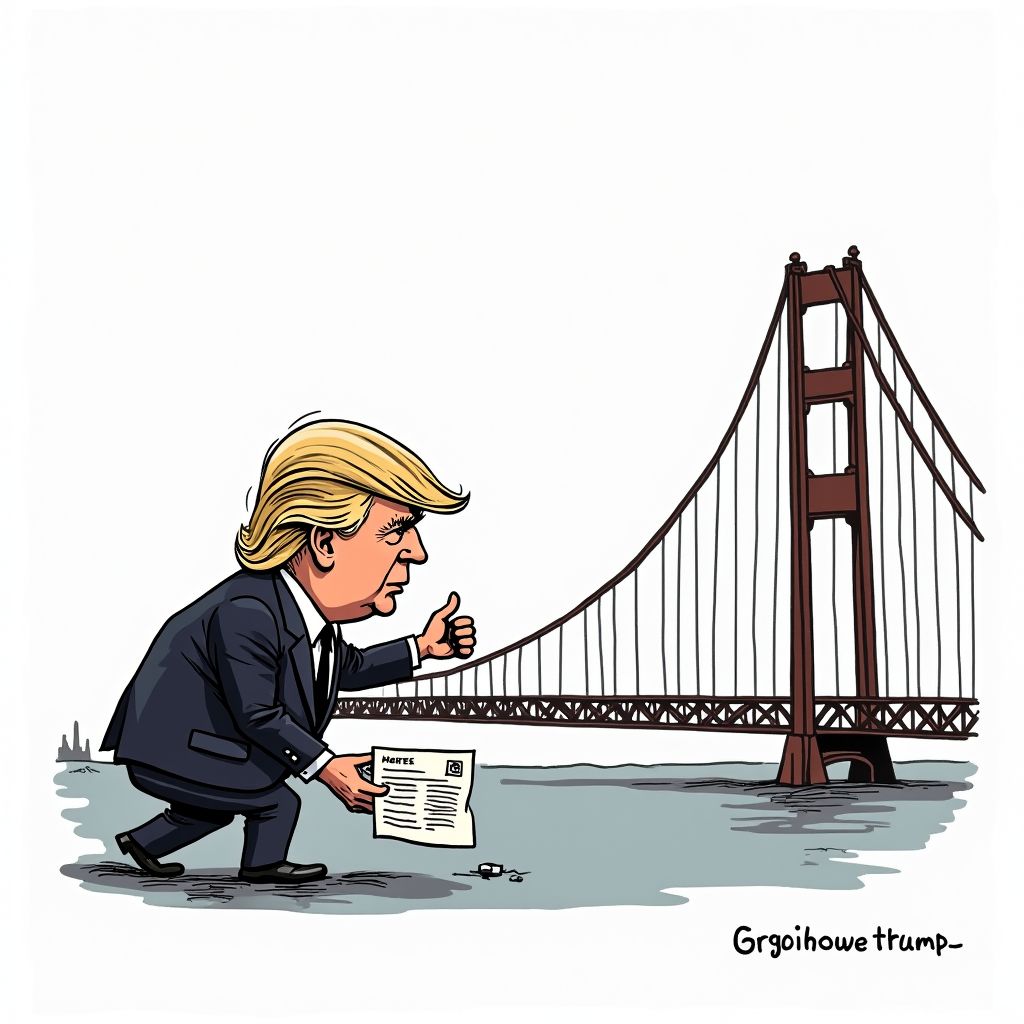
Washington D.C., Tuesday, 10 February 2026.
President Trump has threatened to block the imminent opening of the Gordie Howe International Bridge unless the U.S. is granted shared ownership of the asset. This ultimatum introduces significant uncertainty to North American trade logistics, as the White House demands equity in the $6.4 billion infrastructure project despite the fact that the Canadian government funded the entire construction cost.
The Ultimatum
On Monday, February 9, 2026, President Trump explicitly stated he would “not allow” the Gordie Howe International Bridge to open until the United States is “fully compensated” and granted at least 50% ownership of the asset [2][3][4]. This declaration comes despite the infrastructure being scheduled to open in early 2026 following years of construction that began in 2018 [1][3]. White House Press Secretary Karoline Leavitt reinforced this stance, labeling the current arrangement—where Canada controls the crossing and owns land on both sides—as “unacceptable” to the President [1].
Financial Asymmetry and Ownership Structure
The crux of the dispute lies in the project’s financing and existing ownership structure. The bridge, estimated to cost $6.4 billion CAD, was entirely funded by the Canadian federal government [1][3]. Under the current binational agreement, the bridge is jointly owned by Canada and the U.S. state of Michigan, with Canada intending to recoup its investment through toll collections [2][3]. However, the Trump administration is now demanding that the U.S. federal government participate in the economic benefits and hold “shared authority” over the crossing, arguing that the lack of U.S. capital investment is irrelevant to the strategic necessity of American control [1].
Strategic Implications for Trade
The Gordie Howe International Bridge was designed to alleviate congestion at the Ambassador Bridge, which is privately owned by the Moroun family and currently facilitates over $300 million in daily cross-border trade [4]. The Moroun family has historically opposed the new government-backed crossing, previously appealing to Trump to halt its construction [4]. With the new bridge poised to reduce border crossing times and save an estimated 850,000 hours annually for trucks, a continued blockade could severely impede the flow of goods between the two nations [3].