US and Israel Launch Joint Strikes on Iran; Supreme Leader Moved to Secure Location
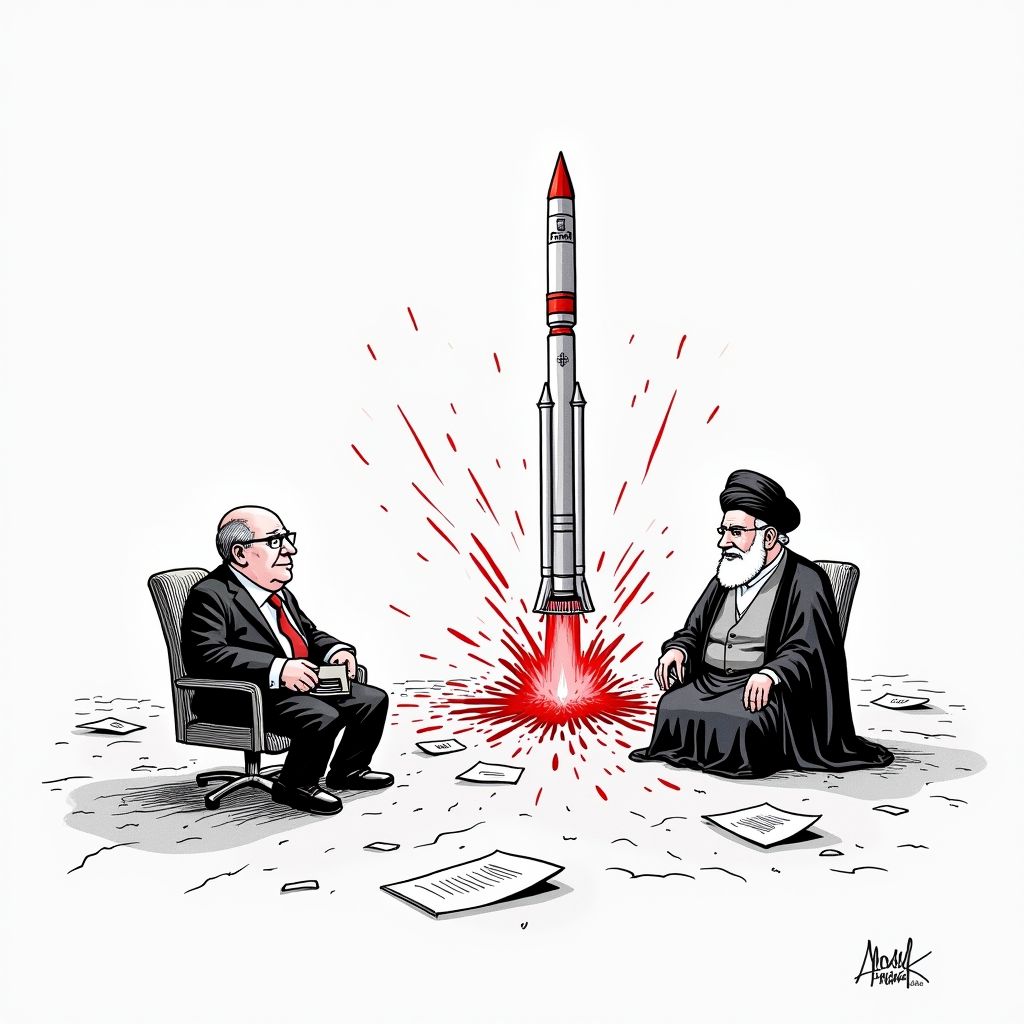
Tehran, Saturday, 28 February 2026.
Joint US-Israel strikes hit Tehran Saturday, targeting missile sites. The most telling development is Supreme Leader Khamenei’s immediate transfer to a secure location, signaling the severity of this escalation.
Escalation to Joint Combat Operations
The geopolitical landscape in the Middle East underwent a seismic shift on Saturday, February 28, 2026, as the United States formally joined Israel in a coordinated military offensive against the Islamic Republic of Iran. While we previously reported on Israel’s initiation of pre-emptive strikes and the declaration of a national emergency [1], the scope of the conflict has expanded significantly with the direct entry of American forces. U.S. President Donald Trump confirmed the development, stating that the United States has commenced “major combat operations” in the region [2]. In an eight-minute video statement released on Truth Social, President Trump described the joint action as a necessary measure to defend American citizens and eliminate imminent threats posed by the Iranian regime [3].
Operation ‘Shield of Judah’ and Strategic Targets
The joint offensive, operationally named ‘Shield of Judah,’ appears to be a highly synchronized effort planned over several months by Israeli and American defense establishments [4][5]. The strikes are not limited to the capital; while blasts were reported in central Tehran—including near the offices of the Supreme Leader—reports indicate the offensive has expanded to targets in Qom, Isfahan, Kermanshah, and Karaj [3][6]. The primary objectives of this wave of attacks are to neutralize the Iranian Revolutionary Guard Corps (IRGC) Intelligence Directorate and dismantle missile launchers and unmanned aerial vehicle (UAV) bases that threaten the Israeli home front [4][6].
Leadership Security and Iranian Retaliation
In a move that underscores the severity of the threat perceived by the regime, Iranian Supreme Leader Ayatollah Ali Khamenei has been evacuated from Tehran. Official sources confirmed to international news agencies that Khamenei was transferred to a “secure location” shortly after the daylight strikes commenced [3][4][7]. The vacuum in Tehran is accompanied by heightened military readiness; Iranian officials have closed the country’s airspace and vowed a “crushing response” to what they term a combined Israel-US attack [4][6]. Defense establishment sources assess that the likelihood of an Iranian missile retaliation within hours is increasing, prompting the Israel Defense Forces (IDF) to surge forces and raise alert levels along all borders [6].
Domestic Impact and Market Implications
The domestic situation in Israel has shifted to a war footing. The country has moved to “Essential Activity” status, resulting in the closure of schools and the prohibition of large gatherings, while citizens have been warned to remain near protected spaces due to the anticipation of incoming fire [4][5]. As the IDF reinforces its Central Command and heavy helicopter traffic is reported over Israel [6], the direct involvement of the United States suggests this conflict is no longer a localized exchange but a broader regional confrontation. Investors and policy analysts should brace for significant volatility in global energy markets as the confrontation endangers critical infrastructure in a key oil-producing region.
Sources
- wsnext.com
- www.ctvnews.ca
- www.ndtv.com
- www.jpost.com
- www.instagram.com
- www.jpost.com
- www.ynetnews.com