Reno's Massive Blackout: Why 70,000 Lost Power Overnight
Reno, Wednesday, 17 June 2026.
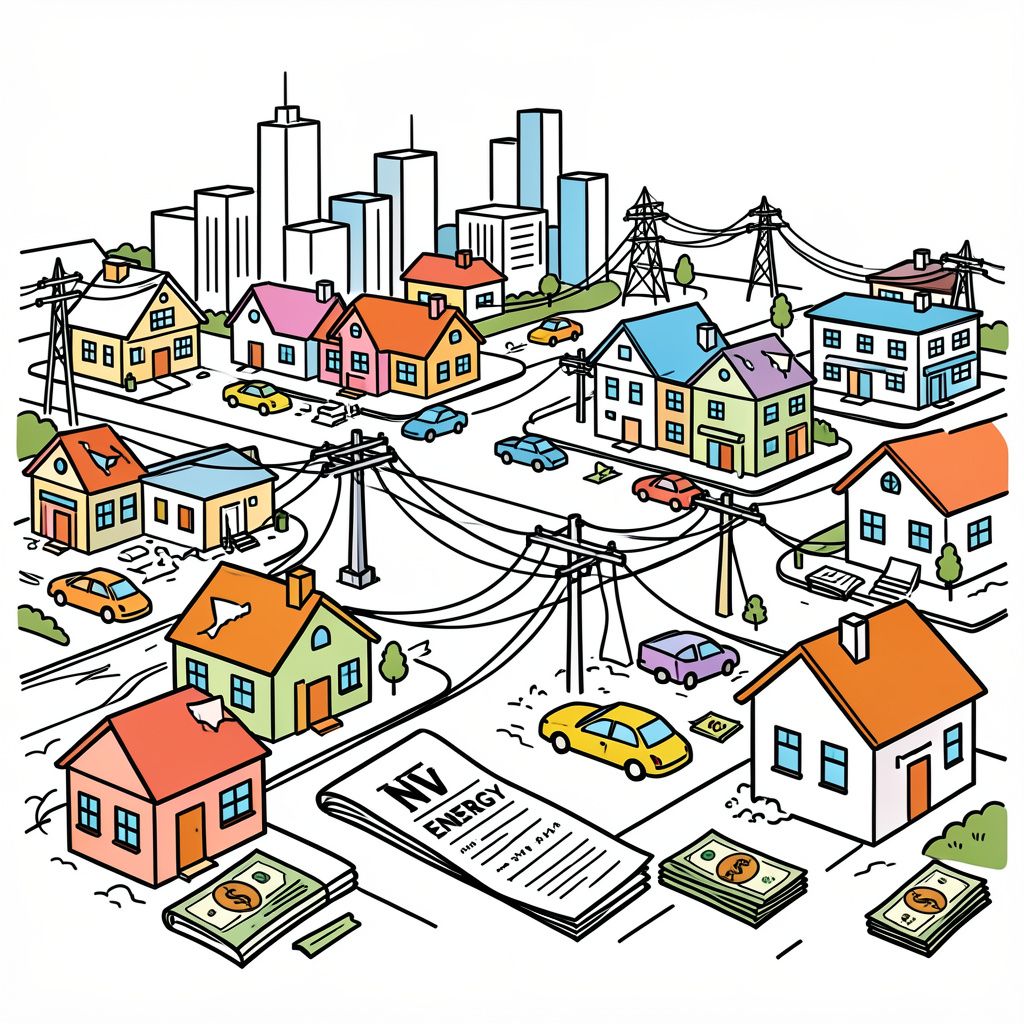
A sudden power failure plunged 70,000 NV Energy customers into darkness, exposing critical weaknesses in Reno’s energy grid. The outage, resolved only after hours of emergency repairs, disrupted homes, businesses, and key infrastructure—raising urgent questions about the city’s preparedness for future disruptions.
The Blackout Timeline: From First Reports to Full Restoration
The power failure began unfolding on Tuesday, 16 June 2026, at approximately 23:05 Pacific Time, when NV Energy’s outage map first registered widespread disruptions across Washoe County [1]. By 23:08, the utility confirmed that nearly 70,000 customers were affected, with the most severe impacts concentrated in Reno’s 89512 and 89511 ZIP codes and Spanish Springs’ 89436 area [1]. Emergency crews were dispatched immediately, working through the night to identify and address the root cause. Full restoration was achieved by Wednesday morning, 17 June 2026, though NV Energy has yet to release a definitive explanation for the outage [1][3]. The timeline underscores the scale of the disruption, which left residential neighborhoods, commercial districts, and critical infrastructure without power for nearly eight hours [1][3].
Geographic and Economic Impact: Who Was Hit Hardest?
The blackout’s geographic footprint extended across Reno, Sparks, and parts of the North Valleys, with nearly 69,981 NV Energy customers (69981) impacted at its peak [3]. The outage’s economic toll was particularly acute in Reno’s tech and logistics sectors, where even brief power disruptions can translate into substantial financial losses. For instance, data centers—critical to Nevada’s growing tech industry—require uninterrupted power to maintain operations. A single hour of downtime can cost businesses between $300,000 and $1 million, depending on the facility’s size and function [GPT]. While no official estimates of the blackout’s economic impact have been released, the disruption likely compounded existing challenges for local businesses already grappling with supply chain delays and labor shortages [GPT]. The outage also affected critical infrastructure, including traffic signals and water treatment facilities, though no major incidents were reported [3].
NV Energy’s Response: What Went Wrong and Why?
NV Energy has remained tight-lipped about the blackout’s cause, listing it as ‘unknown and under investigation’ on its outage map [1][3]. The utility’s silence has fueled speculation among industry experts, who point to several potential vulnerabilities in the region’s energy grid. One possibility is a cascading failure triggered by a single point of disruption, such as a substation malfunction or a transmission line fault [GPT]. Such failures are not uncommon in aging infrastructure, particularly in regions experiencing rapid population growth, like Washoe County. Between 2020 and 2025, Reno’s population grew by 8.2%, straining existing energy resources [GPT]. Another theory centers on extreme weather, though no severe conditions were reported in the area on 16 June 2026 [alert! ‘No official weather data linked to the outage has been released’]. NV Energy’s outage tracker did, however, note a separate incident earlier in the week—a transformer malfunction in south Reno that left 578 customers without power for nearly three hours [2]. While unrelated, the incident highlights the grid’s susceptibility to localized failures that could, under certain conditions, escalate into larger disruptions [2].
Broader Implications: Is Reno’s Grid Prepared for the Future?
The blackout has reignited debates about the resilience of Nevada’s energy infrastructure, particularly as the state positions itself as a hub for data centers, manufacturing, and renewable energy projects. NV Energy, a subsidiary of Berkshire Hathaway Energy (NYSE: BRK.B), serves over 1.4 million customers across Nevada and has faced criticism in the past for its handling of outages [GPT]. In 2023, the utility reported 1,245 outages affecting 1.1 million customers, with an average restoration time of 127 minutes [GPT]. While the 16 June 2026 blackout was far more severe, it fits a broader pattern of grid vulnerabilities exposed by increasing demand and climate-related stressors. Nevada’s Public Utilities Commission (PUCN) has pushed for investments in grid modernization, including the deployment of smart meters and battery storage systems, but progress has been slow [GPT]. The 70,000-customer outage may serve as a wake-up call for policymakers and business leaders, particularly as companies like Tesla (NASDAQ: TSLA) and Switch (NYSE: SWCH) expand their operations in the region. For now, NV Energy has urged customers to report outages via its mobile app and outage map, though the utility’s ability to prevent future disruptions remains an open question [1][3].