India More Than Doubles Gold and Silver Import Taxes to Shield the Rupee
New Delhi, Wednesday, 13 May 2026.
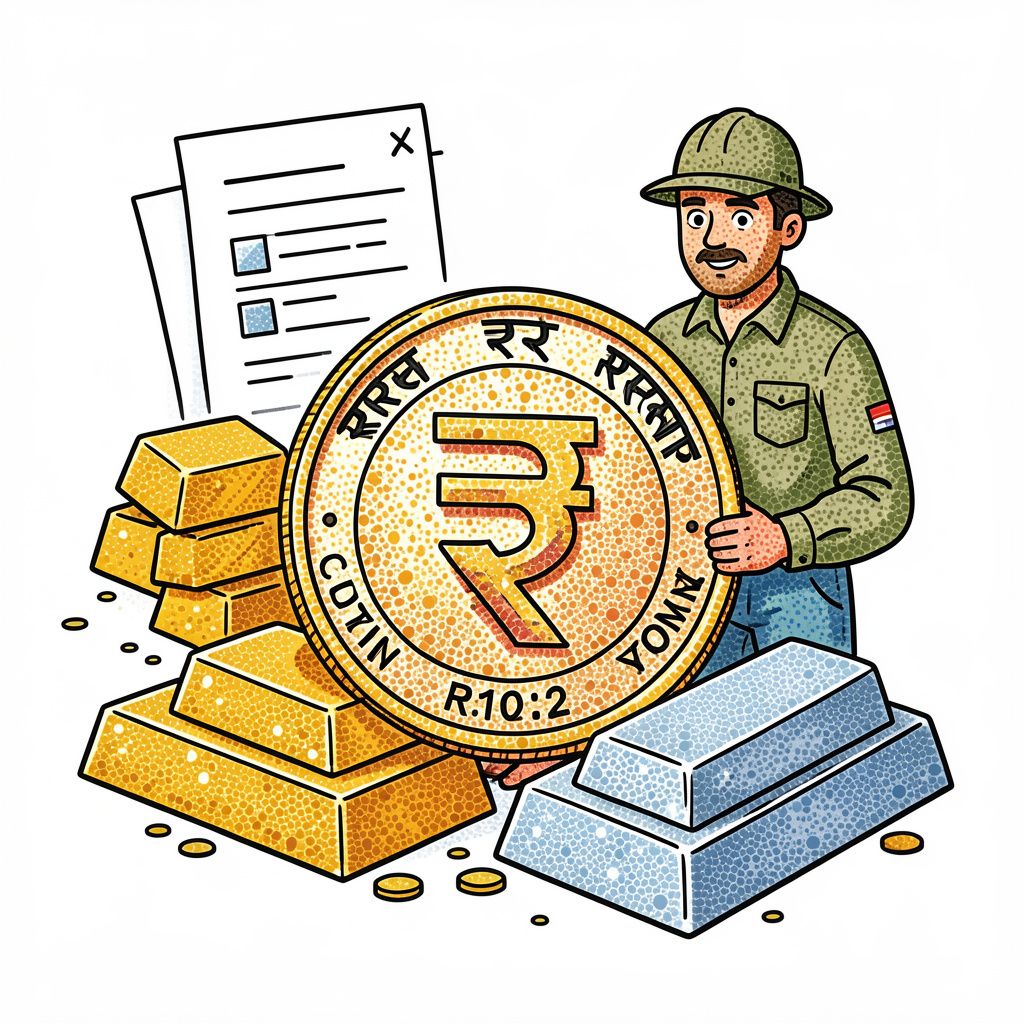
India raised gold and silver import taxes to 15 percent to stabilize the rupee, though experts warn this aggressive hike could unintentionally trigger a massive resurgence in illegal smuggling.
Macroeconomic Pressures and Policy Response
Effective today, May 13, 2026, the Indian Finance Ministry and the Central Board of Indirect Taxes and Customs (CBIC) officially implemented a revised tax structure on precious metals [3][5]. The government raised the overarching import tariff on gold and silver to 15 percent, reversing a prior reduction to 6 percent established in July 2024 [3]. This new rate is composed of a 10 percent basic customs duty and a 5 percent Agriculture Infrastructure and Development Cess (AIDC) [1][2][3][5]. The swift policy reversal is primarily designed to artificially depress demand in the world’s second-largest consumer market for precious metals, thereby narrowing the national trade deficit and providing a buffer for the Indian rupee, which has recently ranked among Asia’s worst-performing currencies [2].
Surging Demand and Government Austerity Appeals
The tariff hike follows a period of explosive growth in bullion imports. According to the Global Trade Research Initiative (GTRI), India’s gold bar imports surged from $36.5 billion in 2022 to $58.9 billion in 2025, representing an increase of 61.37 percent [4]. Silver imports also experienced aggressive growth, climbing 44 percent year-on-year to $9.2 billion in 2025 [3]. The momentum continued into 2026, with January alone recording nearly $12 billion in gold imports [3]. Furthermore, data from the World Gold Council indicated that inflows into India’s gold exchange-traded funds (ETFs) skyrocketed by 186 percent year-on-year in the first quarter of 2026, reaching a record 20 metric tons [1][2].
Closing Trade Loopholes and the Grey Market Threat
In tandem with the baseline tariff increases, authorities have moved to close specific trade loopholes. Notably, gold imported from the United Arab Emirates under a fixed-quantity quota system—which previously enjoyed concessional duty rates under the India-UAE free trade agreement—will now face the same 15 percent duty structure [4][5]. The Finance Ministry also recalibrated customs duties on jewelry components and recyclable waste; gold and silver findings are now taxed at 5 percent, platinum findings at 5.4 percent, and spent catalysts containing precious metals at 4.35 percent [3][5].