Federal Judge Scolds Justice Department for Ignoring Press Laws in Reporter Home Raid
Washington, Saturday, 21 February 2026.
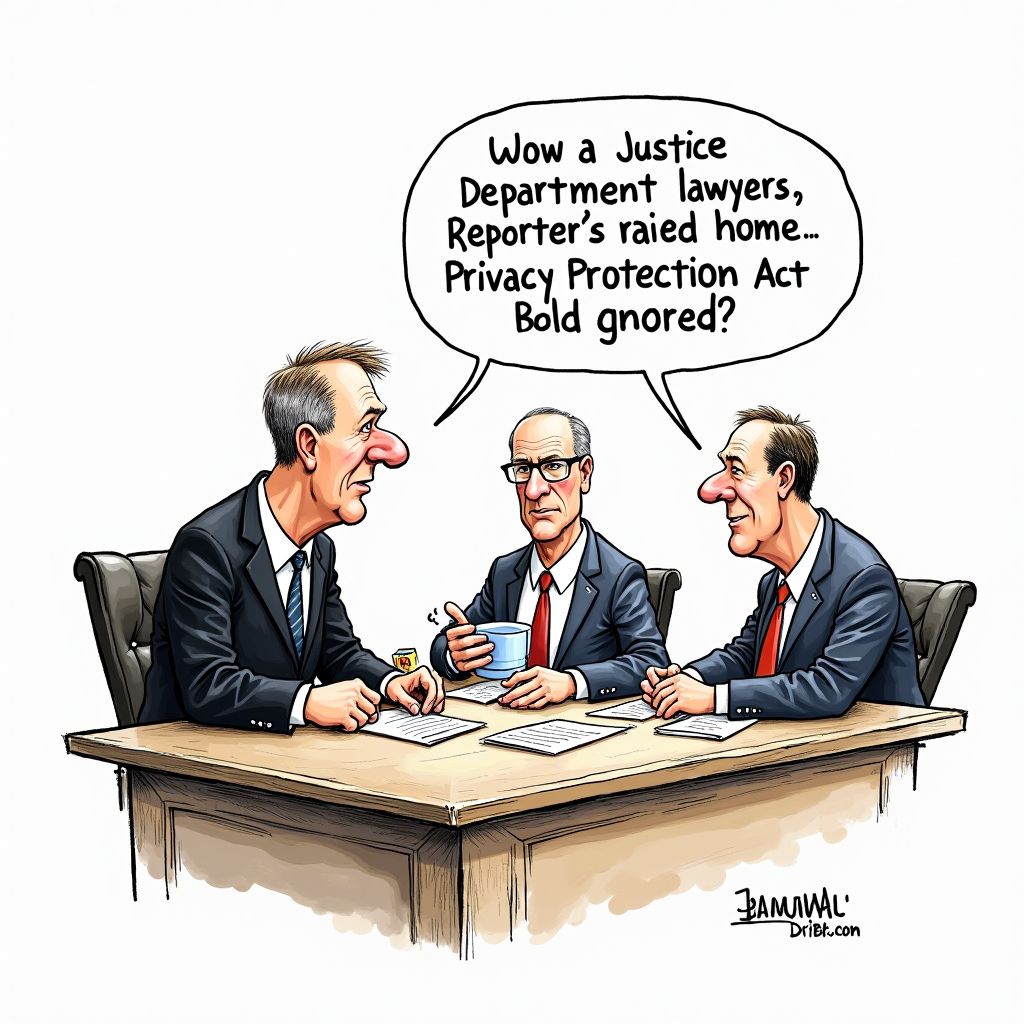
Magistrate Judge William Porter severely reprimanded prosecutors for ignoring the Privacy Protection Act when raiding a reporter’s home, bluntly asking the government’s legal team, “How could you miss it?”
Judicial Rebuke Over Omitted Statutes
During a contentious hearing in Alexandria, Virginia, on Friday, February 20, 2026, U.S. Magistrate Judge William Porter issued a sharp reprimand to Justice Department prosecutors regarding the recent search of a journalist’s home [1][4]. The judge expressed frustration that the government failed to disclose the applicability of the Privacy Protection Act of 1980 when applying for the warrant to search the residence of Washington Post reporter Hannah Natanson earlier this year [1][2]. Addressing the government’s legal team directly, Judge Porter asked, “Why didn’t you raise it? It’s a threshold question in this case” [4]. Assistant U.S. Attorney Gordon D. Kromberg apologized to the court, conceding that while he was aware of the law—which restricts government searches of reporters’ materials—he had followed department policy in the application process [4].
The January Raid and National Security
The legal confrontation stems from a raid conducted by federal agents on January 14, 2026, at Natanson’s home [5]. During the search, investigators seized a significant array of electronic equipment, including a phone, two laptops, a recorder, a portable hard drive, and a Garmin smartwatch [2][5]. The Justice Department maintains that these items contain evidence relevant to an ongoing investigation into Aurelio Luis Perez-Lugones, a Pentagon contractor arrested on January 8, 2026 [5]. Perez-Lugones has pleaded not guilty to charges of unlawfully transmitting national defense information to the reporter and retaining classified documents [1][5].
Constitutional Concerns and Source Protection
Attorneys for The Washington Post have characterized the government’s actions as a threat to press freedom, arguing that the seizure allows the state to “run roughshod” over First Amendment rights [5]. Simon Latcovich, representing the newspaper, warned that the government had effectively “commandeered the entirety of reporter Hannah Natanson’s professional life” and noted that the seized devices could expose the identities of more than 1,200 confidential sources [3]. Latcovich stated that since the seizure, Natanson’s sources have already “dried up” due to fears of exposure [5]. Conversely, Justice Department attorney Christian Dibblee argued that the search was not a “fishing expedition” and emphasized the national security implications of the alleged leak [5].
Upcoming Ruling
Judge Porter, who has temporarily blocked the government from reviewing the data on the seized devices, indicated he would not issue an immediate ruling from the bench on Friday [3][5]. However, he stated his intention to issue a decision regarding the potential return of the devices before a follow-up hearing scheduled for March 4, 2026 [3][5]. The judge also suggested the possibility of establishing a “filter team” to review the data to determine what falls within the scope of the warrant, attempting to find a middle ground between the investigation’s needs and press protections [1][2].