South Korea's Stock Market Plunges into a Bear Market After Record Highs
Seoul, Thursday, 9 July 2026.
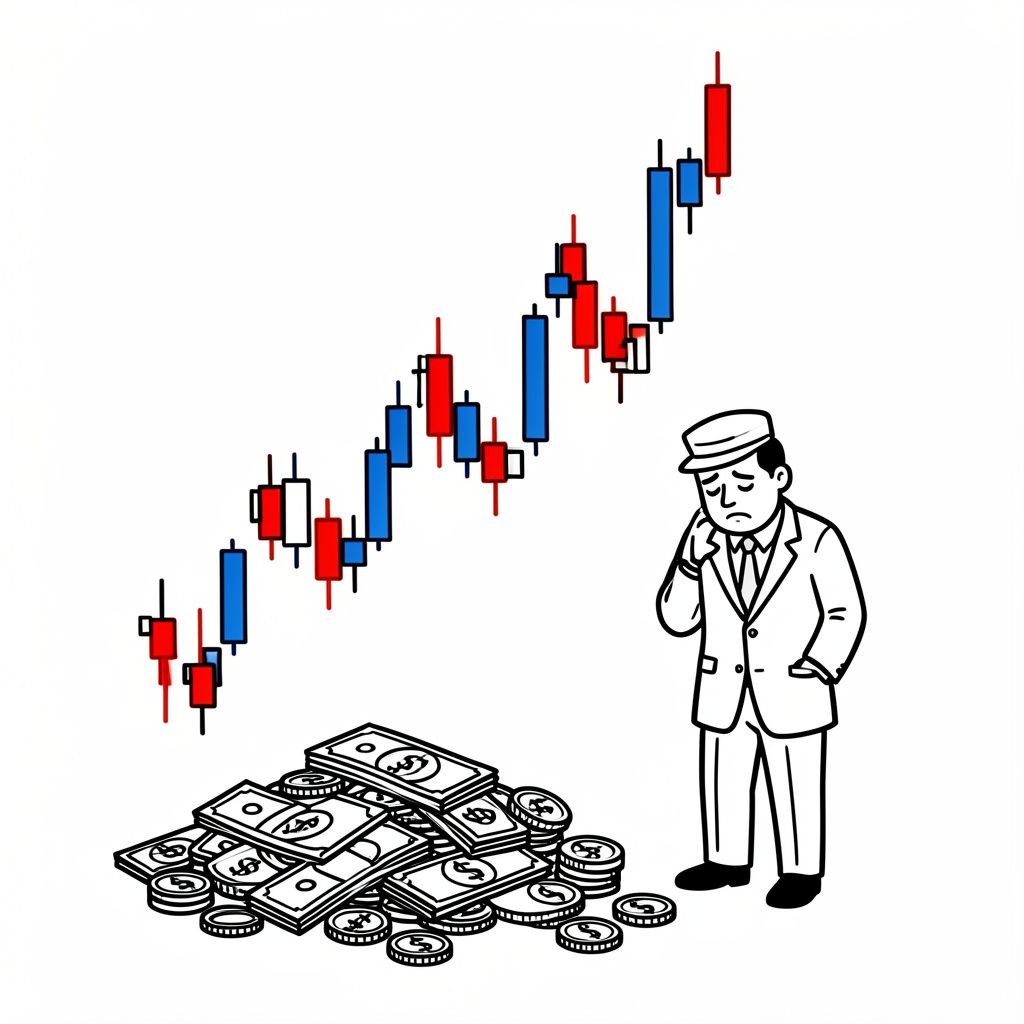
South Korea’s benchmark index entered a bear market on July 8, 2026, falling 22% from its June peak as a massive selloff in major microchip stocks erased historic gains.
The Swift Descent from Historic Highs
The rapid descent of the Korea Composite Stock Price Index (KOSPI) culminated on Wednesday, July 8, 2026, when the index fell by as much as 5.4% during intraday trading to hit a near three-week low of 7,222.60 points [2]. This sharp drop pushed the index down more than 20% from its historic peak of 9,385.59 points established on June 19, 2026, representing an intraday peak-to-trough drop of -23.046% [2]. By closing down 5% on Wednesday, the benchmark officially cemented its entry into a technical bear market, which is defined by a 20% or greater decline from a recent peak [1][2][5]. This represents a stunning reversal for an index that had almost quadrupled since May 2025 and was showing a return of 122% for the year at its peak [1].
Leverage and Valuation Fatigue Drive Correction
A confluence of negative factors, including valuation fatigue, high leverage, and sector-specific disruptions, fueled this rapid correction [1][2]. Leverage in the South Korean market has risen significantly, particularly following the launch of several leveraged and inverse exchange-traded funds (ETFs) since May 2026 [2]. Additionally, profit-taking became highly attractive to investors looking to lock in gains after the index’s meteoric rise [1][2]. The selling pressure was further intensified by international capital outflows as global investors reassessed their exposure to East Asian tech assets [1].
Chip Giants Lead the Selloff
The downturn was primarily led by South Korea’s heavyweight semiconductor sector, with industry giants Samsung Electronics and SK Hynix bearing the brunt of the market’s anxiety [2][4]. Although Samsung Electronics recently reported record-high second-quarter profits, its revenue figures failed to meet some of the loftiest market expectations [2]. This minor miss triggered widespread skepticism about whether the artificial intelligence (AI) boom can continue to sustain such stretched valuations [2]. Consequently, Samsung’s stock plunged by as much as 6% on July 8, prompting investors to lock in profits on a stock that had more than doubled over the preceding 12 months [2].
Supply Chain Concerns and Broader Tech Declines
Meanwhile, Samsung’s primary local competitor, SK Hynix, experienced a 5% drop on Wednesday, following a 6% decline in the previous trading session [2]. The bearish sentiment in the semiconductor sector was compounded by reports that Apple Inc. is contemplating sourcing memory chips from Chinese suppliers due to ongoing supply shortages among South Korean producers [2]. Such a shift could potentially dilute the market dominance of South Korean chipmakers and drag down global memory prices in the medium term [2]. The AI-driven selloff also spilled over into other high-performing sectors, such as automotive; Hyundai Motor, which had rallied 120% over the past year due to its Nvidia partnerships and physical AI initiatives, slid 4.7% on Wednesday [2].
A Sharp Next-Day Rebound
Despite the severe technical bear market designation on July 8, the South Korean stock market showed immediate signs of resilience the following morning, Thursday, July 9, 2026 [3]. According to the Korea Exchange (KRX), the KOSPI opened at 7,486.64 points, marking a dramatic surge of 239.85 points, or 3.31%, from the previous day’s close [3]. This indicates that the previous day’s close was approximately 7,246.79 points, calculated as 7246.79 [3]. This rapid recovery was driven by a powerful wave of bargain hunting from foreign and institutional investors, who net-purchased 280.0 billion won and 517.1 billion won respectively in early trading, while retail investors net-sold 746.4 billion won [3].
Global Tech Rally Sparks Local Recovery
This rebound was supported by a positive overnight session on Wall Street, where tech stocks rallied [3]. Notable developments included Broadcom jumping 4.8% after expanding a $30.0 billion chip supply deal with Apple, and Nvidia rising 3.7% following reports of relaxed restrictions on AI chip sales to China [3]. Consequently, South Korea’s major chipmakers experienced a massive gap-up on July 9, with Samsung Electronics and SK Hynix surging by 3.24% and 7.27% respectively in early trade [3]. Analysts like Lee Jae-man from Hana Securities noted that with 88% of listed stocks having fallen more than 30% from their annual peaks, many large-cap equities had reached attractive valuation floors [3].
Macroeconomic Headwinds and Global Context
While domestic bargain hunting has provided a temporary cushion, the broader economic landscape remains fraught with international challenges [3]. Overnight, global energy markets saw significant volatility as Brent crude rose 5.21% to $78.02 per barrel and West Texas Intermediate (WTI) climbed 4.37% to $73.52 per barrel amid renewed geopolitical tensions [3]. Concurrently, the yield on the US 10-year Treasury note rose by 0.20 percentage points to 4.58%, while the 30-year yield increased by 0.22 percentage points to 5.07% [3]. These moves followed the release of the Federal Open Market Committee (FOMC) June meeting minutes, which reiterated persistent inflation concerns and pushed the market-implied probability of a US Federal Reserve interest rate hike above 50% [3].
Currency Volatility and Long-Term Outlook
For South Korea’s highly export-dependent economy, these global macroeconomic pressures—combined with a volatile domestic currency, which traded at 1,500.80 won per US dollar on the morning of July 9—could test the sustainability of any market recovery [3]. The KOSPI’s quick transition from the world’s hottest stock market to a technical bear market, followed by a sharp intraday bounce, highlights the extreme sensitivity of modern tech-heavy indices to global supply chain shifts and monetary policy expectations [1][2][3]. Investors and multinational executives will continue to watch whether South Korea’s chip sector can maintain its technological edge or if rising competition and high leverage will prolong the market’s volatility [1][2].