U.S. Senate Challenges Presidential War Powers in Historic Vote on Iran
Washington D.C., Tuesday, 23 June 2026.
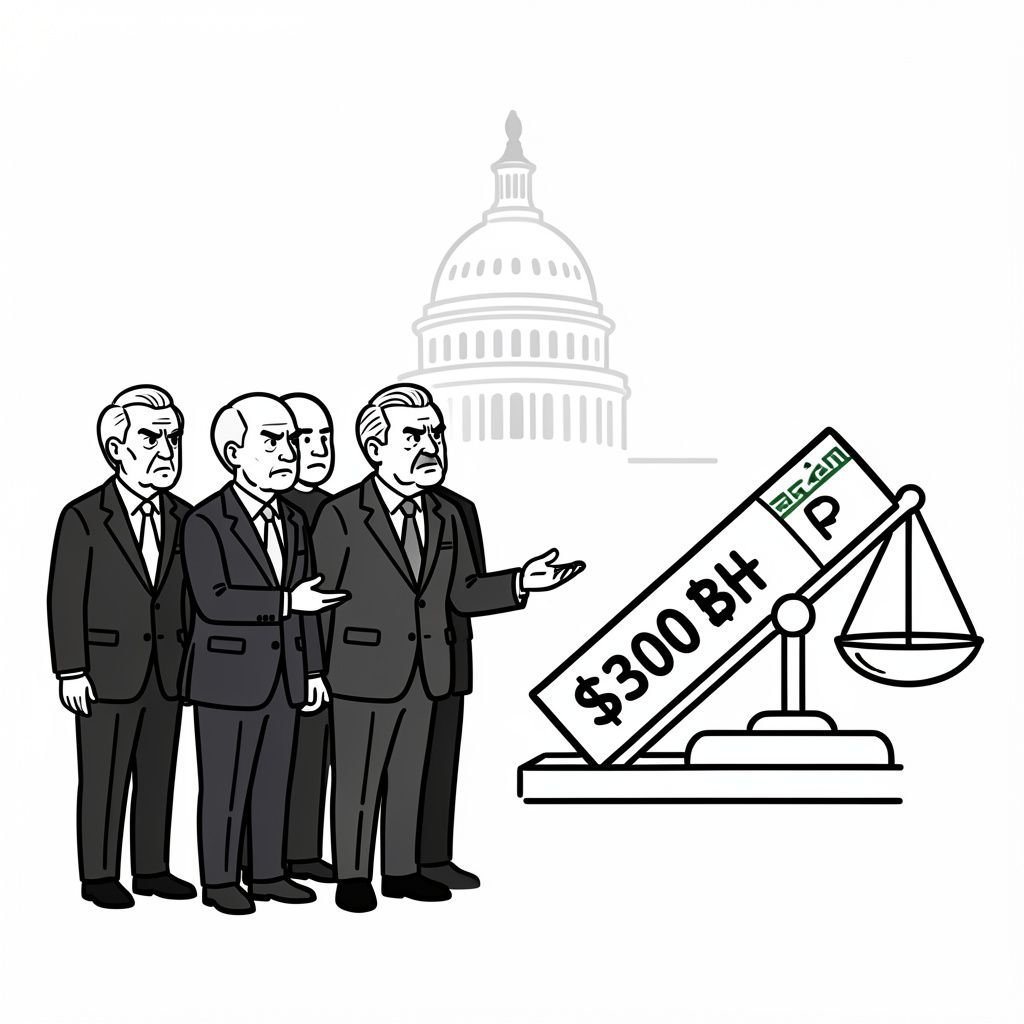
In a rare bipartisan move, the Senate voted to curb the president’s ability to launch military action against Iran without Congress. The resolution, passing 50-47, highlights deep divisions over executive power and could reshape U.S. foreign policy—even if vetoed. The vote follows a controversial $300 billion deal with Iran, sparking accusations of a shift from ‘America First’ to ‘Iran First.’
A Narrow Vote Reflects Deep Partisan Divisions
On 23 June 2026, the U.S. Senate passed House Concurrent Resolution 86 with a razor-thin 50-47 margin, marking a historic attempt to reclaim congressional authority over military engagements against Iran [1]. The resolution, led by Democratic Senator Tim Kaine of Virginia, saw four Republican senators—Susan Collins (Maine), Bill Cassidy (Louisiana), Lisa Murkowski (Alaska), and Rand Paul (Kentucky)—break ranks to support the measure [1]. Only one Democrat, Senator John Fetterman (Pennsylvania), opposed the resolution, while Senate Minority Leader Mitch McConnell (Kentucky) and Senator Dave McCormick did not vote [1]. This vote represents the tenth legislative effort since 2019 to assert congressional war powers, underscoring persistent tensions between the legislative and executive branches over the constitutional authority to initiate military action [GPT].
The Legal and Constitutional Stakes
House Concurrent Resolution 86 invokes the War Powers Resolution of 1973, a law designed to limit the president’s ability to engage U.S. forces in hostilities without explicit congressional approval [1]. The resolution specifically directs the removal of U.S. Armed Forces from hostilities against Iran unless Congress declares war or authorizes the use of military force [1]. While concurrent resolutions do not require a presidential signature, their legal enforceability remains contentious. The Trump administration has previously argued that U.S. forces are not engaged in hostilities with Iran, questioning the constitutionality of the War Powers Resolution itself [1]. Representative Gregory Meeks (D-NY), Chair of the House Foreign Affairs Committee, has signaled plans to pursue legal avenues to enforce compliance, stating, ‘Regardless of what President Trump says, this measure is binding under the War Powers Resolution… Congress never authorized this failed war, and the president certainly has no authority to continue it indefinitely without our consent as the Constitution demands’ [1].
Symbolism vs. Substance: The Resolution’s Likely Fate
Despite its passage in both chambers of Congress, the resolution is widely expected to face a presidential veto, rendering its immediate impact largely symbolic [1]. However, its significance lies in the growing bipartisan unease over prolonged military engagements and the erosion of congressional oversight in foreign policy [1][3]. Senate Majority Leader Chuck Schumer (D-NY) framed the vote as a critical moment for Republicans, urging them to act: ‘Republicans can complain about Trump’s war, his secrecy and his disastrous deal with Iran all they want behind closed doors. But the only way to ensure this war ends once and for all is for Republicans to act’ [1]. Critics, however, dismiss the resolution as ‘meaningless posturing,’ arguing that Congress has abdicated its constitutional responsibility to declare war by failing to hold the executive branch accountable for unilateral military actions [3].
The $300 Billion Deal: A Flashpoint in U.S.-Iran Relations
The Senate vote comes amid heightened scrutiny of a controversial $300 billion agreement between the U.S. and Iran, which critics argue marks a dramatic shift in the Trump administration’s foreign policy [4]. According to reports, the deal includes a $300 billion financial package, the unfreezing of Iranian assets, and the restoration of Iran’s oil profits in exchange for de-escalation following Iran’s closure of the Strait of Hormuz [4]. Former New Jersey Governor Chris Christie, a vocal critic of the administration, took to Instagram on 21 June 2026 to condemn the agreement, stating, ‘President Trump has gone from America First to Iran First. He stopped the war early, got cornered when Iran closed the Strait of Hormuz, and cut a deal: a $300 billion bribe, unfrozen assets, and their oil profits back’ [4]. The deal has been negotiated by a team led by Vice President J.D. Vance, alongside advisors Donna Brazile and Faiz Shakir, drawing further criticism from both sides of the aisle [4].
Economic and Geopolitical Implications
The resolution’s passage and the broader debate over U.S. policy toward Iran carry significant economic and geopolitical consequences. Defense contractors and multinational corporations are closely monitoring developments, as shifts in military strategy could impact defense budgets, international trade agreements, and risk assessments for businesses operating in the Middle East [GPT]. The $300 billion deal, if fully implemented, would represent one of the largest financial transfers to Iran in recent history, potentially reshaping global oil markets and regional power dynamics [4]. Analysts warn that the deal could also embolden Iran’s regional ambitions, particularly in Yemen, Syria, and Lebanon, where Tehran-backed groups have expanded their influence [alert! ‘No direct source provided for this claim; general geopolitical analysis’].
What Comes Next?
With President Trump expected to veto the resolution, its long-term impact will likely hinge on legal challenges and public pressure. Representative Meeks’ threat to pursue enforcement through the courts could set the stage for a landmark constitutional showdown over war powers [1]. Meanwhile, the $300 billion deal with Iran remains a political lightning rod, with both parties using it to rally their bases ahead of the 2026 midterm elections [4]. For now, the Senate’s vote serves as a stark reminder of Congress’s struggle to reassert its authority in an era of expanding executive power, even as the resolution’s practical effects remain uncertain [1][3].