Nigeria's $20 Billion Energy Corridor Aims to Power Europe
Abuja, Tuesday, 24 March 2026.
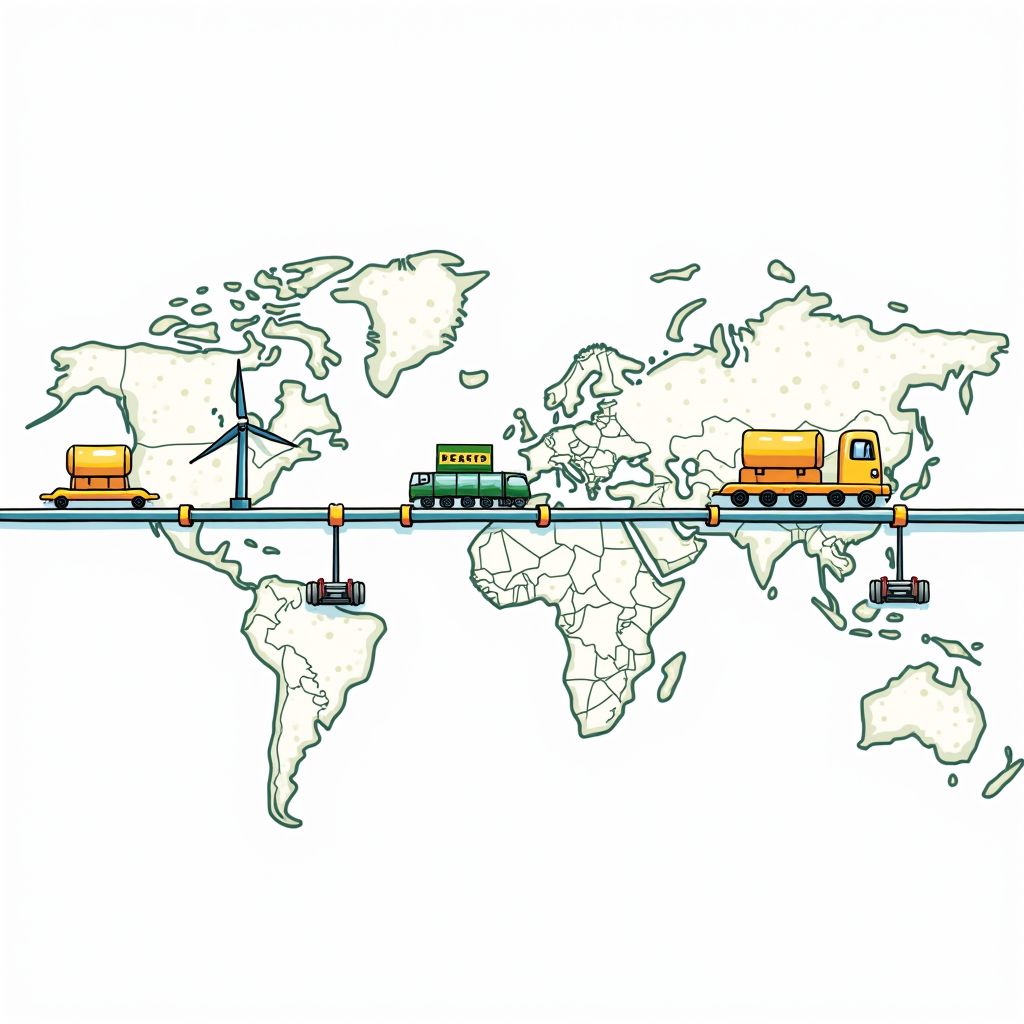
Nigeria is advancing a $20 billion pipeline through Chad and Libya to deliver 30 billion cubic meters of natural gas annually, aiming to reshape Europe’s energy landscape.
Strategic Blueprint for Energy Security
Recent high-level discussions in London have accelerated the momentum behind a transformative infrastructure project aimed at reshaping global energy flows [1][2]. During Nigerian President Bola Ahmed Tinubu’s state visit to the United Kingdom, Minister of State for Petroleum Resources (Gas) Ekperikpe Ekpo led delegations on March 15 and March 21, 2026, to finalize strategic frameworks with key industry stakeholders [1][2]. The proposed transcontinental corridor will transport natural gas from Nigeria through Chad and Libya, eventually traveling subsea to Sicily, Italy, before reaching broader European markets [2][3].
Overcoming Domestic Hurdles to Global Supply
For Nigeria, the pipeline represents a critical opportunity to monetize long-dormant energy wealth. Despite holding the largest natural gas reserves on the African continent, Nigeria has historically grappled with severe infrastructure deficits and domestic underutilization [1]. Furthermore, the lack of adequate export channels has perpetuated environmentally damaging practices such as gas flaring [3]. According to Alain Bolo, CEO of Unicorn, this new corridor holds the potential to significantly reduce gas flaring while positioning Nigeria as a dominant supplier in the European energy matrix [3].
Consortium Dynamics and Next Steps
While the economic rationale is robust, the pipeline remains in its early developmental stages [2][3]. The executing consortium must navigate complex technical, commercial, and regulatory processes before finalizing definitive agreements [2][3]. Although the exact completion timeline remains undefined [alert! ‘Project is in early developmental stages and lacks a finalized construction deadline’], market demand appears highly favorable [2][3]. Roger Tamraz, Founder and CEO of Netoil Inc., noted that the underlying technology is proven and that financing solutions are readily available [1]. Crucially, European buyers are already prepared to commit to 20-year off-take contracts, leaving the acquisition of cross-border rights-of-way as the primary remaining hurdle [1][2].