New Plastics Legislation Promises Economic Growth but Sparks Greenwashing Concerns
Washington, Wednesday, 3 June 2026.
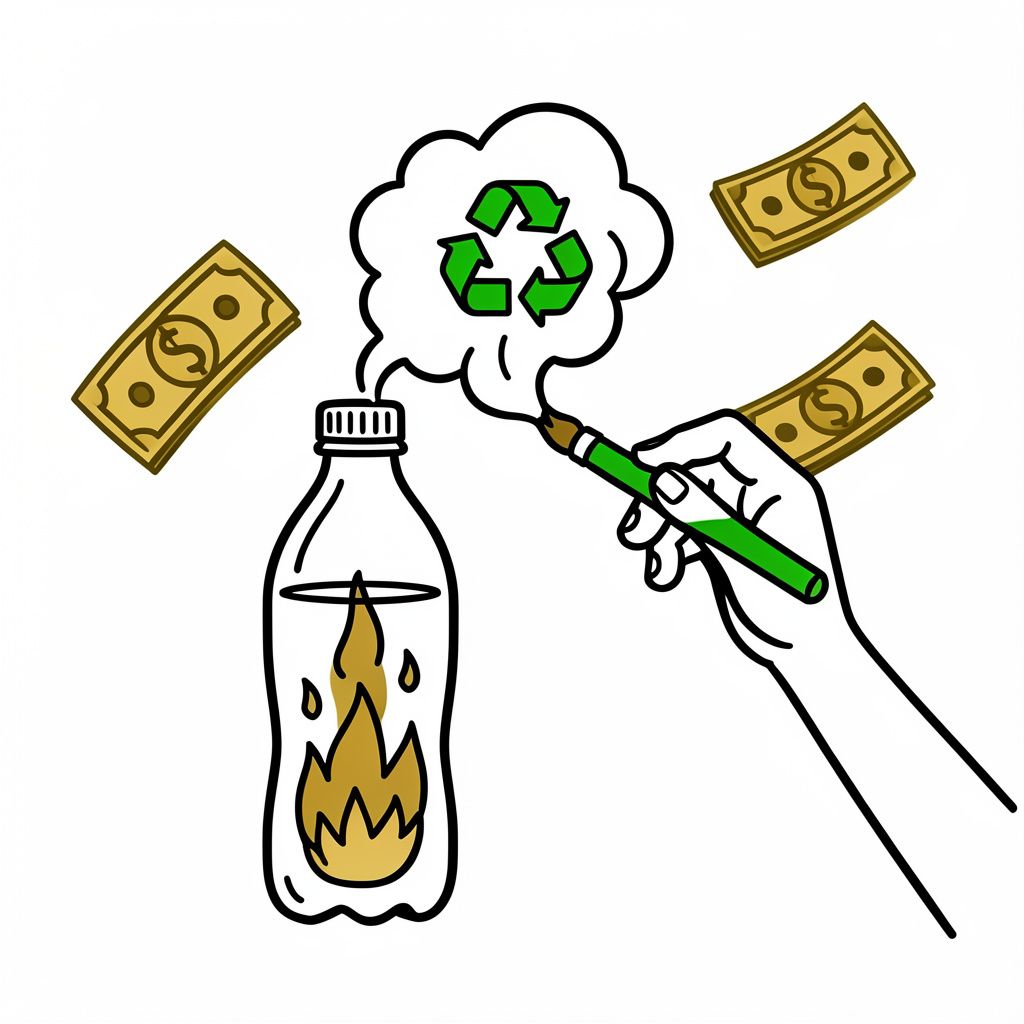
A proposed federal recycling bill could unlock $48.7 billion in economic output, but critics warn its accounting methods may allow burned plastics to be deceptively labeled as recycled.
The Legislative Push and Economic Promises
On June 2, 2026, Ross Eisenberg, president of America’s Plastic Makers (APM), took to the “Powering America Podcast” to champion the Recycled Materials Attribution Act (H.R. 7502) [1]. Introduced earlier this year on February 11 and 12, 2026, by Representative Nick Langworthy (R-NY), the bill aims to establish uniform federal standards for recycling and marketing claims [1][3][5][7]. The legislation, currently pending in the House Committee on Energy and Commerce, is presented by its backers as a massive economic catalyst [5]. According to an economic analysis by APM, redirecting 50 percent of municipal solid waste plastics to recycling facilities could generate 173,200 jobs, $12.8 billion in annual payroll, and a staggering $48.7 billion in annual economic output nationwide [1]. Of that total, direct impacts alone would account for 43,000 jobs and $16.4 billion in output, calculating to an average output of 381395.349 per direct job [1].
Federal Preemption and Industry Support
Furthermore, the legislation establishes a clear federal preemption under Section 6, explicitly prohibiting states and local municipalities from enforcing their own distinct laws or standards regarding recycled content claims [2]. This centralized approach is heavily backed by an industry coalition that includes the American Chemistry Council, the Consumer Brands Association, and the Recycling Leadership Council, the latter of which was formed in May 2026 [3][8]. Proponents like John Hewitt, senior vice president at the Consumer Brands Association, argue that this federal framework will reduce consumer confusion, lower compliance costs, and unlock investments in advanced recycling technologies [3][6].
The Greenwashing Backlash and State-Level Threats
Anja Brandon, director of plastics policy at the Ocean Conservancy, has been particularly vocal regarding the bill’s intent. On June 1, 2026, Brandon stated that broadly codifying mass balance accounting without safeguards against plastics-to-fuels creates a system “ripe for greenwashing” where numbers might add up on paper but fail to reflect real-world material recovery [6][8]. Opponents also caution that Section 6’s federal preemption clause threatens state-level Extended Producer Responsibility (EPR) packaging programs, effectively stripping states of the ability to enforce stricter minimum recycled content requirements [4].
A Divided Future for American Infrastructure
As H.R. 7502 remains pending in Congress, traditional mechanical recyclers across the country are reportedly struggling to stay afloat [6][8]. Environmental groups argue that the legislation fails to support proven, existing infrastructure, instead pivoting federal support toward controversial advanced recycling methods [6][8]. Whether this bill will successfully navigate the House Committee on Energy and Commerce to become actionable policy remains uncertain, but it has undeniably set the stage for a significant shift in how the nation approaches plastic recycling and sustainability.