European Governments Tap Emergency Reserves to Halt Soaring Diesel Costs
Brussels, Friday, 30 October 2026.
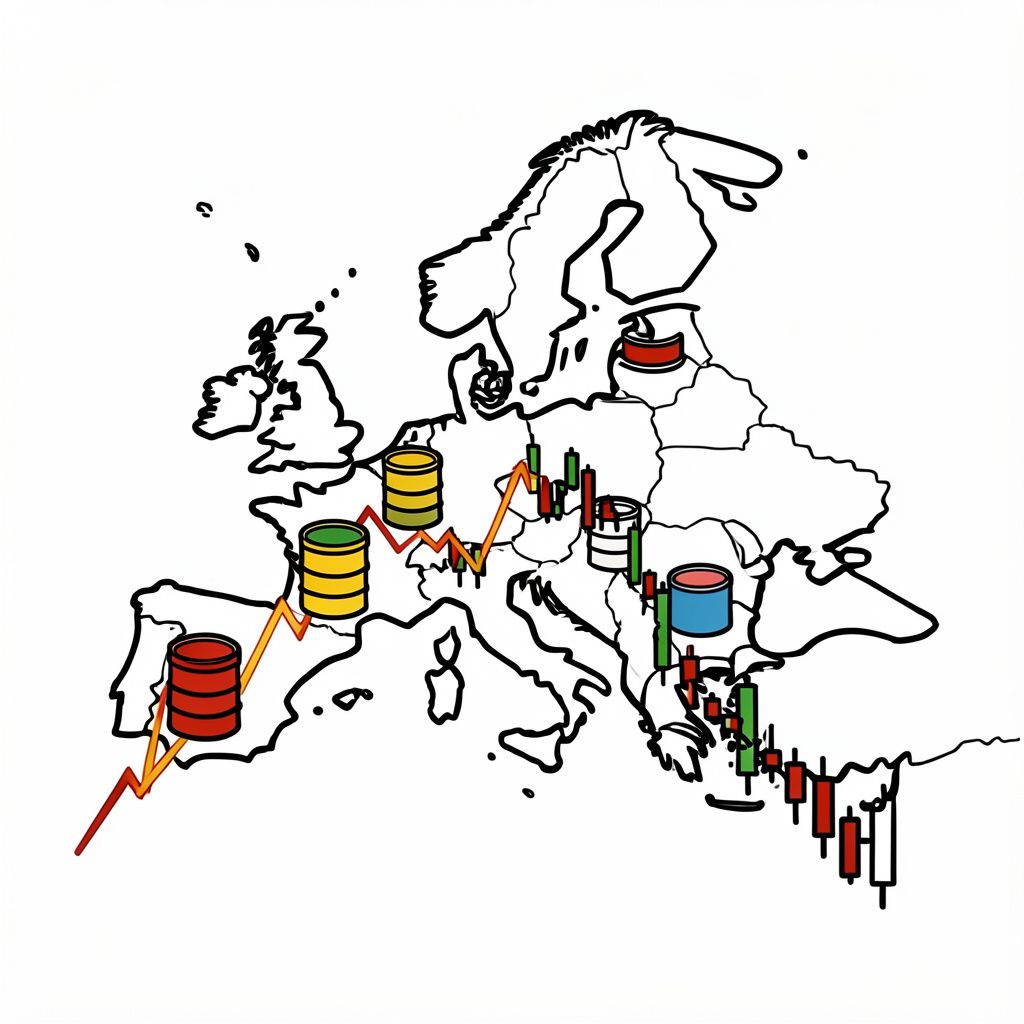
Twelve European nations are releasing nearly 43 million emergency fuel barrels to curb a 35% diesel price spike threatening industrial output and 50 million households ahead of winter.
Escalating Energy Crisis Drives Coordinated Emergency Response
Twelve European nations—Belgium, Denmark, France, Germany, Greece, Italy, Latvia, Lithuania, Luxembourg, the Netherlands, Portugal, and Sweden—announced on October 30, 2026, a coordinated release of 42.6 million barrels of emergency crude oil and petroleum reserves to address severe diesel shortages and soaring fuel prices. The crisis has intensified as geopolitical tensions in the Middle East disrupt critical supply chains, particularly those dependent on Iranian oil routes [1]. This follows a sharp increase in European diesel prices, which reached €2.15 per liter on October 26, 2026—a 35% surge since late February 2026 [1][2]. The intervention aims to stabilize markets before winter, when heating demand will exacerbate energy poverty for nearly 50 million households across the continent [1].
Diesel Shortages Threaten Industrial and Household Stability
The diesel shortage has become the epicenter of Europe’s energy crisis, with prices now exceeding €2.15 per liter—a price point that has nearly doubled since the onset of regional conflicts in early 2026 [1][2]. France, one of the hardest-hit nations, will contribute 10 million barrels of diesel from its strategic reserves, with the fuel expected to hit the market within days [3][6]. French Economy Minister Roland Lescure projected a reduction of 12 to 18 euro cents per liter, though the impact on consumer prices remains uncertain [3][6]. The broader European release averages 460,000 barrels per day over three months, with half allocated to diesel—a critical fuel for transportation and heating [3].
Geopolitical and Structural Vulnerabilities Amplify the Crisis
The diesel shortage is compounded by structural weaknesses in Europe’s refining capacity. Over the past two decades, the EU has shuttered roughly 25% of its refineries, reducing overall capacity by 10% and leaving the bloc heavily dependent on imported fuel [8]. European Energy Commissioner Dan Jørgensen acknowledged this vulnerability, stating that the closures were a mistake and calling for immediate measures to boost production from remaining refineries [8]. Meanwhile, conflicts in the Middle East and Ukrainian strikes on Russian refining infrastructure have crippled key supply routes, leaving Europe scrambling to replace lost refining capacity [8][alert! ‘IEA data on refining disruptions not explicitly quantified in sources’].
Global Coordination and Long-Term Solutions Under Scrutiny
The emergency release is part of a broader G7 and International Energy Agency (IEA) initiative to inject up to 100 million barrels of crude and refined fuel into global markets over four months [1][4]. The IEA has already released 330 million barrels since March 2026, with an additional 100 million barrels planned [1]. However, industry executives warn that depleted global stocks leave little margin for error, as another major supply disruption could send prices sharply higher [4]. EU policymakers are also revisiting their energy framework for 2030 and beyond, with a proposal expected in early 2027 [7]. For now, the focus remains on immediate relief: securing diesel supplies and shielding households from the worst of the price shocks.
Sources
- www.pamphlets.blog
- oilprice.com
- www.google.com
- oilprice.com
- www.google.com
- www.google.com
- www.euronews.com
- www.euronews.com
- www.facebook.com
- www.facebook.com
- www.google.com