U.S. Halts Military Strikes as Iran Agrees to Reopen the Strait of Hormuz
Washington, Wednesday, 8 April 2026.
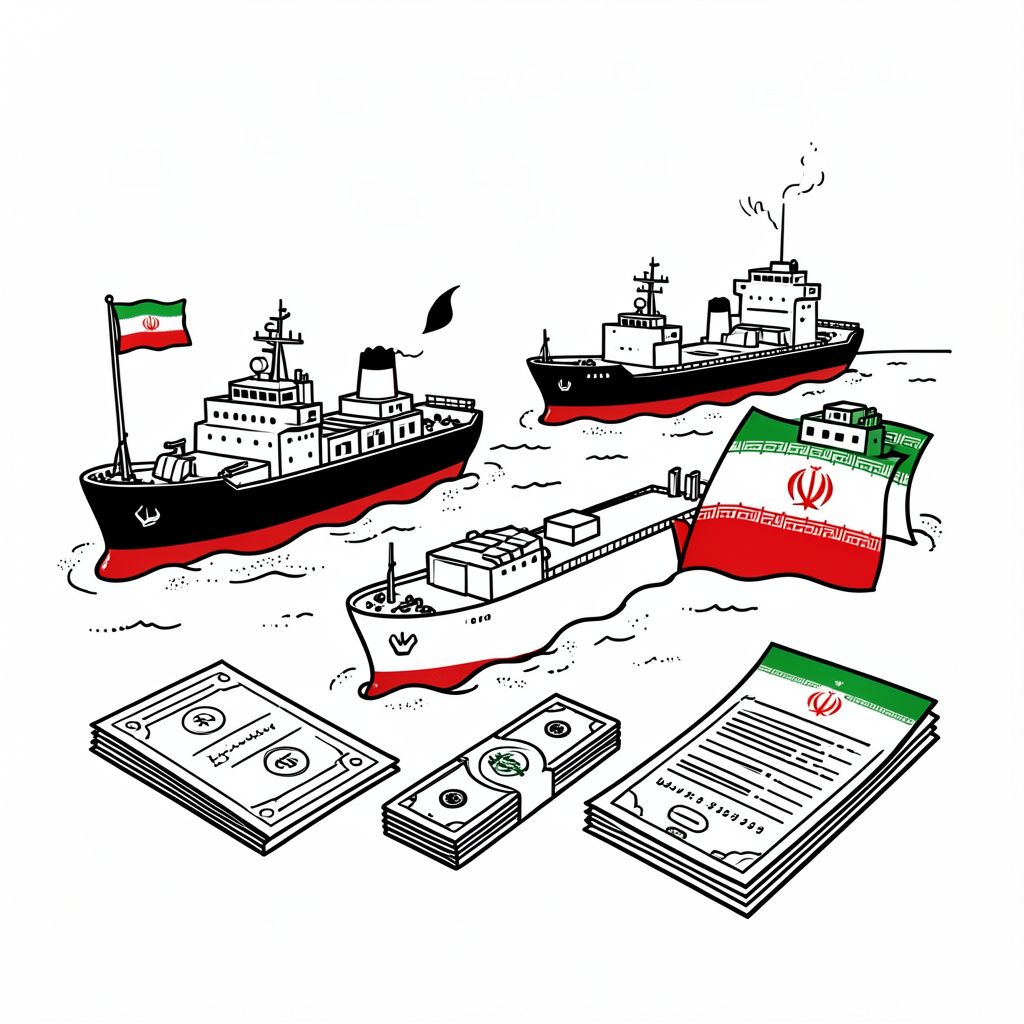
Averting devastating strikes, a two-week ceasefire hinges on reopening the Strait of Hormuz under a bold plan granting Tehran military control and lucrative transit fees over the waterway.
Decoding Tehran’s 10-Point Proposal
The core of this temporary cessation of hostilities rests on a “workable” 10-point peace plan drafted by Tehran, which the U.S. has accepted as a general framework for upcoming negotiations [3][4]. The sweeping demands represent a significant shift in regional power dynamics. Iran’s stipulations include the complete withdrawal of U.S. combat forces from the Middle East, the lifting of all primary and secondary sanctions, the unfreezing of Iranian assets, and formal American acceptance of Iran’s uranium enrichment program [2][7]. Furthermore, the plan mandates compensation for war damages and requires any final agreement to be cemented by a binding UN Security Council resolution [2][7].
A Fragile Truce Amid High Casualties
The human and structural toll leading up to this ceasefire has been devastating, with documented fatalities across the immediate region totaling at least 3436 based on current reports of deaths in Iran, Lebanon, Israel, and among U.S. service members [1]. American and Israeli pilots have conducted dynamic strikes, bombing over 13,000 ground targets since late February [6]. On the day the ceasefire was announced, intense airstrikes continued to hit residential areas in Tehran, alongside repeated Israeli attacks on a petrochemical site in Shiraz and critical transport bridges [1]. While a U.S. official confirmed that offensive operations have halted, defensive measures remain active [4]. Highlighting the fragility of the truce, missile alerts sounded in Israel and the United Arab Emirates shortly after the agreement was declared [4].
Domestic Backlash and the Path Forward
Back in Washington, the administration’s abrupt pivot from threatening the “death of Iranian civilisation” to embracing Tehran’s framework has ignited fierce bipartisan backlash [3]. While White House Press Secretary Karoline Leavitt praised the administration’s “powerful military” for forcing Iran to reopen the strait, lawmakers across the aisle have voiced stark opposition [4]. Republican Congressman Austin Scott labeled the president’s remarks as “counter-productive,” while Democratic Congressman Joaquin Castro argued the pivot demonstrates the president is “not fit to lead” [3].