Unemployment Reaches Four-Year High as Delayed Data Reveals Sharp October Job Losses
Washington, Tuesday, 16 December 2025.
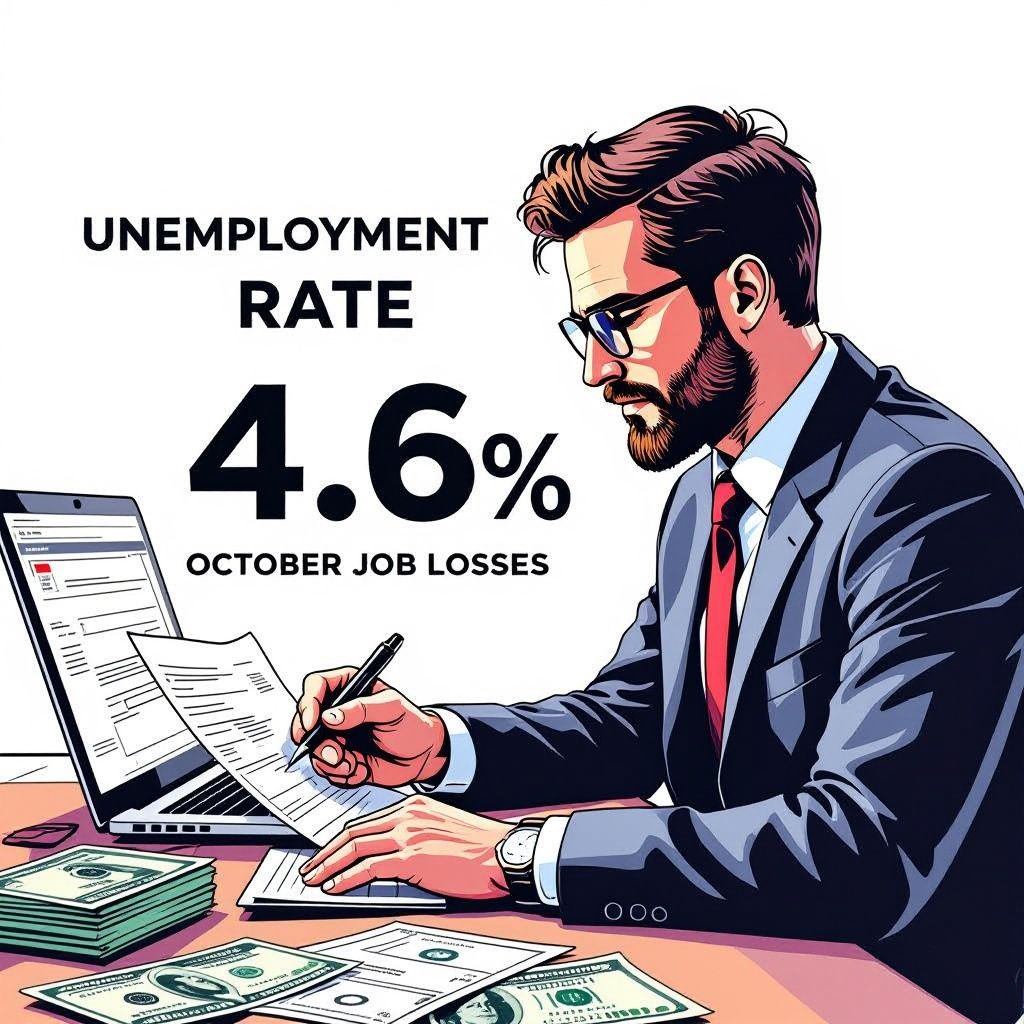
Delayed Labor Department figures confirm a cooling economy with unemployment hitting 4.6 percent. Most intriguingly, revised data reveals a net loss of 105,000 jobs in October, driven by significant federal departures.
Labor Market Cools as Volatility Defines Q4
The release of delayed employment figures on Tuesday, December 16, offers a sobering assessment of the U.S. economy’s trajectory as 2025 draws to a close. While employers added 64,000 jobs in November, this modest gain was overshadowed by a stark revision for October, which saw the economy shed 105,000 positions [1][4][7]. This volatility pushed the unemployment rate to 4.6 percent, a level not seen since September 2021 [1][3]. The data, released by the Bureau of Labor Statistics (BLS) following a 43-day government shutdown, confirms that the labor market has shifted onto a softer footing, with hiring decelerating significantly compared to the start of the year [3][7].
Sector Divergence: Healthcare Buoys a Fragile Market
Beneath the headline numbers, a sharp divergence in sector performance highlights the uneven nature of the current economic climate. The healthcare industry remains a primary engine of job creation, adding 46,000 roles in November, while the construction sector contributed a surprising 28,000 jobs despite high borrowing costs [3][8]. These gains were necessary to offset weakness elsewhere; the transportation and warehousing sector shed 18,000 positions, and the leisure and hospitality industry—once a post-pandemic growth driver—lost 12,000 jobs [4][8]. Manufacturing also struggled, contracting by 5,000 jobs in November [1][5]. This disparity led Heather Long, chief economist at Navy Federal Credit Union, to characterize the current environment as a “jobs recession,” noting that the nation has added only 100,000 jobs in the past six months [4].
Federal Reserve Policy in the Face of Data Distortions
The release of this data complicates the policy outlook for the Federal Reserve, which has already engaged in a series of rate reductions. The central bank cut interest rates by a quarter of a percentage point the week of December 8, marking the third consecutive reduction since September [1][4]. However, Federal Reserve Chair Jerome Powell has urged caution regarding the recent figures, warning on December 8 that “technical distortions” in the data warrant a “skeptical eye” [6]. The significant revisions and the impact of the government shutdown on data collection mean that policymakers may place less weight on these specific reports as they formulate their strategy for early 2026 [4][6].
Sources
- www.nytimes.com
- www.brookings.edu
- www.nbcnews.com
- www.cnbc.com
- www.npr.org
- www.theguardian.com
- abcnews.go.com
- www.usatoday.com