Commercial Longevity Market Expands as Hundreds Compete in New York Fitness Games
New York, Monday, 16 November 2026.
Attracting 500 competitors paying up to $1,400 each, New York’s inaugural Super Age Games highlighted the rapid transition of healthy-aging science into a lucrative consumer wellness industry.
The Super Age Games: A New Frontier in Functional Fitness
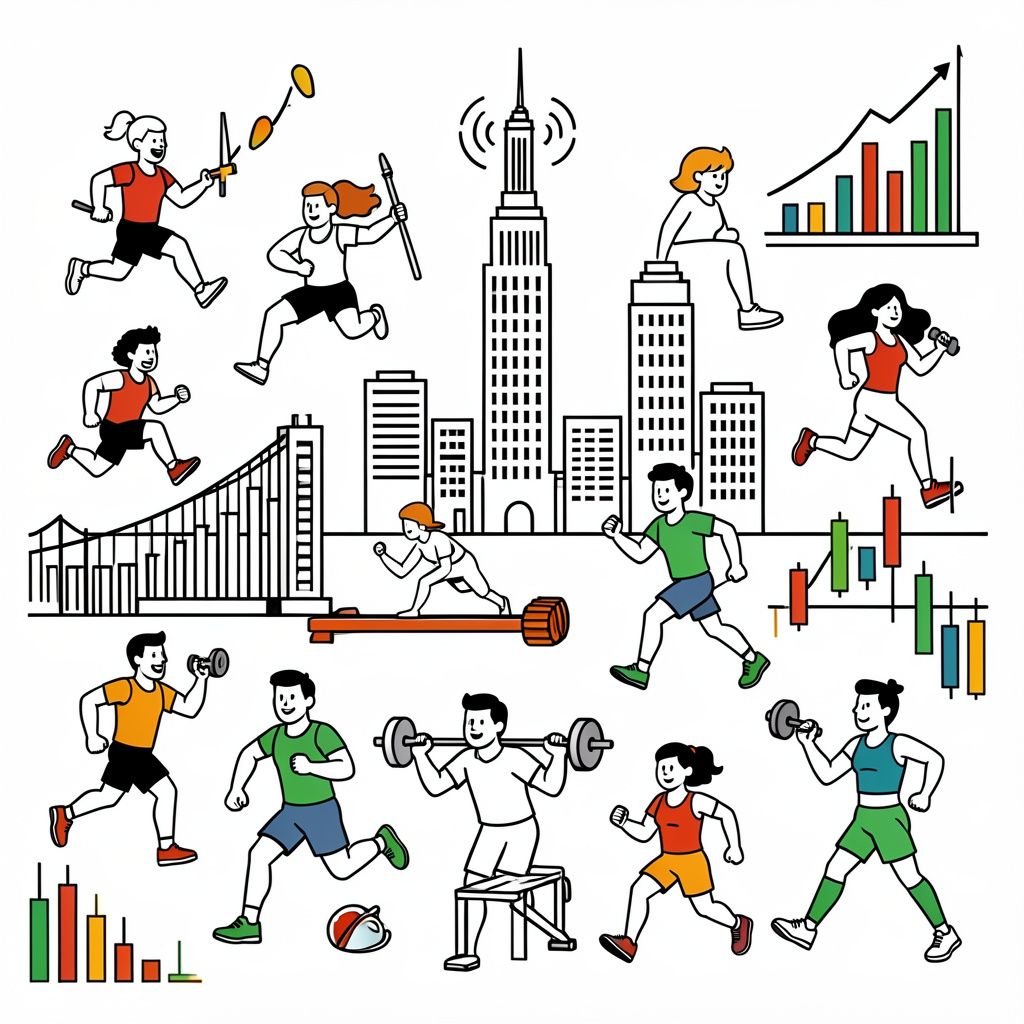
Held over the weekend of 7–8 November 2026 at a large indoor track arena in New York City, the inaugural Super Age Games brought together hundreds of participants aged 20 to 80 to compete in eight standardized trials measuring longevity potential [1][2]. The event’s eight trials included assessments of cardiovascular fitness, balance, brain health, and social connections, with organizers emphasizing measurable, trainable metrics over rigid protocols [1]. Among the participants was Kevin Shesh, who at 259 kg (571 lb) in 2002 began a fitness journey that led to completing two marathons and earning personal training certification, driven by his desire to live past 100 to witness his daughter’s milestones [1].
From Clinical Labs to Consumer Culture: The Longevity Economy Takes Center Stage
The Games are not merely athletic contests but a commercial showcase for the $12.6 trillion global longevity economy, which spans biotechnology, personalized wellness, and preventive healthcare [alert! ‘exact market size figure not provided in sources’] [GPT]. Sponsors such as Whoop, Altra, Braun, Normatec, and Emsculpt Neo were visibly present, indicating strong corporate interest in longevity-related consumer products [2]. Registration fees reflected this commercial momentum: basic entry cost $400, while a premium “Champions Pass” reached $1,400, underscoring the premium placed on data-driven health optimization [2]. Altra Running, for instance, conducted Foot Strength Analyses, highlighting how footwear technology is being integrated into longevity assessments [5].
Performance Metrics: What the Games Actually Measured
The core of the competition’s scoring system centered on aerobic fitness, particularly VO2 max, which has been correlated with extended lifespans in longitudinal studies [1][3]. However, Columbia University aging researcher John Beard cautioned that achieving elite VO2 max levels often requires training time equivalent to the extended years gained, raising questions about net benefit [1]. Participants like Dr. Riley Williams, a 60-year-old orthopedic surgeon at the Hospital for Special Surgery, completed functional trials including a beam-walking balance test, receiving a composite “Super Age” score based on performance across all eight trials [2]. Williams, whose balance was described as “atrocious,” plans to return in 2027 to improve his metrics [2].
Generational Participation and the Cultural Shift in Aging
The event attracted a diverse cohort, from 80-year-old May McDaniel—who hiked the Appalachian Trail solo at age 71—to Junior Kennedy, a 36-year-old SoulCycle instructor [2][3]. McDaniel, who grew up in an era when women were discouraged from sweating, embraced the Games as both fun and transformative, stating, “It became fun, even though it was grueling” [3]. Meanwhile, Richard Graham, an 80-year-old former automobile dealer from Santa Barbara, credited a decade-long fitness regimen—sparked by his late wife’s Parkinson’s diagnosis—with enabling his participation [3]. Both octogenarians were accompanied by family members, underscoring the intergenerational appeal of longevity-focused competition [3].
Corporate Sponsorship and the Commercialization of Longevity
The Super Age Games exemplify a broader trend: the mainstreaming of once-niche longevity interventions. Major consumer brands and health tech companies flocked to the event, signaling that longevity is no longer confined to elite clinical trials or academic research labs [2][3][5]. For example, Whoop provided wearable performance trackers, Braun showcased health monitoring devices, and Normatec offered recovery boots, all marketed as essential tools for extending healthspan [2]. Altra’s Foot Strength Analysis booth drew significant foot traffic, with one attendee remarking, “I’ve never wanted a pair of shoes more. Prime marketing” [5]. This commercial ecosystem is expected to expand, with organizers planning a 2027 return engagement [2][alert! ‘2027 event details not finalized’].