Trump Initiates Major Combat Operations Targeting Regime Change in Iran
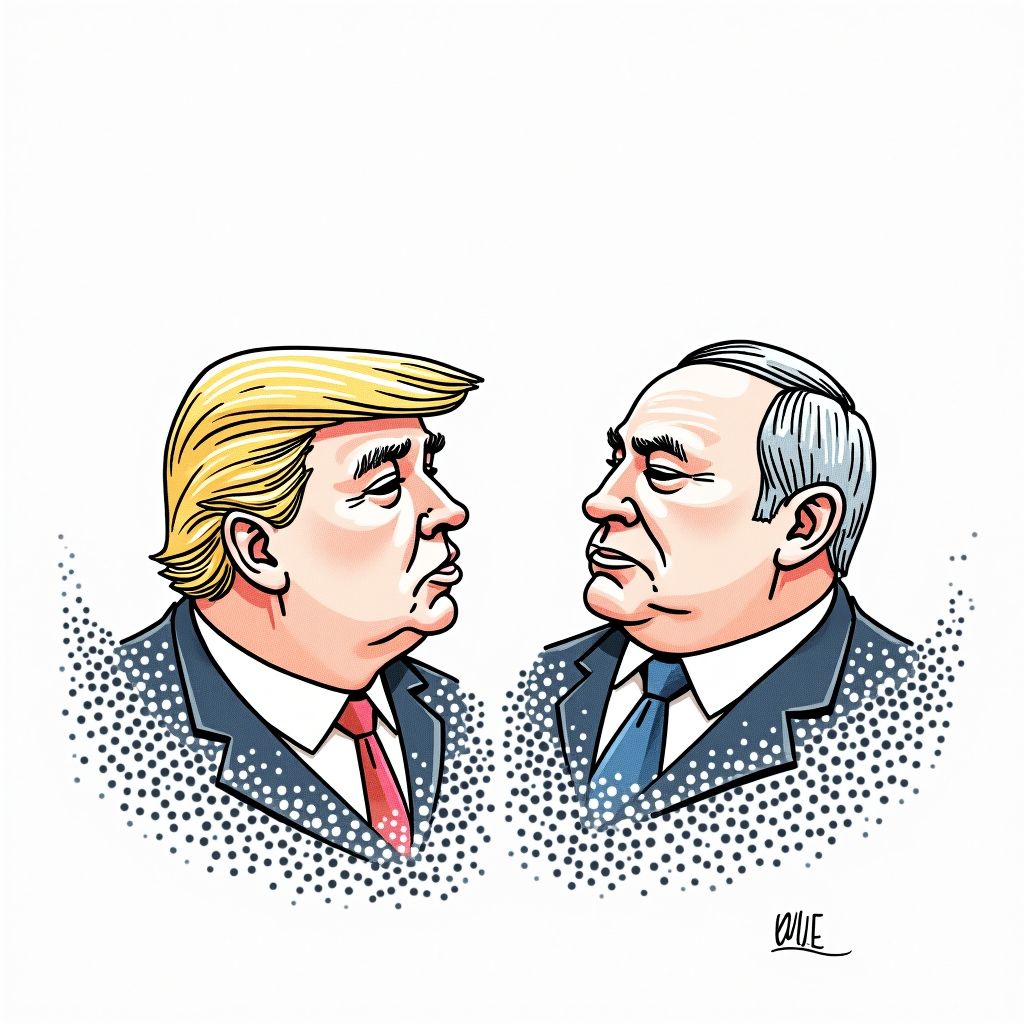
Washington D.C., Saturday, 28 February 2026.
President Trump launched major combat operations with Israel, explicitly urging Iranians to overthrow their government just days after hosting his inaugural “Board of Peace” meeting.
From Stalled Talks to Total War
Following reports that the administration was weighing its options after nuclear negotiations hit an impasse—previously detailed in our coverage of the stalled talks and embassy warnings [https://wsnext.com/08033b8-Geopolitics-Foreign-Policy/]—President Donald Trump has decisively escalated the conflict. As of Saturday, February 28, 2026, the United States, in collaboration with Israel, has commenced what President Trump describes as “major combat operations” in Iran [3][6]. This marks a volatile new chapter in the administration’s foreign policy, moving rapidly from diplomatic pressure to kinetic warfare with the explicit aim of dismantling the current Iranian leadership [1].
Strategic Shift to Regime Change
In an eight-minute video address released on Truth Social on February 27, President Trump declared that the objective of the offensive is not merely a limited strike but the surrender of Iran’s Islamic Revolutionary Guard Corps (IRGC) and the destruction of the nation’s armed forces, missile capabilities, and navy [1][6]. Framing the conflict as a necessary measure to “defend the American people,” Trump cited decades of grievances, including the 1983 Beirut barracks bombing and the 1979 embassy siege, as justification for the assault [6]. The President directly addressed the Iranian public, urging them to “take over your government,” asserting that this moment represents their “only chance for generations” to seize control of their destiny [5]. Initial airstrikes reportedly targeted areas surrounding the offices of Supreme Leader Ayatollah Ali Khamenei, although his status remains unclear [5].
Regional Retaliation and Casualties
The military exchange has triggered immediate and widespread instability across the Middle East. Following the initial U.S. and Israeli bombardment, Iranian forces launched retaliatory missile and drone strikes targeting Israel, as well as U.S. military installations in Bahrain, Kuwait, and Qatar [5]. The escalation has forced the United Arab Emirates and Iraq to close their airspace to civilian traffic [5]. Early casualty reports indicate that five students were killed at a girls’ school in southern Iran during the U.S.-led strikes, while shrapnel from an Iranian missile killed one person in the UAE [5]. In response to the widening conflict, the U.S. State Department has advised Americans in Qatar, the UAE, and Israel to shelter in place [5], and Air Canada has cancelled flights to Dubai and Tel Aviv [4].
Collapse of Diplomatic Channels
The timing of the invasion has drawn sharp scrutiny given recent diplomatic engagements. The attack was launched just ten days after President Trump hosted the inaugural meeting of his “Board of Peace” on February 17 [1], and mere hours after Oman’s Foreign Minister, Badr Albusaidi, met with U.S. Vice President JD Vance [4]. Albusaidi had expressed optimism in an interview posted on February 27, stating that a peace agreement was within reach and that Iran had agreed to halt nuclear enrichment [4][7]. Despite Trump stating on Friday that he was “not happy” with talks but willing to give negotiators more time, the administration pivoted almost immediately to military action [7]. Critics, including Democratic Senator Andy Kim, have condemned the move, arguing that the President lacked a mandate or congressional approval for such a significant escalation [1][4].
Sources
- www.theguardian.com
- www.facebook.com
- www.aljazeera.com
- www.cbc.ca
- www.pbs.org
- apnews.com
- www.npr.org
- www.instagram.com