Russia Requests Commercial Aircraft From Vietnam to Ease Severe Fleet Shortages
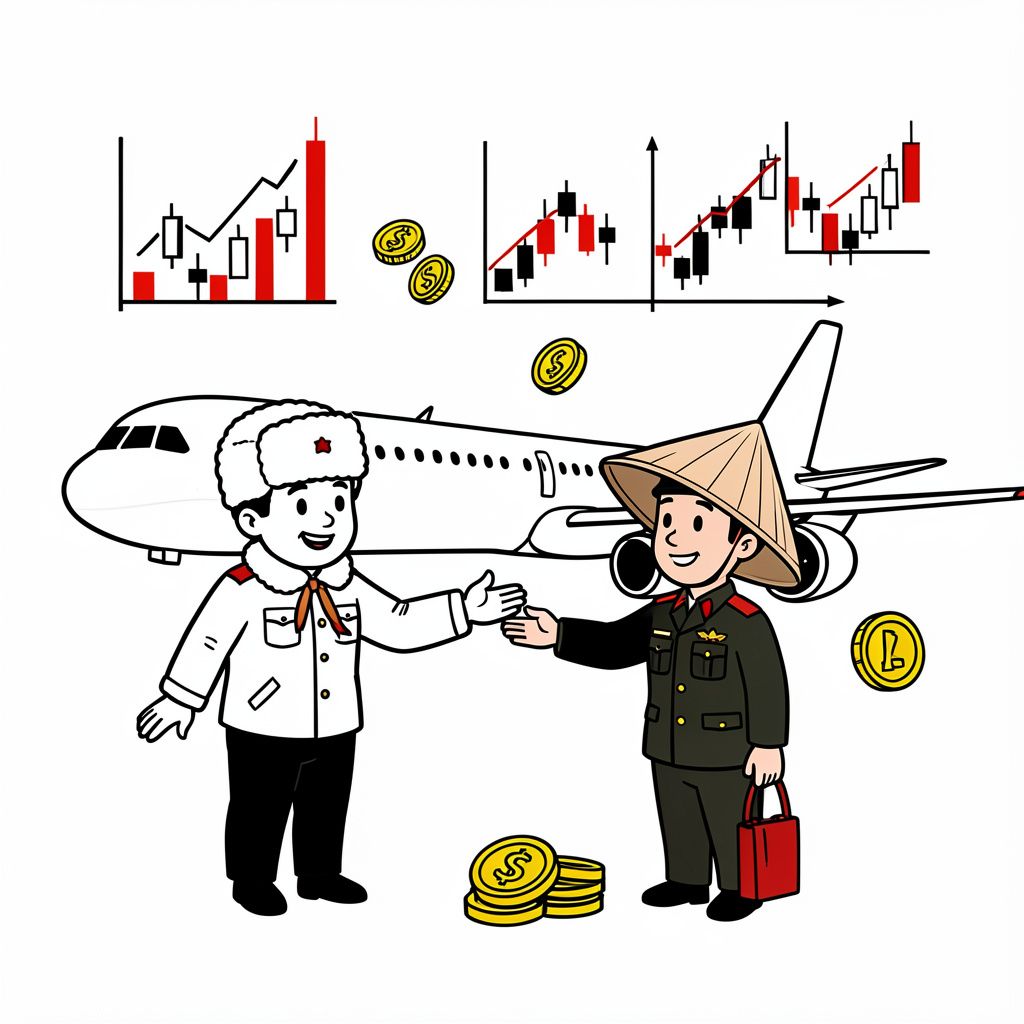
Moscow, Thursday, 8 October 2026.
Faced with nearly 20% of its fleet grounded due to sanctions, Russia asked Vietnam for passenger jets, exposing Vietnamese airlines to severe risks of secondary Western sanctions.
Fleet Grounding Statistics
As of 6 October 2026, data indicates that 130 out of 673 aircraft operated by Russia’s 11 largest airlines are currently inactive [1][3]. This represents approximately 19.316 percent of the fleet, which is double the normal operational downtime rate of 10 percent [2][4]. Non-Aeroflot carriers are experiencing higher attrition, with 93 of 322 planes idle, equating to 28.882 percent of their specific fleet [1][5].
Illegally Re-registered Fleet
Following the February 2022 invasion of Ukraine, Moscow re-registered over 400 foreign-leased Western aircraft domestically in violation of international law [2][3]. Prior to the conflict, approximately 85 percent of Russia’s 900 commercial aircraft were manufactured by Airbus or Boeing, with most leased from foreign companies [3][4]. Lessors have subsequently filed insurance claims totaling approximately $8 billion to recover losses from this action [1][4].
Sanctions and Secondary Risks
Russian Transport Minister Andrei Nikitin confirmed that Moscow proposed wet-leasing Vietnamese aircraft, including crews, maintenance, and insurance [1][3]. Hanoi is currently studying the proposal, though any transfer involves Western-built aircraft which creates significant secondary sanctions risks for Vietnamese airlines [2][5]. Similar proposals to other nations, including Ethiopia, have previously failed due to these regulatory hurdles [4][5].
Maintenance and Certification
Aviation safety standards are compromised as Russian regulator Rosaviatsia issues self-certified airworthiness certificates for cannibalized parts [1][2]. These certificates are not recognized by EU or US authorities, rendering these planes ineligible for international operation [3][5]. This lack of certified spare parts and maintenance support contributes to the severe shortages straining the domestic fleet [1][4].
Operational Challenges and Future Plans
Fuel supply shortages are affecting operations, with rationing imposed at at least 26 major airports including St. Petersburg and Vladivostok [3][4]. Supply is limited to the volume required for a single flight at several locations, driven by reduced production from Ukrainian drone strikes on refineries [2][5]. Airports in Sochi, Volgograd, and Astrakhan face stricter limits where restrictions apply to all carriers [1][4].
Proposed Passenger Levy
The Russian transport ministry, industry ministry, and Rostec are discussing a new passenger levy to subsidize domestically produced MC-21 and Tu-214 jets [3][5]. Proposed fees are up to 500 roubles for domestic tickets and 1,000 roubles for international flights [2][4]. No specific implementation date has been provided for this levy [1][5].