A Republican Senator's Warning on the Decline of Congressional Power
Washington, Monday, 29 June 2026.
Senator Bill Cassidy warned that Donald Trump treats Congress as a mere tool, following their heated, face-to-face shouting match over secret military strategy in the Iran war.
The Flashpoint of Executive-Legislative Friction
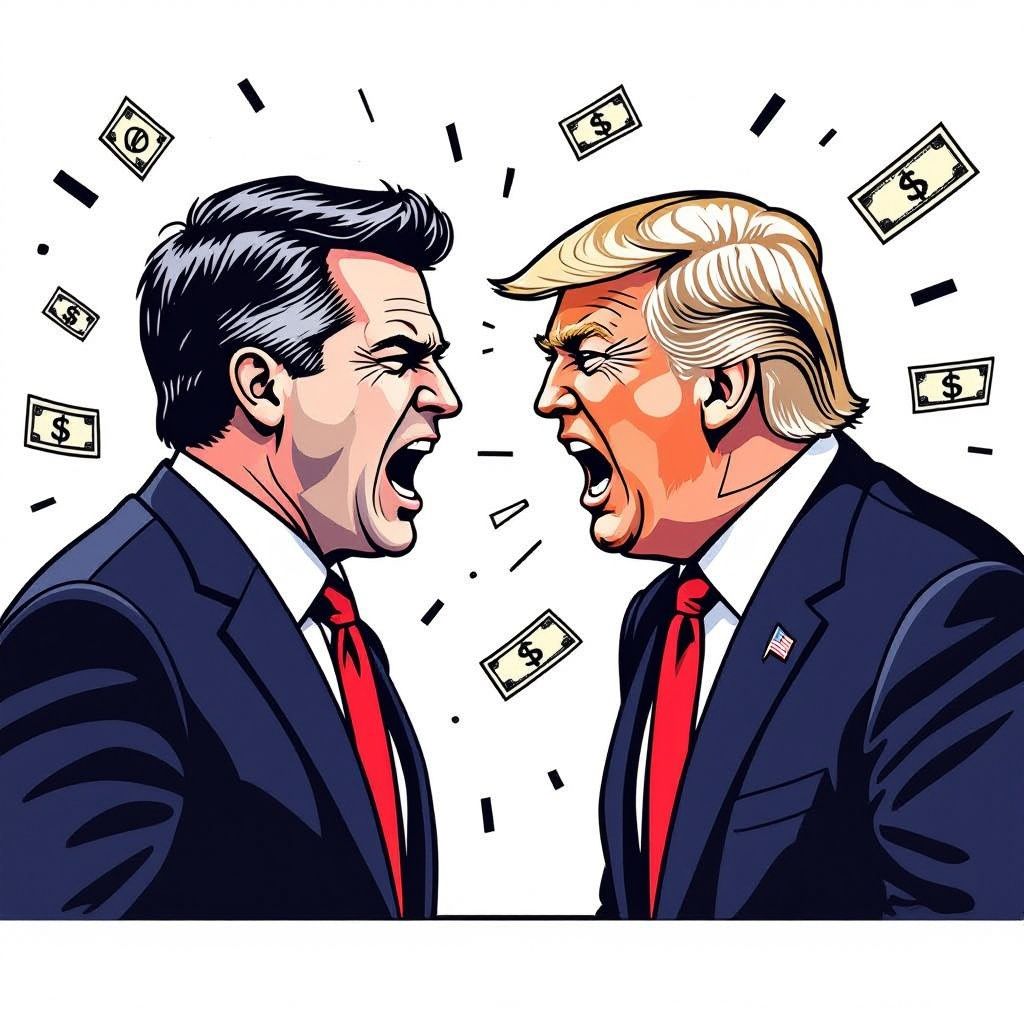
The tension between the executive and legislative branches of the United States government reached a boiling point on Wednesday, June 24, 2026, during a closed-door Republican Senate lunch [1][4]. Senator Bill Cassidy, a Republican representing Louisiana, and President Donald Trump engaged in a heated, face-to-face shouting match over the ongoing war in Iran and the War Powers Act [1][4]. The conflict, which has already cost the United States $29 billion and resulted in 13 American fatalities, has become a proxy battle over congressional oversight and the limits of executive power [2][4]. Trump reportedly berated the four Republican senators who voted for a war powers resolution intended as a symbolic rebuke to the White House’s military strategy [1][2][4]. Refusing to be bullied, Cassidy raised his volume to match the president’s, arguing that Congress must not be treated as a mere appendage of the presidency [1][2][4].
The Flashpoint of Executive-Legislative Friction
Following the confrontation, the administration moved to address Cassidy’s demands for transparency [1][4]. On Thursday, June 25, 2026, Cassidy attended a classified Situation Room briefing with Vice President JD Vance and Special Envoy Steve Witkoff [4]. The briefing provided Cassidy with a plausible plan to achieve U.S. military objectives—specifically confirming that ‘regime change’ is off the table—while addressing the nation’s conventional, ballistic missile, and nuclear concerns in Iran [4]. Satisfied with this newly provided clarity, Cassidy announced on Sunday, June 28, 2026, that he would change his vote on the subsequent war powers resolution, illustrating how access to intelligence can shift legislative strategy [1][2][4].
The High Cost of Electoral Realignment
The public clash comes at a moment of profound political transition for Cassidy, who is serving out the final six months of his Senate term [4]. The Louisiana senator lost his bid for renomination after the state transitioned from an open primary system to a closed primary system [4]. This structural change reduced the pool of eligible primary voters from 1.2 million to just 400,000 [4]. The shift represents a contraction of -66.667 percent in the participating electorate [4]. Cassidy was ultimately eliminated during the primary on May 16, 2026, where Representative Julia Letlow and State Treasurer John Fleming advanced [5]. On Saturday, June 27, 2026, Letlow won the Republican primary runoff election, positioning her to face Democratic nominee Jamie Davis in the November 2026 general election [2][5].
The High Cost of Electoral Realignment
Cassidy has directly attributed his primary defeat to President Trump’s targeted endorsement against him [4]. The political rift dates back to Cassidy’s decision to vote to convict Trump during the 2021 impeachment trial following the January 6 attack on the U.S. Capitol [1][2][5]. Despite facing aggressive opposition from Trump-backed candidates and substantial spending by the political action group ‘Make America Healthy Again’ (MAHA), Cassidy maintained that his impeachment vote was a fulfillment of his oath to uphold the Constitution [4]. He dismissed the influence of MAHA’s spending, characterizing the presidential endorsement as the decisive factor in his defeat [4].
Deepening Policy Divisive Lines
Beyond the immediate conflict over war powers, Cassidy has leveraged his final months in office to challenge key administration policies and appointments [4]. As the Chair of the Senate HELP Committee, Cassidy expressed sharp criticism of Health and Human Services (HHS) Secretary Robert F. Kennedy Jr., stating on June 28, 2026, that Kennedy’s public health stances are built on a ‘foundation of lies’ [3][4]. Cassidy, a medical doctor, noted that Kennedy violated prior commitments regarding ‘guardrails’ for his executive role, particularly concerning the federal advisory panel on vaccines [4]. This loss of trust has complicated the administration’s health agenda, especially as the HHS has lacked Senate-confirmed leadership for key positions like the Surgeon General and CDC Director for approximately nine months [4].
Deepening Policy Divisive Lines
Cassidy is also actively opposing domestic and fiscal policies proposed by the administration [2][4]. He has voiced strong objections to a proposed $1.8 billion ‘weaponization fund’ initiated by Trump and the Department of Justice, which is intended to compensate individuals allegedly prosecuted unfairly under the previous Biden administration [2][4]. Cassidy argued that leaders should be held to a higher standard, not a different one, and stated that making any individual above the law is fundamentally wrong [2]. While evaluating his vote for acting Attorney General nominee Todd Blanche, Cassidy has sought assurances that this fund will not be utilized, highlighting his focus on maintaining institutional integrity before his term concludes in January 2027 [2][4].
Geopolitical Strategy and National Readiness
In foreign policy, Cassidy has aligned with certain strategic shifts while continuing to critique others [4]. He expressed strong approval of Secretary of State Marco Rubio’s recent decision to reclaim control of overseas vaccine distribution from the State Department [4]. Cassidy framed this move as a critical step in countering Chinese geopolitical influence, emphasizing the strategic value of ‘soft power’ and diplomatic relationship-building with African heads of state [4]. He contrasted this with previous attempts by Kennedy to limit overseas immunization programs, which he argued undermined American influence and public health infrastructure in Sub-Saharan Africa [4].
Geopolitical Strategy and National Readiness
Closer to home, Cassidy raised alarms regarding domestic public health and economic stability [4]. He warned that plummeting vaccination rates have put the United States at risk of losing its measles elimination status, noting that no parish in Louisiana currently meets herd immunity thresholds for kindergarten students [4]. On the economic front, Cassidy is focusing his remaining legislative efforts on Social Security reform to prevent projected benefit cuts of 22% to 25% due to program insolvency [4]. He also expects a decrease in gasoline prices following the successful resolution of the shipping tie-up at the Strait of Hormuz, linking regional stability directly to domestic kitchen-table issues [4].