Warren Buffett Builds Massive Cash Reserve as Stock Market Risk Signals Rise
Omaha, Monday, 28 September 2026.
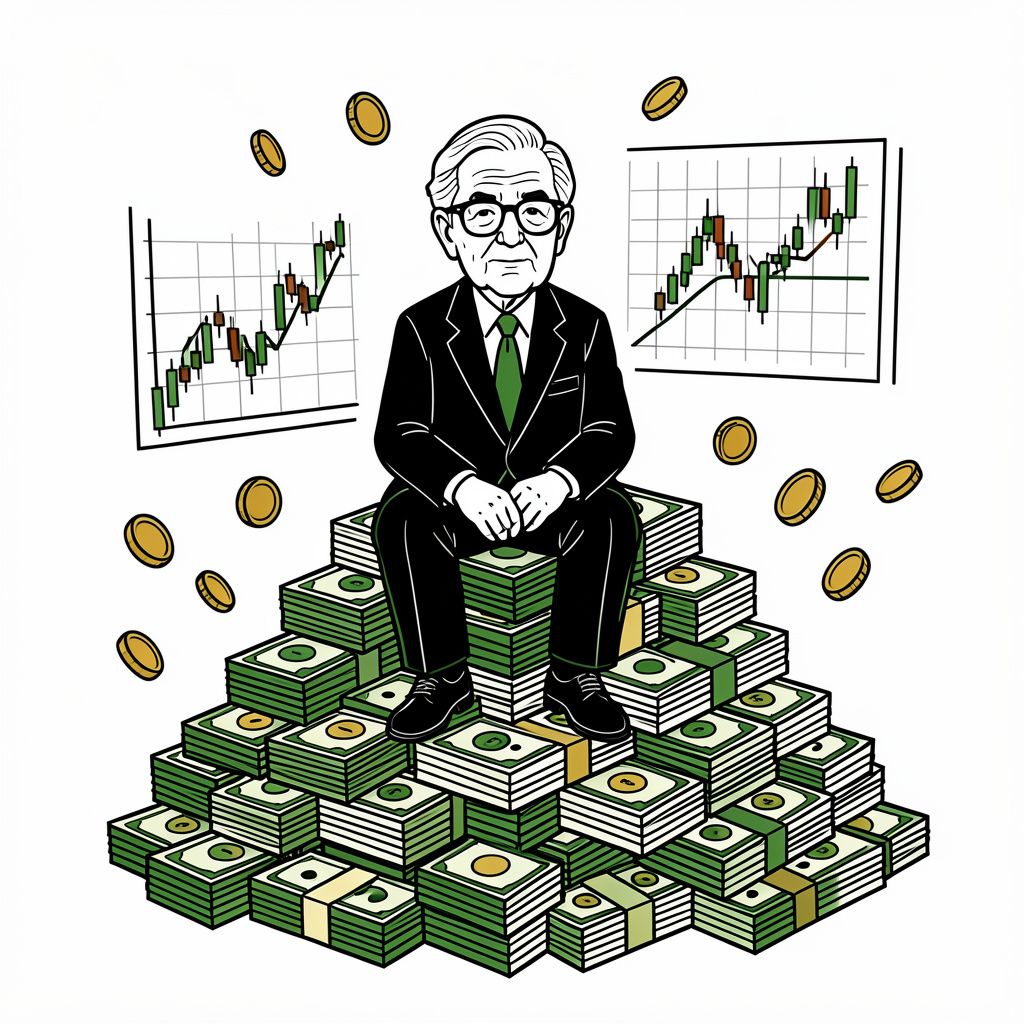
With major market valuation metrics reaching historic highs, Warren Buffett has built a record cash reserve, advising investors to prepare for potential downturns by prioritizing liquidity and patience.
Valuation Metrics Signal Caution Amid Record Highs
As of 28 September 2026, major market valuation metrics have reached historic extremes, prompting warnings from legendary investor Warren Buffett regarding the necessity of tempering investor expectations [1]. The Buffett Indicator, which compares total stock market value to GDP, recently hit an all-time high above 235%, far exceeding the 120% threshold considered overvalued [3]. Simultaneously, the Shiller CAPE ratio has climbed above 40, a valuation level historically associated with the dot-com bubble peak and preceding periods of lower returns or meaningful market reversals [1]. These indicators suggest that easy gains from valuation expansion may be over, despite AI-driven earnings and post-midterm election patterns offering reasons for optimism [3].
The stock market has been rallying for more than three years, with the S&P 500 delivering total returns of 24% in 2023, 23% in 2024, 16% in 2025, and 12% year-to-date as of 25 September 2026 [1]. During the same respective periods, the Nasdaq Composite gained 43%, 29%, 20%, and 16% [1]. Between 27 March 2026 and 27 September 2026, the Nasdaq and S&P 500 rose by approximately 23% and 18%, respectively [2]. As of 27 September 2026, the Nasdaq hit an all-time high, while the S&P 500 remained within 1% of a record high [2]. Current economic indicators show 1.5% annual real GDP growth, a 4.1% unemployment rate, and inflation remaining above the Federal Reserve’s 2% target [1].
Berkshire Hathaway’s Liquidity Strategy and Leadership Transition
Warren Buffett has been stockpiling cash at Berkshire Hathaway, advising investors to wait for better entry prices amidst the current market rally [1]. Berkshire Hathaway was a net seller of stocks for 14 consecutive quarters, increasing its cash and Treasury reserves from approximately $128 billion to a record high of nearly $397 billion by early 2026 [1]. As of 30 June 2026, the company held $365.5 billion in cash and short-term Treasury bills, a decrease from the record $397.4 billion held in March 2026 [4]. This change represents a reduction in cash reserves of -8.027 percent between March and June 2026 [4]. The cash deployment strategy in the second quarter of 2026 included $4.5 billion in share buybacks and an additional $3.3 billion in buybacks during July 2026 [4].
A significant leadership transition occurred on 18 September 2026, when Warren Buffett stepped down as Berkshire Hathaway chairman, appointing Howard Buffett as chairman and confirming Greg Abel as CEO [4]. Berkshire Hathaway has maintained a consistent policy against dividends since 1967, prioritizing share buybacks and acquisitions, a strategy affirmed in CEO Greg Abel’s February 2026 shareholder letter [4]. Market analysts highlight the critical transition period as the company shifts from Buffett’s capital allocation model to Abel’s, noting the company’s cash pile remains a central point of investor interest [4]. Future company strategy remains contingent on Abel’s specific deployment record, with observers waiting to see if he will alter the firm’s long-standing stance on capital returns to shareholders [4].
Historical Precedents and Investor Sentiment
Historical data reveals that bear markets, defined as drops of 20% or more, occur roughly every three and a half years since 1928, while since World War II, they have occurred roughly every 5 years [1]. These downturns typically last 9 months with an average decline of 35% [1]. In his 1999 letter to Berkshire Hathaway shareholders, Buffett identified that investors were becoming wildly optimistic regarding future stock returns as the internet transformed the global economy [5]. A 2000 PaineWebber-Gallup survey cited in Buffett’s shareholder letter revealed that investors expected an average annual return of 19% from stocks over the subsequent decade, significantly higher than the long-term average annual return of approximately 10% for the S&P 500 [5].
A weekly survey by the American Association of Individual Investors released on or near 27 September 2026 indicates nearly 50% of U.S. investors expect a stock price decline within the next six months, while 33% expect continued growth [2]. Buffett’s investment strategy focuses on maintaining liquidity to purchase value-oriented assets during market downturns rather than attempting to time market peaks or bottoms [1]. Investors are advised to align asset allocation with time horizons and risk tolerance rather than attempting to forecast market movements or switching entirely to cash based on valuation concerns [5]. Experts advise prioritizing companies with diversified operations and reliable cash flow over single-source income streams to ensure survival during potential market downturns of 20% or extended periods of stagnation [3].