Former Lieutenant Governor Mark Robinson Faces Deep Financial Strain in New Bankruptcy Filing
Raleigh, Tuesday, 10 November 2026.
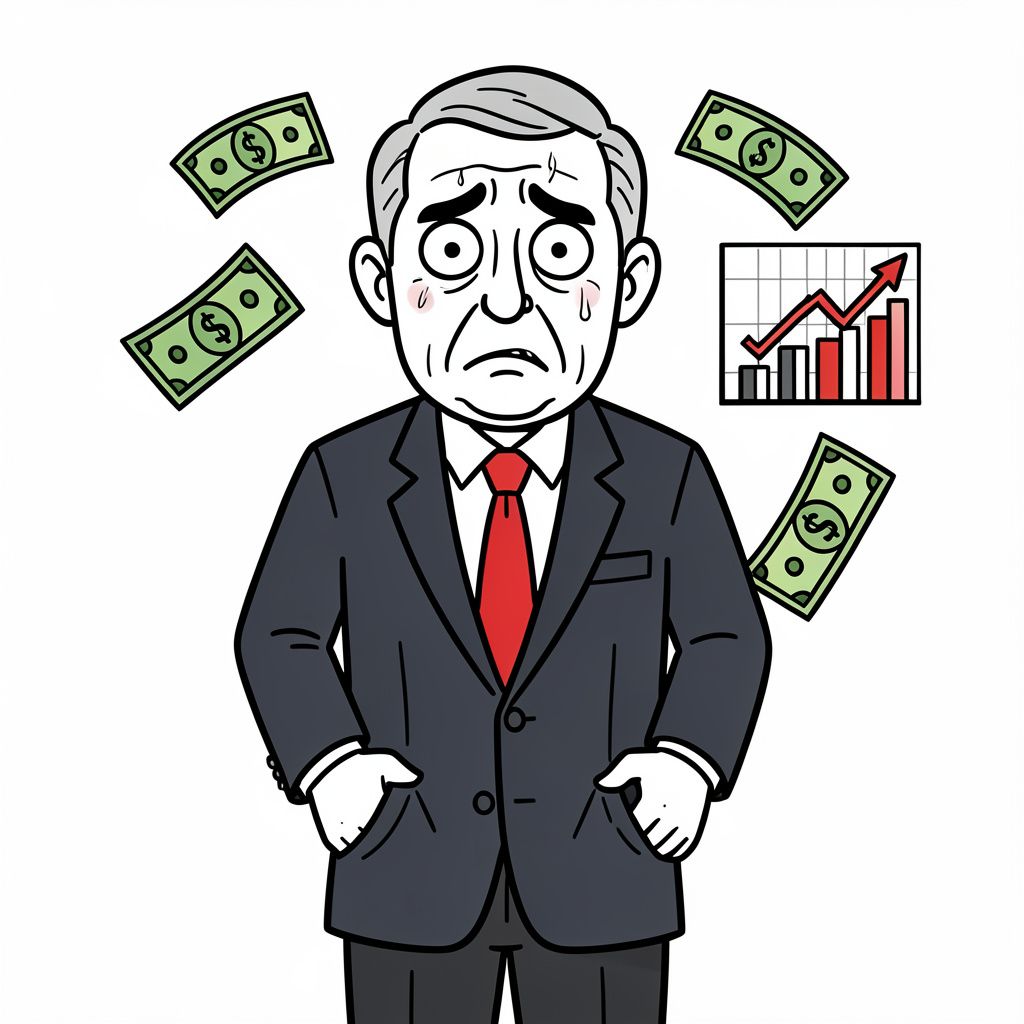
Mark Robinson and his wife have filed for Chapter 13 bankruptcy, revealing nearly $800,000 in liabilities against under $800 in liquid assets amid mounting personal and legal debts.
A High-Profile Political Career Precedes Financial Turmoil
Former North Carolina Lieutenant Governor Mark Robinson, a Republican who served from 2021 to 2025, has filed for Chapter 13 bankruptcy protection on November 3, 2026, according to court records cited by multiple outlets [1][2][3]. Robinson, who gained national attention during his contentious 2024 gubernatorial campaign against Democrat Josh Stein, now faces significant financial and legal challenges. Robinson’s political trajectory—marked by his tenure as the state’s second-highest executive and a high-stakes election loss—has been followed closely by state and national observers, particularly after revelations surfaced in September 2024 that he had made racist and sexually explicit comments on an adult forum, leading to widespread resignations from his campaign [3].
Financial Disclosure: $800,000 in Debts Against Minimal Liquid Assets
The bankruptcy filing, submitted in federal court, reveals that Robinson and his wife, Yolanda Hill, collectively owe approximately $800,000 in liabilities, with liquid assets totaling just $766.98 in bank accounts [1][2][3]. Their reported debts include $120,000 in credit card obligations, $94,000 in unspecified other debts, and $100,000 in collections accounts [1]. Notably, the couple’s total assets exceed $535,600, including a home in Colfax valued at approximately $437,000, two vehicles—a 2021 Cadillac Escalade and a 2021 Chevy Silverado—valued at $80,000, as well as furniture, electronics, a $25 set of golf clubs, a $2,000 golf cart, and a $6,000 gun collection [1][2]. The disparity between their liquid assets and liabilities underscores the severity of their financial strain, particularly as Chapter 13 bankruptcy requires a court-approved repayment plan to settle creditor claims while protecting some assets from foreclosure [1][2][3].
Legal and Ethical Challenges Compound Financial Woes
Robinson’s financial troubles are exacerbated by a series of legal and ethical controversies. His wife, Yolanda Hill, previously ran the nonprofit Balanced Nutrition, which was the subject of a state investigation in 2024 for over-reporting childcare center billing amounts to divert federal funds for her personal salary [3]. The North Carolina Department of Health and Human Services (DHHS) ordered the nonprofit to repay over $100,000 in misspent funds, though as of March 2026, the debt remained uncollected [1][3]. Additionally, Robinson faces a lawsuit from Greensboro-area musician Louis Love Money, who alleges Robinson used a defamation lawsuit against him as a strategic maneuver to intimidate critics, a claim stemming from Robinson’s dropped CNN defamation case [1][3]. These legal entanglements highlight the broader financial and reputational risks Robinson and Hill now confront, compounding their bankruptcy filing.
Historical Financial Missteps and Campaign Finance Violations
Robinson’s financial history reveals a pattern of fiscal challenges. Between 1998 and 2002, he and Hill failed to pay an estimated $15,800 in income taxes, which were settled in 2003 [3]. The couple also filed for bankruptcy three times between 1998 and 2003, a period marked by recurring financial instability [3]. More recently, Robinson paid a $35,000 fine in December 2024 for campaign finance violations stemming from his 2020 State Board of Elections case, further tarnishing his financial and political standing [3]. These past missteps, coupled with the current bankruptcy filing, paint a portrait of a high-profile figure grappling with both personal and professional setbacks.
The Path Ahead: Chapter 13 Proceedings and Public Scrutiny
Chapter 13 bankruptcy proceedings will require Robinson and Hill to submit a repayment plan to the court, enabling them to manage debt payments while retaining some assets [1][2][3]. However, the public nature of their financial disclosures and ongoing legal issues may intensify scrutiny of their affairs. The case also raises questions about the intersection of personal finance and public service, particularly for a former lieutenant governor whose career was once defined by electoral success and political ambition. As the bankruptcy process unfolds, Robinson’s ability to navigate these challenges will be closely watched by political observers, creditors, and the public alike.