Air Canada Suspends Key Routes as Iran Conflict Drives 50% Spike in Fuel Costs
Montreal, Monday, 20 April 2026.
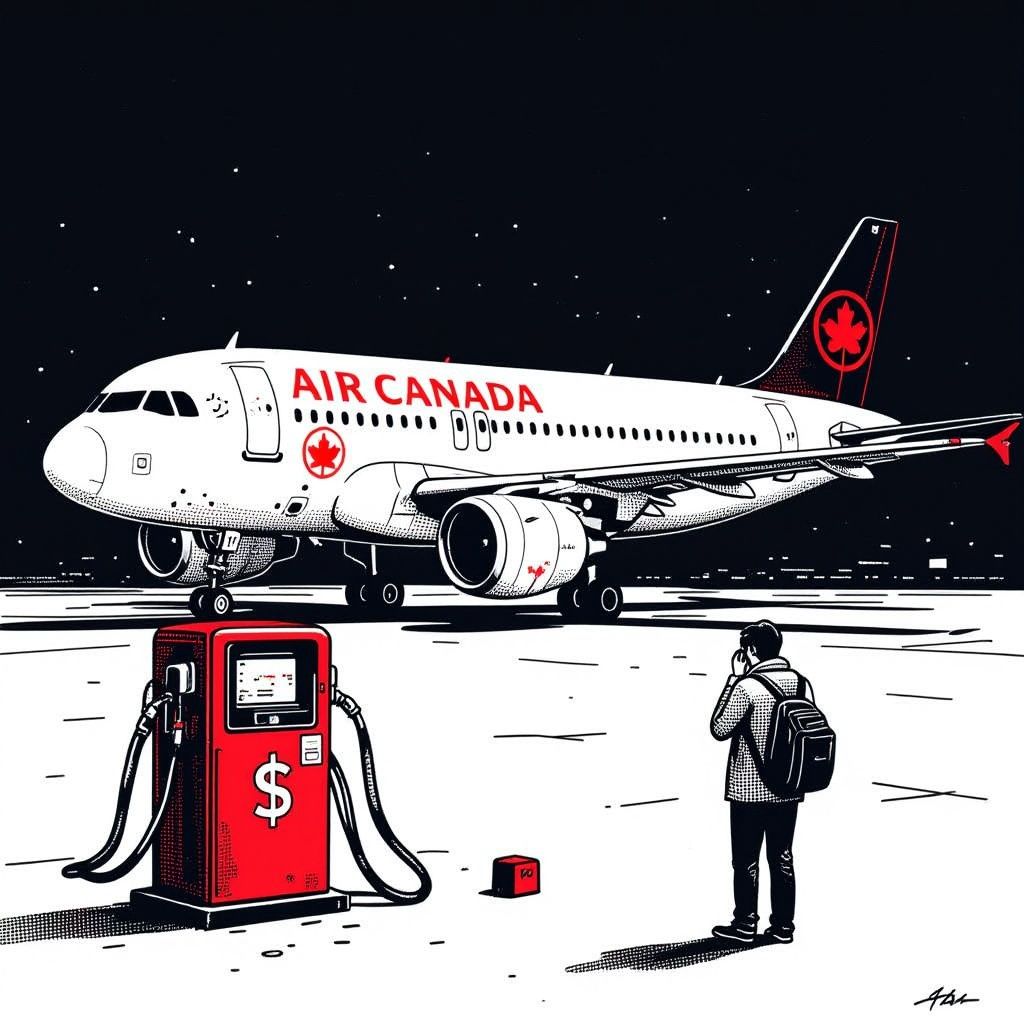
Driven by a 50% surge in jet fuel prices since the Iran war began, Air Canada is cutting flights, signaling immediate economic fallout and rising costs for global travelers.
Surging Operating Expenses
On Friday, 17 April 2026, Air Canada (OTC: ACDVF) officially announced the suspension of select United States-bound and domestic flights, directly attributing the decision to the skyrocketing cost of aviation fuel [1]. According to data from Airlines for America, jet fuel prices reached USD 3.79 [alert! ‘The source does not specify the unit of measurement for the USD 3.79 fuel price, though standard industry pricing in the US is per gallon’] on 17 April 2026 [1]. This represents an increase of more than 50 percent since 26 February 2026, the day before the outbreak of the ongoing Iran war [1]. The airline noted in a public statement that fuel prices have effectively doubled since the conflict began, rendering lower-profitability routes economically unfeasible [1].
Targeted Route Reductions
The immediate impact of these adjustments will be felt heavily on cross-border travel starting this summer [1]. All Air Canada service to New York’s John F. Kennedy International Airport (JFK) from both Montreal and Toronto will be suspended from 1 June 2026 through 25 October 2026 [1]. However, business travelers and logistics networks can still rely on uninterrupted service to nearby Newark Liberty International Airport (EWR) and LaGuardia Airport (LGA) [1]. Additionally, flights from Toronto Pearson (YYZ) to Salt Lake City International Airport (SLC) will be halted beginning 30 June 2026, creating a service gap of approximately six months before an expected resumption in 2027 [1].
Managing Capacity in a Constrained Market
While the list of suspended routes is notable, the overall reduction is a calculated, targeted maneuver rather than a mass grounding [GPT]. According to the airline, these strategic cuts will affect only about 1 percent of its total annual flying capacity for the 2026 fiscal year [1]. Data reported by CTV indicates that the suspensions translate to roughly 34 daily departures across the Canadian network, with a heavier concentration of operational adjustments out of major hubs in Montreal and Toronto [1].